Unknown's avatar

About Donna Cameron

After many deeply-satisfying years in non-profit management, I’ve been spending my time exploring the good life that Rachel Remen describes as “pursuing unanswerable questions in good company.” I blog about the power of kindness, and my book, A YEAR OF LIVING KINDLY, will be published in September 2018. Always looking for ways to convey the power of stories in our lives, I believe that we can change the world through our stories . . . and through kindness. https://ayearoflivingkindly.com/

When the Kindest Thing To Do Is … Absolutely Nothing

“Don’t underestimate the value of doing nothing, of just going along, listening to all the things you can’t hear, and not bothering.”  (Winnie the Pooh)
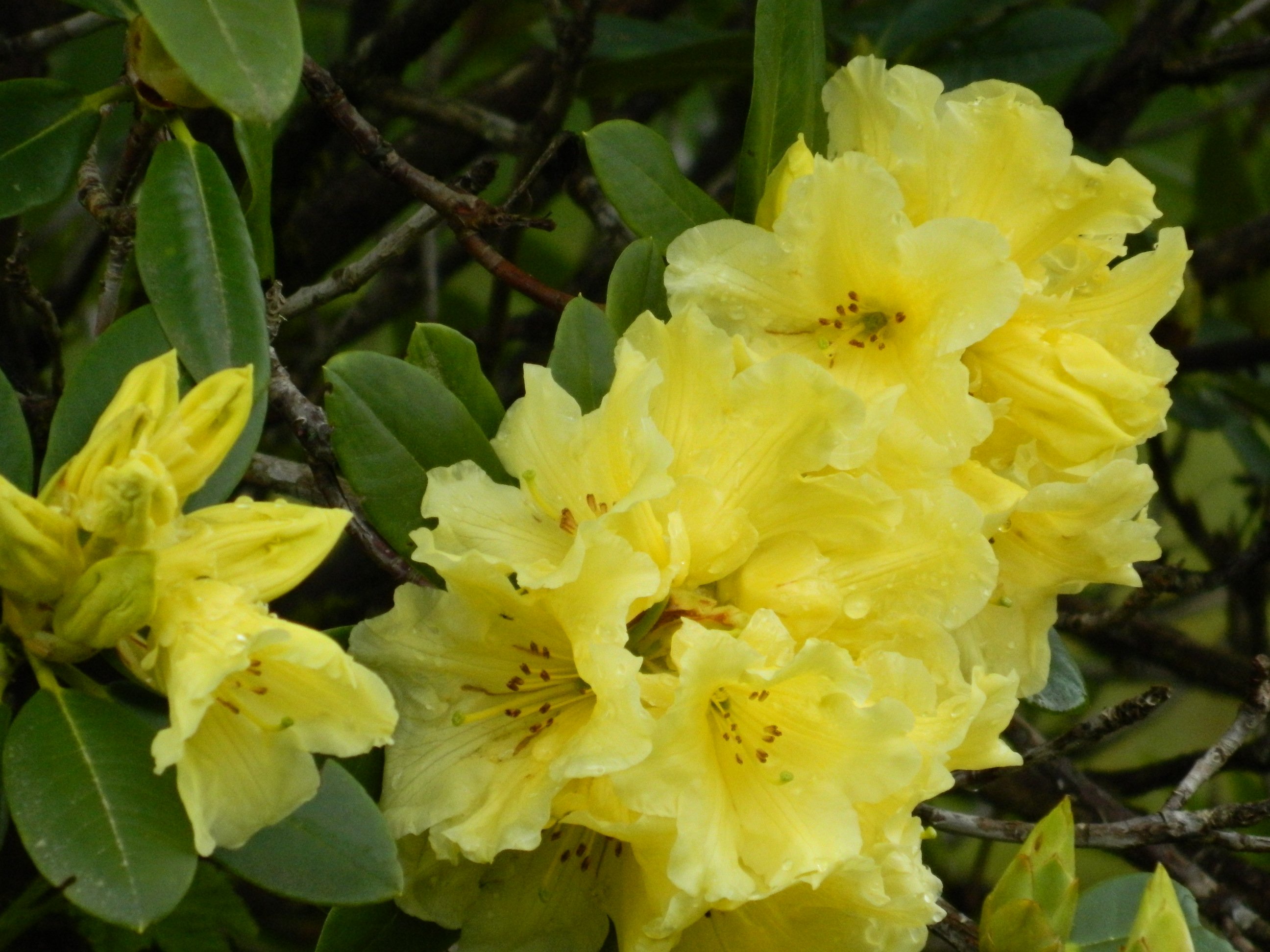
Yellow RhodieAs I wander around exploring kindness, I’ve been surprised to realize that quite often choosing to do nothing is the kind choice.  That probably flies in the face of any image we might have of the kindest people being ones in tights and a cape, with a big K emblazoned across their chest, leaving a trail of good deeds in their wake.

Over the last week, I’ve had occasion to witness a few episodes where feelings were hurt and tempers were raised as a result of emails that never should have been sent.  That’s one of the problems with email.  It’s just so damn easy to reply immediately—in the heat of the moment—before we’ve really thought through what the sender may have intended, how our reply might be interpreted—or misinterpreted—and what our ultimate goal for the communication is.

Do we want to be right (or righteous), or do we want to keep the peace?  Sometimes, we can’t do both.

I think there was probably a time in my life when being right (or, I admit it, righteous) may have felt more important than keeping the peace or being kind.  Being right doesn’t seem all that important anymore.  I’m reminded of a line from the classic film Harvey, where Elwood P. Dowd, played to perfection by Jimmy Stewart, says, “Years ago my mother used to say to me…. ‘In this world, Elwood, you must be oh so smart or oh so pleasant.’  Well, for years I was smart.  I recommend pleasant.”

This harks back to an earlier post about the power of the pause, and the importance of delaying long enough to decide if the action you’re anticipating will really get the results you want.  Sometimes, when we hit pause, we realize that we should make that pause permanent and simply do nothing, say nothing.

“Silence is sometimes the best answer,” the Dalai Lama wisely said.  It’s harder than it sounds, though—at least for me it can be—especially in verbal interactions.  A derisive comment or sarcastic reply may come to my lips quickly and be spoken before I realize how snarky it sounds.  I’m learning to bite my tongue, but it is not always easy.

Even if my words aren’t snarky, does what I’m saying help?  Maybe somebody in my office brings up an idea that they think is great, but there are ramifications that make it unworkable or unwise.  How I communicate that may mean the difference between their continuing to search for good ideas and their feeling deflated and put down.  Sometimes, the right thing to do or say may be nothing—to let them discover the flaw for themselves or even find a way to make the seemingly unworkable work.  Or maybe the best course is to talk through the issue in hopes that they see the unsoundness, or that I can point it out considerately.  Either way, the knee-jerk response (“No, that will never work”) is not the best choice.

I think back on the four questions Rotarians ask to decide whether and how to act or speak (mentioned in the earlier post on pausing):

  • Is it the truth?
  • Is it fair to all concerned?
  • Will it build goodwill and friendship?
  • Will it be beneficial to all concerned?

If the answer to any is no, don’t say it or do it.  Such good advice, it bears repeating!

Wise and Kind Parenting

I am not a parent, never have been, know nothing about parenting, and would surely have been a dreadful mother.  The closest I’ve come is raising a cat or three, each of whom assumed its rightful place as head of the household in very short order.

I have a few friends whom I consider to be extraordinarily good parents, and it seems that the wisdom to do nothing out of kindness is something great parents learn.  As kids grow, there are times when parents need to let them learn lessons—sometimes painful ones—on their own.  If mom or dad always steps in and clears the path or fixes the problem, the child will never learn independence.  I’m guessing (remember, only guessing, I only know cats) that it’s terribly difficult for a parent to do nothing when they know the lesson their child must learn is accompanied by pain or distress.  And to compound that, the kids—seeking rescue—rarely recognize that the parents’ choice to do nothing is exactly the right one.  But the parents know that the pain is temporary and the lesson will serve the kids for a lifetime.

And here’s the amazing part: these parents also know that there are other times when the exact right thing to do is step in and help solve the problem or avert the pain, and they do that.  How do they know the difference?  That discernment, that wisdom, fills me with awe.

There’s a reason I’ve only had cats.

I suppose, though, that the same wisdom parents have of when and when not to intervene is what good leaders and managers have with their team members.

It may be tempting at times to tell ourselves that we are choosing to do nothing out of kindness, when really our kindness is sorely needed and we are being lazy or apathetic.  Kindness requires both mindfulness and honesty.  If we pay attention, we will know what’s right, and we will respond accordingly….or not.  If kindness were always easy, there’d be a lot more of it….

“When given the choice between being right or being kind, choose kind.”  (R.J. Palacio)

When Fear Gets in the Way of Kindness

“Be not afraid.  A kind life, a life of spirit, is fundamentally a life of courage—the courage simply to bring what you have, to bring who you are.” (Wayne Muller)

Attrib: Donna CameronThere are many barriers to extending kindness, and fear may be one of the biggest.  Fear is also frequently the cause of people acting unkindly.  In an earlier post, I described an ah-ha I had when dealing with a disgruntled conference attendee a while back (does this mean that the other conference participants were “gruntled”?): much of her unpleasant behavior was the result of her fears in the face of a new and intimidating experience. When I see unkindness—my own or others—I can often trace it to fear: fear of judgment, fear of rejection, fear of not being enough, fear of being vulnerable, fear of looking foolish.  It’s true not just with unkindness, but also with that netherworld between kindness and unkindness—indifference. There’s an old proverb that “pride goeth before a fall.”  As with so many old proverbs, this one holds a ring of truth.  Fear and pride do often go hand-in-glove.  Most of the things we fear are threats to our pride, to the image we have of how good, strong, smart, capable, and lovable we are.  When these are shaken, we either strike out or strike back. Sometimes, if we are able to see someone’s unkindness toward us as an expression of their own fear, it is easier to forgive and respond to them with kindness, rather than retaliating and escalating the encounter. Just as fear can often be the impetus for our acting unkindly, it can just as easily be a barrier to our extending kindness.  Sometimes the thought of putting myself out there or taking the risk to do something kind can be enough to stifle the impulse. Two Key Questions I’ve often heard that when dealing with my fears I should ask, “What is the worst that could happen?”  Then, assuming “worst” is not a fiery death or a lengthy prison term, further evaluate whether I could handle “worst.”  In the case of extending a kindness, what’s the worst that could happen?

  • I might be embarrassed. I could deal with that—it won’t be the first time.
  • I might be rejected. I can get over that, I always have.
  • I might do it badly (whatever it is). Well, that’s how we learn—very few of us get it right the first time. But if we never try….
  • I might be judged as foolish or stupid, or weak. Well, so who does judgment reflect on, really? The judger, not me.
  • I might be put in a vulnerable position. Well, life is a pretty vulnerable condition, might as well accept that.

I think it’s a useful exercise to ask “what’s the worst that could happen?”  But I also think that’s only half the question.  The other half—the more important half—is “what’s the best that could happen?”  Let’s look at our potential action from that perspective: What’s the best that could happen if I extend a kindness?

  • I might help someone feel good or make it through a tough day.
  • I might grow closer to an old friend or make a new one.
  • My words or actions might be just what someone else needs to extend a kindness themselves.
  • I might be appreciated.
  • I might be judged as loving, compassionate, or wise.
  • I might become more confident in my own values and actions.
  • I might overcome a fear and be the better person that I want to be.
  • I might change the world.

This last one might sound a bit grand, but, truly, we have no idea where or how our kindnesses reverberate.  The small kindness I extend to one person might cause them to extend a kindness they might otherwise not have acted upon.  And then that person might … you get the picture. We’ve all heard the stories of someone suffering the depths of despair whose potential act of self-destruction was suspended by a seemingly small act—a kind note, or word, or gesture from someone.  What if we approached every encounter with a sense of the sacredness of our words and actions, and of the potential each of us carries to change the world for the better? I think looking at the best that could happen is a great way to overcome the fear that keeps us from being kind to others … and perhaps also to ourselves.  Also, if we’re focused on best, rather than worst, then our eyes are on the prize—we’re thinking about what we want to happen, not what we don’t want.  The world and our own unconscious inner resources will conspire to make it happen. It requires a change in our perspective and our paradigms.  It may not be easy, but it’s worth it.  After, all, what’s the worst that could happen … and what’s the best?

“Each smallest act of kindness reverberates across great distances and spans of time—affecting lives unknown to the one whose generous spirit was the source of this good echo, because kindness is passed on and grows each time it’s passed, until a simple courtesy becomes an act of selfless courage, years later and far away.” (Dean Koontz)

Kindness Begins With … Who, Me?

“Self-compassion is simply giving the same kindness to ourselves that we would give to others.” (Christopher Germer)

Attribution: Donna CameronIn the previous post, we talked about the need to be kind to ourselves if we are going to be able to give genuine kindness to others and to receive kindnesses.  The challenge is to feel worthy and not to listen to that voice—ours now, but probably once that of a parent or teacher—who says putting ourselves first is always selfish.

Selfish and unselfish is a polarity we must manage, recognizing that there are times when our need is greater and other times when someone else must come first, and still other times when putting someone else’s need above our own is our greatest need.

“Self-care” is not a term that will mean the same thing for everyone.  It’s also a term that can get a bad rap.  For some, self-care may be analogous to selfishness, or self-absorption, and taken to an extreme, like anything else, it ceases to serve us.  It’s no fun spending time with someone who has nothing of interest to talk about but herself, or anyone above the age of eight who still believes that the universe revolves entirely around him.  Yet, those people are all around us and they are as exhausting as they are unwelcome.  We can’t change them, but as a gesture of kindness to ourselves, we can limit the time we have to spend with them.

Let’s look at a few more methods we humans have devised for being kind to ourselves:

Recognizing Boundaries 

I look at boundaries as something like values.  My friend Lynn describes values as “decisions we make in advance” and I think boundaries are much the same.  They are the demarcation of what I will and will not do, and what I will and will not allow as I interact with others.  They are both external and internal.  External boundaries protect us from invasions of our space, our emotions and beliefs, and even our possessions.  Internal boundaries help us manage our time, our emotions, and our impulses.  Without a sense of our own boundaries we can deplete ourselves by trying excessively to please, serve or fix, by tolerating abuse, byaccepting criticism without evaluating it, by overscheduling our lives ‘til we reach exhaustion, or by taking on other people’s baggage.  Learning to both establish and hold to our boundaries is a big element of self-kindness.

 Forgiving

As someone who has done her share of stupid and thoughtless things, I have finally learned that continuing to carry them around with me in the form of regrets and self-recriminations serves no one … and it’s a dreadfully heavy weight.  That doesn’t mean ignoring them, but rather learning from them, forgiving myself, and letting them go.  There is a quote of unknown origin that says it well: Your past mistakes are meant to guide you, not define you.

Small Indulgences

Somewhat related to the satisfaction triggers we talked about earlier, “small indulgences” is a term I first heard from trend-watcher Faith Popcorn.  She was referring to the tiny “affordable luxuries” that we allow ourselves—they don’t break the budget and they offer a quick and easy respite from stress.  In the commercial world, Starbucks is the embodiment of a source for small indulgences, having convinced us that the answer to our immediate need is a caramel macchiato, a chai tea, or simply a good cup of Ethiopian blend.  But we can find small indulgences all around us: a piece of dark, artisan chocolate … a magazine we enjoy but don’t usually spend five dollars to buy … a visit to a museum or library … a massage … just about anything by a couple of guys named Ben and Jerry … or maybe it’s buying that new bestseller we’ve been wanting to read, rather than waiting months to get it from the library.

The barriers that prevent us from being kind to ourselves are generally the same obstacles that keep us from being kind to others: time, fear, fatigue, apathy, obliviousness….  We’ll be exploring some of these in upcoming posts.

If we are to have a long-term perspective on compassion, as the Dalai Lama encourages, that means recognizing that kindness begins with self and radiates outward.  Unless we replenish ourselves periodically, we cannot offer our gifts to others and to a universe that is in dire need of our kindness.

What’s the kindest thing you could do for yourself right this minute?  What’s stopping you?

“The thing that is really hard, and really amazing, is giving up on being perfect and beginning the work of becoming yourself.”  (Anna Quindlen)


Kindness Begins With … Who?

“Self-care is never a selfish act – it is simply good stewardship of the only gift I have, the gift I was put on earth to offer others. Anytime we can listen to true self and give the care it requires, we do it not only for ourselves, but for the many others whose lives we touch.”  (Parker Palmer)

Attribution: By zenera (http://www.flickr.com/photos/zenera/37026266/) [CC BY-SA 2.0 (http://creativecommons.org/licenses/by-sa/2.0)], via Wikimedia CommonsI can’t effectively extend kindness to others or graciously receive kindness from them if I don’t have a solid relationship of kindness with one very important person: me.

Seems obvious, but how many of us are really pretty mean to that person we live and breathe with 24/7?  Sometimes we’re downright abusive; other times, we’re indifferent or neglectful.

I’m going to employ one of the most overworked analogies around—one we encounter every time we take to the friendly skies:  “Should there be a loss of cabin pressure, oxygen masks will drop from the overhead compartment … be sure to secure your own mask before assisting others.”

We’ve heard it a thousand times, not just from our amiable flight attendant, but it is part of the repertoire of every motivational speaker on the circuit.  Yes, it’s overworked and trite, but, as so many overworked and trite things are, it’s also true.

Think about it in its original and literal setting:  If you were a child or someone who might need assistance donning an oxygen mask, would you prefer to get that help from someone breathing calmly and offering the assurance that this is a minor inconvenience which we will handle together, or from a wild-eyed martyr who may pass out at any moment.  I’ll take the former, thank you.

And in more earthbound circumstances, I find it more pleasurable to receive a kindness from someone who is steady and self-assured than from someone whose attempt at kindness seems to be born more out of desperation or obligation than of genuine caring.  And I find it easier to extend kindness to someone who is able to receive, than to someone who can’t because they don’t feel worthy.

There is not a one-size-fits-all method of being kind to ourselves.  What works for some won’t for others.  Let’s explore just a few:

Knowing When to Say Yes to Saying No

Saying yes to our own lives sometimes means knowing how to say no to others.  When we give so much to others that we have nothing left to give ourselves, we must follow the advice of the Dalai Lama: “…for the sake of everyone … withdraw and restore yourself. The point is to have a long-term perspective.”  Likewise, there are times when we need to speak a gentle “no” to ourselves, when we are poised to embark on a self-destructive action, or when we simply need permission to get off the merry-go-round.

Margot Silk Forrest, author of A Short Course in Kindness, offers a wonderful list of 42 ways to say no.  Here are just a few.  You’ll find the whole, handy list on her website:

  • I wish I could help you out, but I’m overextended/overcommitted right now.
  • Not in this lifetime!
  • The part that wants to make you happy wants to say yes, but the rest of me won the vote. I’ll pass.

Changing Our Self-Talk

How many of us say things to ourselves that we would never say to another human being?  We call ourselves stupid, clumsy, ugly, fat.  We criticize our slightest error.  We tell ourselves that we don’t deserve the good things that come our way, and that we do deserve the bad.  If we happen to look in the mirror and notice that the person looking back at us is looking pretty hot today, we immediately look for the flaw: check out that hair, brushed it with a cattle prod, did you?  We need to notice when we’re engaging in verbal self-abuse and change it on the spot:  Dahling, you look magnificent!  Come, let the world see how beautiful you are!

Finding Our Own Satisfaction Triggers

Everybody has different self-care activators, and they are as diverse as the population is: reading, exercise, bubble baths, being in nature, listening to music, writing, walking the dog or petting the cat, romance, travel, swimming, tennis, meditation, spending time with friends, spending time alone.  These are just a few.  What are your satisfaction triggers?  We all need to recognize the activities that replenish and re-energize us and then activate them with some frequency.  If we don’t take care of ourselves, who will?

Self-care and self-kindness is a big issue.  In the next post, we’ll look at a few more means of being kind to that VIP who is us, and we’ll talk about what gets in the way.  Please share your own ah-has and thoughts about self-kindness.  What happens when you don’t practice kindness with yourself?  What do you do to be kind to yourself?

“Be who you are and say what you feel because those who mind don’t matter, and those who matter don’t mind.” (Dr. Seuss)

Kindness Counters Indifference … It Requires Engagement and Action

“They say philosophers and wise men are indifferent. Wrong. Indifference is a paralysis of the soul, a premature death.”  (Anton Chekhov)

Attribution: Donna CameronWhile the opposite of kindness is, logically, unkindness, I think equally opposite is indifference.  One cannot be kind if caring is absent.  Unless we are willing to suspend our spectator status and jump into our lives, we will probably wallow in a state of relatively comfortable indifference.

And indifference and kindness cannot coexist.

An anthem to indifference, entitled, “Outside of a Small Circle of Friends,” was written and sung by Phil Ochs in the 1960s, in response to the horrific murder of a young woman named Kitty Genovese in New York.  Dozens of people were awakened by her screams, and even watched from their windows as she was attacked and stabbed over a prolonged period.  Yet none tried to intervene or even picked up the phone to call the police.  It seems unbelievable that no one would step up to help in any way.  But they didn’t want to get involved; they couldn’t be bothered; they were afraid; perhaps they assumed someone else had already taken action.

Ochs’ song satirizes our indifference not just to a crime such as the Genovese murder, but also to poverty, inequality, and the needs of others.  Like so many of Ochs’ songs of protest (and he was a master of the protest ballad), the song is outdated now, too strident and a bit corny.  But it still has a bite.

Today’s “anthem” to indifference might be a one-word phrase that is generally delivered with an accompanying shrug and a roll of the eyes: “Whatever…”

There is so much packed into that little word: who cares? … I can’t be bothered … what’s the big deal? … so what?

“Whatever,” delivered with the accompanying tone and gestures of indifference, is not a kind word.  At best, it’s a lazy word; at worst, a door slamming on potential kindness.

We learn indifference and phrases like “whatever” from the people around us.  Children, especially, model what they see, and from the time they are very young, they see a great deal of indifference.  But just as indifference is learned, so is kindness.  The earlier we start learning kindness, the sooner we are able to practice it, thus staving off indifference.

Teaching Kindness

According to neuroscience expert Patty O’Grady, PhD, of the University of Tampa, children can learn kindness in school through the teaching of empathy.  She cites many classroom experiences that can demonstrate and reinforce kindness, among them simple acts such as charting kind actions, noticing kindnesses, teaching tolerance, and group participation in activities that spread kindness.

In an online article on the Psychology Today website, O’Grady notes: The neuroscience and social science research is clear: kindness changes the brain by the experience of kindness. Children and adolescents do not learn kindness by only thinking about it and talking about it. Kindness is best learned by feeling it so that they can reproduce it. Kindness is an emotion that students feel and empathy is a strength that they share.

Kindness and empathy are an antidote to indifference.  We cannot force kindness, any more than we can force love or respect.  But, the sooner we can replace shrugs with caring, and “whatever” with a smile and a genuine response, we will be on the way to countering indifference and engaging in the precious life that is only ours to live.

“Indifference.” Jerusha surprised herself with the answer. “Indifference, Gundhalinu, is the strongest force in the universe. It makes everything it touches meaningless. Love and hate don’t stand a chance against it. It lets neglect and decay and monstrous injustice go unchecked. It doesn’t act, it allows. And that’s what gives it so much power.” (Joan D. Vinge, The Snow Queen)