Extending Kindness to All

“Being considerate of others will take your children further in life than any college degree.”  (Marian Wright Edelman)

Attribution: Donna CameronThere’s an old adage that “a person who is kind to you but rude to the waiter is not a kind person.”

We’ve all seen it: some clueless person who treats a waiter, or a cashier, or a laborer as if they don’t matter and are only on the planet to serve Mr. or Ms. Clueless.

Viewed from another angle: we’ve witnessed the people who fall all over themselves to be agreeable when the individuals they are dealing with are famous or “important,” but who look at the rest of us as if we were either invisible or something to be scraped off the bottom of a shoe.

True kindness isn’t selective.  A kind person doesn’t pick and choose whom to be kind to.

A few years ago, there was a story on the news here in Washington about a farmer in the Spokane area who closed his million-dollar-plus account when his bank treated him rudely.  He had gone into the bank somewhat dirty and dressed as he had been when working in his fields.  The bank personnel assumed he was a vagrant and spoke impolitely to him, making it clear they wanted nothing to do with him.  So he decided he wanted nothing to do with them.  He closed his sizable account and moved his money to another bank.  Good for him.

As the story was repeated in different news media, the moral seemed to be “don’t judge a book by its cover,” but that misses the point.  It implies that if, indeed, he had been a vagrant, then it would be okay to disrespect him.  It’s never okay to disrespect anyone.  The deeper lesson of the story is that kindness isn’t situational and it isn’t reserved for some people and not others.

Along this same vein, there have been occasions in our office when someone will call to talk to me and I’ll learn afterward that they were rude and pushy to our receptionist.  I remember one instance in particular:  a representative for a national speaker called to see if any of our client associations were interested in hiring his boss to speak at their conferences.  He bullied and badgered our receptionist, he spoke to her as if she were insignificant, and then asked to talk to me.  When he spoke with me, he was deferential and even fawning—he wanted to do business with our company and he saw me as the key to that door.  When I hung up, Alison came in to my office to ask if he had been as rude to me as he had to her.  Indeed not.  Needless to say, his boss never stood on a stage in front of any of our clients.

Robert Louis Stevenson famously said, “Sooner or later everyone sits down to a banquet of consequences.”  I suspect the food at such a banquet is far more appetizing for those who have consistently chosen kindness.

Some people seem to think they only need to be nice to people who—in some way or another—can help them achieve their aims.  Maybe it’s advancing their career, making an advantageous introduction, or helping to acquire something.  Or perhaps—like the bank personnel—they make a judgment:  this is (or isn’t) an important person and I will treat them accordingly. 

Where do people learn that they don’t have to be kind to the cashier, or the waiter, or the service worker, or the homeless person?  I suspect they learn from watching others—parents first, but then probably bosses, friends, acquaintances, strangers.  Maybe they see it on television.  Children mimic what they see others do and say, not always understanding why.  How good it would be if parents and teachers remember the Marian Wright Edelman quote above and teach children the enormous lifelong value of practicing kindness.

It’s true that there are some people who don’t see any value to being kind, unless it can get them something.  There are some people who are, let’s face it: jerks.  But most of us aren’t.  We just need reminders occasionally that kindness begets further kindness, and that we can always choose kindness.

“We are what we pretend to be, so we must be careful about what we pretend to be.” (Kurt Vonnegut)
Hurry Up! Hurry Up! … Impatience as a Barrier to Kindness

The more you know yourself, the more patience you have for what you see in others(Erik Erikson)

Attribution: Donna CameronWe’ve looked at fear as a barrier to kindness, and the previous post explored time—or our lack of it—as a major obstacle to being kind.  With lives that are overflowing with obligations, deadlines, and activities, making time to be kind may not always be a priority.  Today, I want to ponder a subset of the time conundrum: impatience.

Sometimes impatience is the result of feeling one doesn’t have time for the chit-chat, or time to be kept on hold.  And sometimes, we may have all the time in the world, but we don’t have much tolerance for the circumstances we find ourselves in.

When Time Is the Problem

If I am in a hurry, taking time to say kind words, offer assistance, or extend myself will just slow me down more.  I’ll fall further behind.  Sometimes it feels like the more rushed I am, the more things seem to be conspiring to get in my way: the slowest checker in the market, the driver who is stuck in first gear, the acquaintance who wants to tell me in great detail how she selected the yarn for the sweaters she is knitting for her dogs.  Yikes, I don’t have time for this!  I’m sure they’ll understand if I blow them off … after all, I’m busy!

But what is it I’m rushing to?  Often, it’s my job, a meeting, the next obligation on my never-ending list.  How many of us are so important or so overscheduled that we really haven’t time to be kind?  And if we are that important or overscheduled, is it by our choice, or someone else’s, or maybe nobody’s—we just think that’s the way it’s supposed to be?

Perhaps if I change my perspective.  Instead of allowing myself to get impatient because I have to go do my job, what if I decide my number one job is to be kind?

If being kind is my most important job, won’t it be easier to stand in line at the grocery story while the person in front of me fumbles for her checkbook and questions the cashier about the price of broccoli?  Won’t it be easier to follow the car going 25 when the speed limit is 45? Won’t it be easier to wait through 15 minutes on hold for the next customer service representative?  It’s all part of the job.

When Time Isn’t the Issue

Sometimes we may have the time we need to extend a kindness, but we may not have the tolerance.

I’m going to make a confession here:  I was really late in learning to tie my shoes, really late.  Most of my friends had that skill down when they were 4 or 5.  I was still struggling at 7.  It wasn’t that I didn’t want to learn, but my parents quickly discovered that teaching me wasn’t easy and it was a lot easier just to tie my shoes for me, or to buy me shoes that didn’t need tying.  The problem was that I was left-handed and everyone else in my family was right-handed.  They’d show me how they did it, but I couldn’t make my hands do what theirs did.  Then they’d try to figure out how to do it from a left-handed perspective and they couldn’t do it.  So, the hell with it, just tie the kid’s shoes for her and send her on her way.

Finally, my mom or my dad found someone who was left-handed and asked them to show me.  Happily for all, the learning came easily and I’ve been tying my own shoes quite successfully for many decades.

My point here is that regardless of time issues, patience is required when it comes to teaching and to learning.  The best parents, teachers, and managers know that they need to allow the learner to stumble, fumble, or even just sit and think about it—without jumping in to fix, show them how to “do it right,” or do it for them.  My husband tutors kids in math and I see this patient kindness in his teaching.  If one explanation doesn’t do the trick, Bill finds another, or asks just the right questions until the students get it themselves.  He never rushes them, and when they finally get a concept, they own it.

Sometimes, we may think we’re being kind when we rush in to help, or to fix, or to get it just right, but what we may be doing is disempowering the person we think we’re helping.  The truly kind response may be to stand by silently while they figure it out, or explain a concept again in a different way, or to be willing to show someone something for the tenth time.  And that requires patience.

It takes patience to be kind and kindness to be patient.  But if I can view being kind as my job, it will be much easier to patiently teach a child, or instruct a new employee in an unfamiliar skill, or refrain from jumping in and doing something myself, thus denying someone else a valuable growth lesson.

“Even if our efforts of attention seem for years to be producing no result, one day a light that is in exact proportion to them will flood the soul.” (Simone Weil)

The Fundamental Things Apply … As Time Goes By

“We become what we love.  Whatever you are giving your time and attention to, day after day, is the kind of person you will eventually become.” (Wayne Muller)

By User:S Sepp (Own work) [GFDL (http://www.gnu.org/copyleft/fdl.html), CC-BY-SA-3.0 (http://creativecommons.org/licenses/by-sa/3.0/) or CC BY-SA 2.5-2.0-1.0 (http://creativecommons.org/licenses/by-sa/2.5-2.0-1.0)], via Wikimedia Commons

By User:S Sepp  via Wikimedia Commons

Time seems to be our most precious resource these days.  We all have the same 24 hours, but for most of us, it’s never enough.  There’s rarely enough time to do everything we want to do.  And using some of that precious time to extend kindness may not be a priority.

Last February on Forbes.com, contributor Tim Maurer wrote a thoughtful article entitled, “Time Is More Precious Than Money.”  That’s right, Forbes, not High Times.

Maurer, a financial advisor, is part of a group of advisors that is deliberately asking new questions of themselves and their clients—questions that are intended to go beyond portfolios and financial investments to explore the values that make our lives richer in every sense, not just ka-ching.  When he explores asset allocation with his clients, he wants to probe beyond securities and talk about how they allocate their time, their lives, and their love.  Maurer states:  “We have the choice to order our loves, to acknowledge the limited nature of time and our own capacity, and to prioritize our work and life.”

As we allocate our time, are we creating space for kindness?  If it’s a priority, we will.  But, it’s a choice we need to make consciously, otherwise it may be squeezed out by the myriad other things clamoring for our time and attention.

It takes time to be kind.

  • It takes time to pause and think about what is the kind response.
  • It takes time to step out of our routine and enter into a genuine conversation, or provide assistance when doing so might delay us from our appointed rounds.
  • It takes time to be patient—to allow someone to fumble, stumble, and learn—without jumping in to fix, show them how to “do it right,” or do it for them.
  • It takes time to reach into our pocket and find a dollar that might help someone make it through another day and then to look that person in the eye and say a kind word as we hand it to them.
  • It takes time even to be kind to ourselves—to stop and think about whether what we need most is to slow down, take a walk, relax….

When I was working 60+ hours a week, and also trying to maintain some sort of a life outside of work, I think I often blew off opportunities to be kind.  The few moments it would take to drop someone a note, or to go out of my way to pick up a small gift, or to invite a friend to lunch or bake a treat for a neighbor…all were just too much, like dumping a bathtub full of water into an already sinking rowboat.

I have friends and colleagues whose workloads were as crazy as mine who nonetheless often went out of their way to be kind.  Their kindness, and their priorities put me to shame.  What great examples they are.  These are people who are just naturally kind and who would probably think it ridiculous to set an intention of kindness, or to spend time pondering the nature of kindness.  To them, kindness is like breathing, it requires no thought.

Kindness isn’t something we do only when we have time for it.  Kindness is how we choose to live.  I’m reminded of Robert Corin Morris’ lovely quote:

“The way we live our life is our spiritual practice—no more, no less, nothing but, nothing else.”

Now that I’ve cut my workload by half, I’m trying to look for those opportunities I used to overlook, and I’m also seeing that fitting them into my previous life might have been just what I needed—for kindness is energizing.  Isn’t it curious how many great lessons we learn through our rear-view mirrors?

It may not always be a good time to extend kindness, but it’s almost always the right time.

There are so many barriers to kindness.  I suspect, though, that once I can make kindness a natural, first response, the barriers begin to crumble.  Once I no longer have to tell myself to pause, to engage, to connect, kindness will become second-nature … at least that’s my hope.  For now, time and I are still skirmishing.  And I remind myself daily that taking time for kindness is what gives meaning to life.

“When I am constantly running there is no time for being. When there is no time for being there is no time for listening.” (Madeleine L’Engle)

When the Kindest Thing To Do Is … Absolutely Nothing

“Don’t underestimate the value of doing nothing, of just going along, listening to all the things you can’t hear, and not bothering.”  (Winnie the Pooh)

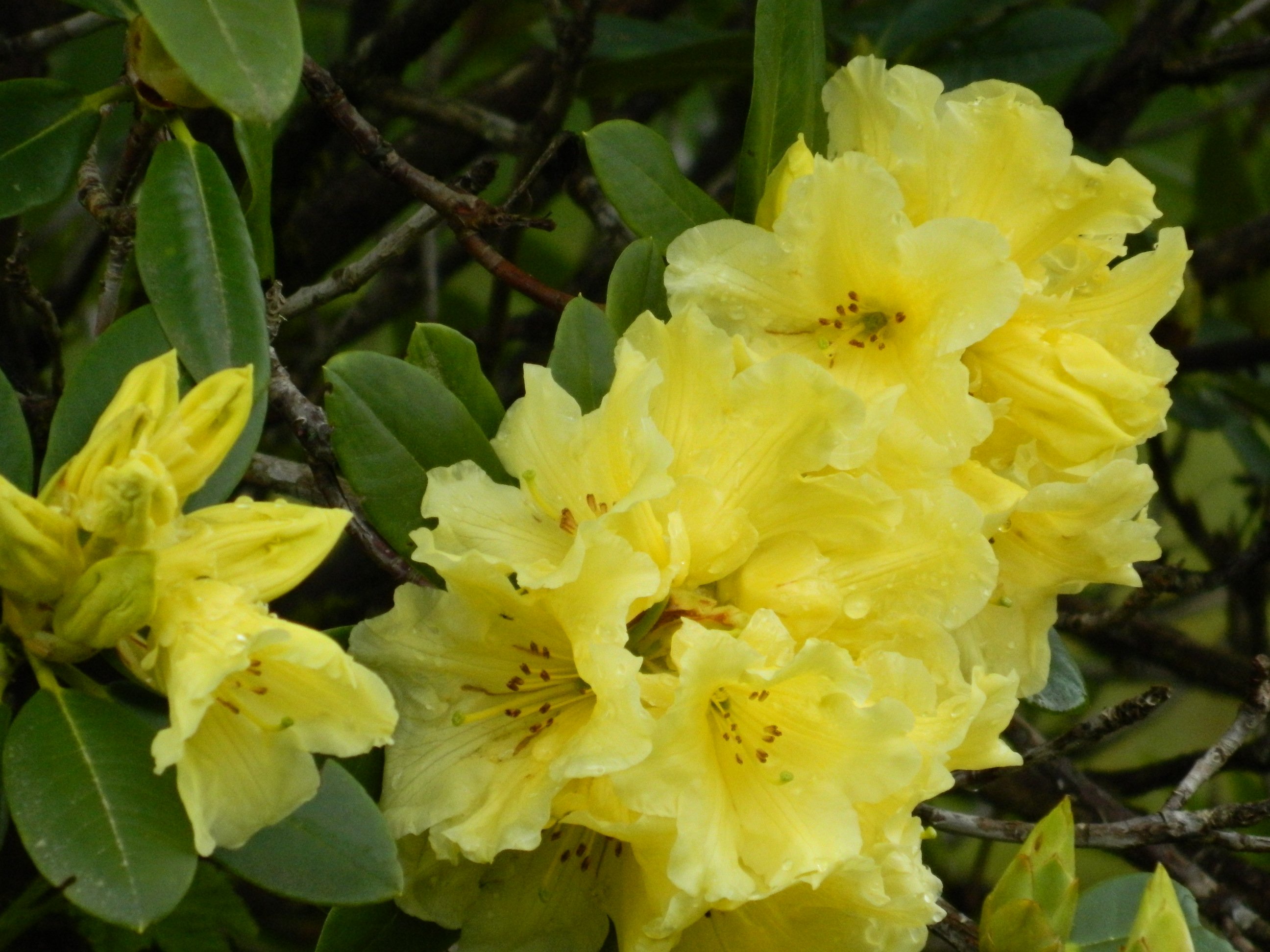
Yellow RhodieAs I wander around exploring kindness, I’ve been surprised to realize that quite often choosing to do nothing is the kind choice.  That probably flies in the face of any image we might have of the kindest people being ones in tights and a cape, with a big K emblazoned across their chest, leaving a trail of good deeds in their wake.

Over the last week, I’ve had occasion to witness a few episodes where feelings were hurt and tempers were raised as a result of emails that never should have been sent.  That’s one of the problems with email.  It’s just so damn easy to reply immediately—in the heat of the moment—before we’ve really thought through what the sender may have intended, how our reply might be interpreted—or misinterpreted—and what our ultimate goal for the communication is.

Do we want to be right (or righteous), or do we want to keep the peace?  Sometimes, we can’t do both.

I think there was probably a time in my life when being right (or, I admit it, righteous) may have felt more important than keeping the peace or being kind.  Being right doesn’t seem all that important anymore.  I’m reminded of a line from the classic film Harvey, where Elwood P. Dowd, played to perfection by Jimmy Stewart, says, “Years ago my mother used to say to me…. ‘In this world, Elwood, you must be oh so smart or oh so pleasant.’  Well, for years I was smart.  I recommend pleasant.”

This harks back to an earlier post about the power of the pause, and the importance of delaying long enough to decide if the action you’re anticipating will really get the results you want.  Sometimes, when we hit pause, we realize that we should make that pause permanent and simply do nothing, say nothing.

“Silence is sometimes the best answer,” the Dalai Lama wisely said.  It’s harder than it sounds, though—at least for me it can be—especially in verbal interactions.  A derisive comment or sarcastic reply may come to my lips quickly and be spoken before I realize how snarky it sounds.  I’m learning to bite my tongue, but it is not always easy.

Even if my words aren’t snarky, does what I’m saying help?  Maybe somebody in my office brings up an idea that they think is great, but there are ramifications that make it unworkable or unwise.  How I communicate that may mean the difference between their continuing to search for good ideas and their feeling deflated and put down.  Sometimes, the right thing to do or say may be nothing—to let them discover the flaw for themselves or even find a way to make the seemingly unworkable work.  Or maybe the best course is to talk through the issue in hopes that they see the unsoundness, or that I can point it out considerately.  Either way, the knee-jerk response (“No, that will never work”) is not the best choice.

I think back on the four questions Rotarians ask to decide whether and how to act or speak (mentioned in the earlier post on pausing):

  • Is it the truth?
  • Is it fair to all concerned?
  • Will it build goodwill and friendship?
  • Will it be beneficial to all concerned?

If the answer to any is no, don’t say it or do it.  Such good advice, it bears repeating!

Wise and Kind Parenting

I am not a parent, never have been, know nothing about parenting, and would surely have been a dreadful mother.  The closest I’ve come is raising a cat or three, each of whom assumed its rightful place as head of the household in very short order.

I have a few friends whom I consider to be extraordinarily good parents, and it seems that the wisdom to do nothing out of kindness is something great parents learn.  As kids grow, there are times when parents need to let them learn lessons—sometimes painful ones—on their own.  If mom or dad always steps in and clears the path or fixes the problem, the child will never learn independence.  I’m guessing (remember, only guessing, I only know cats) that it’s terribly difficult for a parent to do nothing when they know the lesson their child must learn is accompanied by pain or distress.  And to compound that, the kids—seeking rescue—rarely recognize that the parents’ choice to do nothing is exactly the right one.  But the parents know that the pain is temporary and the lesson will serve the kids for a lifetime.

And here’s the amazing part: these parents also know that there are other times when the exact right thing to do is step in and help solve the problem or avert the pain, and they do that.  How do they know the difference?  That discernment, that wisdom, fills me with awe.

There’s a reason I’ve only had cats.

I suppose, though, that the same wisdom parents have of when and when not to intervene is what good leaders and managers have with their team members.

It may be tempting at times to tell ourselves that we are choosing to do nothing out of kindness, when really our kindness is sorely needed and we are being lazy or apathetic.  Kindness requires both mindfulness and honesty.  If we pay attention, we will know what’s right, and we will respond accordingly….or not.  If kindness were always easy, there’d be a lot more of it….

“When given the choice between being right or being kind, choose kind.”  (R.J. Palacio)

When Fear Gets in the Way of Kindness

“Be not afraid.  A kind life, a life of spirit, is fundamentally a life of courage—the courage simply to bring what you have, to bring who you are.” (Wayne Muller)

Attrib: Donna CameronThere are many barriers to extending kindness, and fear may be one of the biggest.  Fear is also frequently the cause of people acting unkindly.  In an earlier post, I described an ah-ha I had when dealing with a disgruntled conference attendee a while back (does this mean that the other conference participants were “gruntled”?): much of her unpleasant behavior was the result of her fears in the face of a new and intimidating experience. When I see unkindness—my own or others—I can often trace it to fear: fear of judgment, fear of rejection, fear of not being enough, fear of being vulnerable, fear of looking foolish.  It’s true not just with unkindness, but also with that netherworld between kindness and unkindness—indifference. There’s an old proverb that “pride goeth before a fall.”  As with so many old proverbs, this one holds a ring of truth.  Fear and pride do often go hand-in-glove.  Most of the things we fear are threats to our pride, to the image we have of how good, strong, smart, capable, and lovable we are.  When these are shaken, we either strike out or strike back. Sometimes, if we are able to see someone’s unkindness toward us as an expression of their own fear, it is easier to forgive and respond to them with kindness, rather than retaliating and escalating the encounter. Just as fear can often be the impetus for our acting unkindly, it can just as easily be a barrier to our extending kindness.  Sometimes the thought of putting myself out there or taking the risk to do something kind can be enough to stifle the impulse. Two Key Questions I’ve often heard that when dealing with my fears I should ask, “What is the worst that could happen?”  Then, assuming “worst” is not a fiery death or a lengthy prison term, further evaluate whether I could handle “worst.”  In the case of extending a kindness, what’s the worst that could happen?

  • I might be embarrassed. I could deal with that—it won’t be the first time.
  • I might be rejected. I can get over that, I always have.
  • I might do it badly (whatever it is). Well, that’s how we learn—very few of us get it right the first time. But if we never try….
  • I might be judged as foolish or stupid, or weak. Well, so who does judgment reflect on, really? The judger, not me.
  • I might be put in a vulnerable position. Well, life is a pretty vulnerable condition, might as well accept that.

I think it’s a useful exercise to ask “what’s the worst that could happen?”  But I also think that’s only half the question.  The other half—the more important half—is “what’s the best that could happen?”  Let’s look at our potential action from that perspective: What’s the best that could happen if I extend a kindness?

  • I might help someone feel good or make it through a tough day.
  • I might grow closer to an old friend or make a new one.
  • My words or actions might be just what someone else needs to extend a kindness themselves.
  • I might be appreciated.
  • I might be judged as loving, compassionate, or wise.
  • I might become more confident in my own values and actions.
  • I might overcome a fear and be the better person that I want to be.
  • I might change the world.

This last one might sound a bit grand, but, truly, we have no idea where or how our kindnesses reverberate.  The small kindness I extend to one person might cause them to extend a kindness they might otherwise not have acted upon.  And then that person might … you get the picture. We’ve all heard the stories of someone suffering the depths of despair whose potential act of self-destruction was suspended by a seemingly small act—a kind note, or word, or gesture from someone.  What if we approached every encounter with a sense of the sacredness of our words and actions, and of the potential each of us carries to change the world for the better? I think looking at the best that could happen is a great way to overcome the fear that keeps us from being kind to others … and perhaps also to ourselves.  Also, if we’re focused on best, rather than worst, then our eyes are on the prize—we’re thinking about what we want to happen, not what we don’t want.  The world and our own unconscious inner resources will conspire to make it happen. It requires a change in our perspective and our paradigms.  It may not be easy, but it’s worth it.  After, all, what’s the worst that could happen … and what’s the best?

“Each smallest act of kindness reverberates across great distances and spans of time—affecting lives unknown to the one whose generous spirit was the source of this good echo, because kindness is passed on and grows each time it’s passed, until a simple courtesy becomes an act of selfless courage, years later and far away.” (Dean Koontz)