9 Barriers to Kindness

“I expect to pass through life but once. If, therefore, there be any kindness I can show, or any good thing I can do to any fellow being, let me do it now, and not defer or neglect it, as I shall not pass this way again.” (William Penn)
kindness highlightedWhen things get out of hand, we all have different ways of regaining control of our lives. When I am feeling overwhelmed, I organize.

I need to make a distinction between organizing and cleaning: I don’t clean, my husband will be the first to tell you that, so to prevent him from posting an unflattering—but entirely true—description of just what a slob I am, I will repeat: I do not clean, I rarely straighten, I tend to be entirely oblivious to clutter. I’m not proud of that fact, but sadly, it’s absolutely true.

However, when I am besieged by deadlines and overcome by the sheer volume of tasks and responsibilities facing me, I get busy organizing. Once I have organized my life, I feel like I am back in control and able to tackle all of my obligations steadily and timely—and even enjoy doing them.

My first step in organizing is to make a list, or, more accurately, multiple lists. I make lists of everything I need to do and then sub-lists of the various steps to doing them. I make lists of things I need to remember. I make chronological lists, shopping lists, task lists … and when things get truly overwhelming, I make a list of lists I need to make. That is the point I have reached this week.

It was in this list-making frenzy that I realized I haven’t made many lists related to kindness. Maybe I hadn’t yet reached the stress-level needed for that. Fortunately, the universe has conspired to remedy that, and kindness has joined the ranks of lists that I employ to organize and bring order to my life.

The first list I sat down to write enumerates the barriers to kindness—the things that get in the way of our being kind or compassionate. I’ve identified nine factors that might keep us from being our best self. They are in no particular order, but the first is probably the biggest:

Fear – I could write an entire post just about fear (oh, in fact I did), but to condense it here, there’s a smorgasbord of fears to choose from:

  • Fear of Rejection – the gift of our kindness might be misunderstood or spurned. Ouch!
  • Fear of Embarrassment – what if I extend kindness clumsily and look foolish? Ouch, again!
  • Fear of Judgment – people will say I’m weak or maybe gullible. More ouch.

Better to do nothing than to risk the vulnerability…or is it? Part of the solution to dealing with fear is to focus not on the bad things that might happen but on the good outcomes you are seeking to bring forth. That’s a sure way to banish fear.

Laziness and Inertia – While there are certainly kind actions we can take that don’t require a lot of energy (a smile, a compliment, a door held open), many kindnesses do require that we extend ourselves. They require that we get off our butts, go out of our way, and sometimes even leave our comfort zones. Usually it’s just a matter of taking the first step and then our intentions take over and kindness ensues. But the hurdle is that first step and overcoming the inertia to take it.

Indifference – The antithesis of kindness, indifference is a barrier to living a kind life. One cannot be kind if caring is absent; one cannot be kind if one is willing to shrug and say, “It’s not my problem.” Indifference may be how we protect ourselves from strong feelings, from the caring that moves us to action. It may be comfortable to wallow in indifference, but kindness requires that we stop being a spectator and jump into life.

Entitlement – Sadly, there are many people who see kindness—if they see it at all—as something that can be selective. It’s not as essential to show kindness to the clerk, the cashier, or the homeless person as it is to the VIP who can help one get ahead or feel powerful. There’s an adage that says “a person who is kind to you but rude to the waiter is not a kind person.” It’s so true; selective kindness isn’t kindness, it’s opportunism. Kindness is something we extend to everyone at every opportunity.

Obliviousness – It’s easy to miss opportunities to be kind if we aren’t paying attention to what’s going on around us. We may not notice that there is a person behind us for whom we can hold a door, or that someone needs help carrying their groceries, or that a child is frightened or sad. Too often, we allow technology to take precedence over human connection—we are constantly absorbed in our hand-held devices, oblivious to the life around us and the myriad opportunities we have to offer the gift of our kindness. We can even be oblivious to our own need for self-care—unaware that we have depleted our energy and need to engage in some personal renewal if we want to be able to care for others. Paying attention to our lives is easier said than done, but it’s one of the essential elements of a kind life.

Habit – If we are in the habit of saying no, it’s hard to say yes—to someone who asks for assistance, for our time, or for a dollar or two to help them make it through the day. Of course, we can’t say yes to everything or everyone, but whichever answer we choose should come out of conscious conviction, rather than robotic routine.

Not enough timeIt takes time to be kind—to pause and think about what the kind response is, to offer assistance knowing that it might delay us from our tightly-packed schedule, to connect on a human level with the people we encounter throughout the day. It even takes time to be kind to ourselves—an essential quality to being able to extend kindness to others. In the face of so much hurrying, it helps me to remind myself that my number-one job is kindness; all else comes second.

ImpatienceImpatience might be a subset of feeling one doesn’t have enough time, but it’s more than that. We may have all the time in the world and still be impatient with someone who lacks skill or understanding in something. It’s just easier to roll our eyes and do it ourselves than to extend the kindness—the patience—to teach, or coach, or watch while someone fumbles or stumbles. Offering genuine patience is always a kindness.

FatigueResearch has shown that when we’re over-tired we’re not only more prone to accidents, have difficulty learning, and feel stressed, but we are also more likely to commit unethical or unkind acts. As I’ve gotten older, I’ve come to value sleep more than ever—and knowing that it helps make me kinder just makes my bed even warmer and cozier.

Having made a list, I already feel better. No OCD tendencies here. Have I left anything out? When you miss an opportunity to be kind, can you ascribe it to any of the above, or are there other reasons?

“Constant kindness can accomplish much. As the sun makes ice melt, kindness causes misunderstanding, mistrust, and hostility to evaporate.” (Albert Schweitzer)
Third Quarter Report Card: Wherein Our Heroine Rambles Aimlessly in Hopes of Finding Something Sensible to Say…

“Everyone thinks of changing the world, but no one thinks of changing himself.” (Leo Tolstoy)

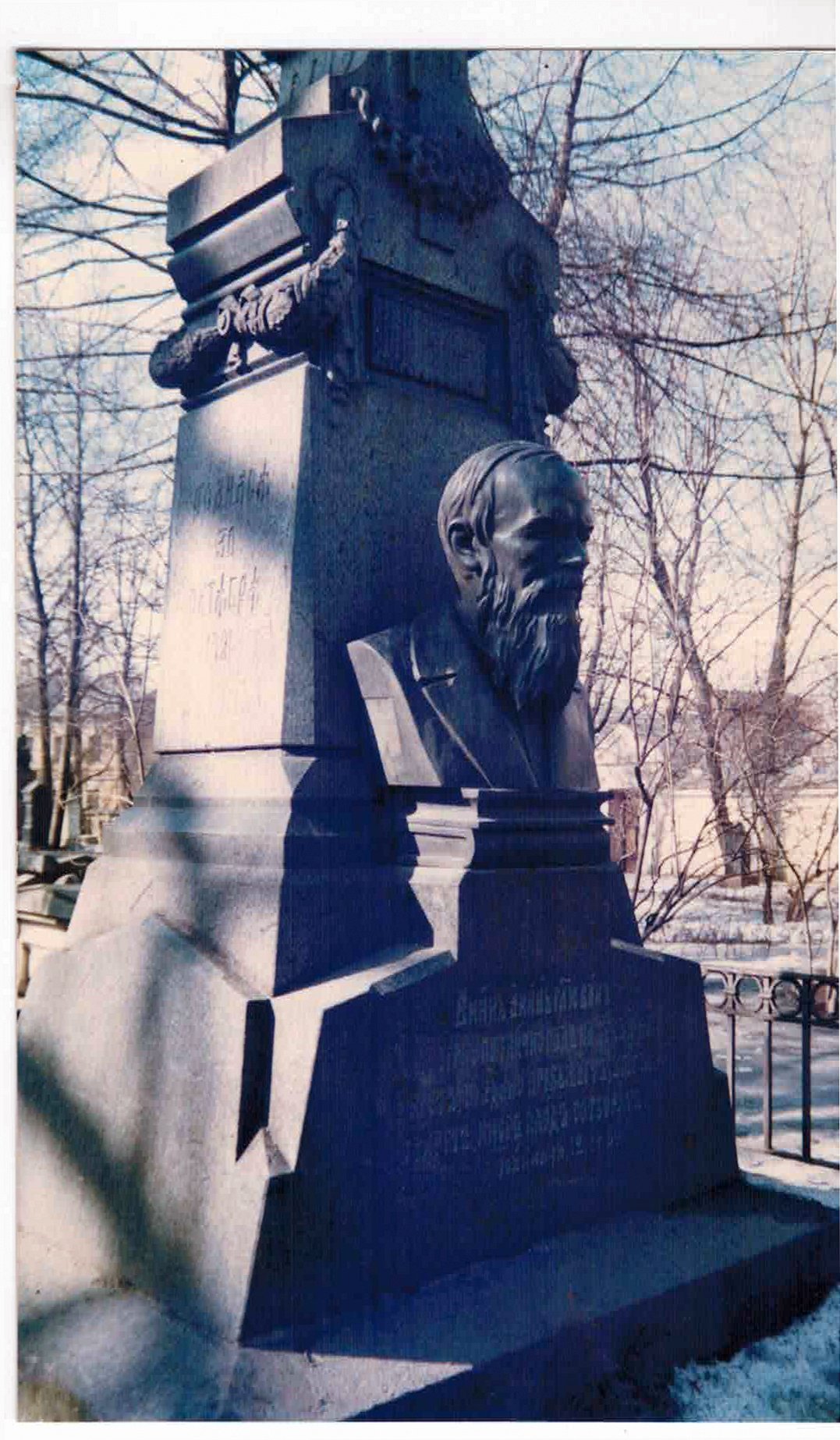
Dostoevsky's grave, Tikhvin Cemetery at Aleksander Nevsky Monastery, St. Petersburg, Russia

Dostoevsky’s grave, Tikhvin Cemetery at Aleksander Nevsky Monastery, St. Petersburg, Russia

Whose dumb idea was it for me to do a quarterly “report card” on my progress during this year of living kindly?

That must have been me.

A few people have pointed out—very kindly—that such an instrument may not be the best example of self-kindness, and that my observations about judgment being a barrier to kindness extend to judgment of myself, as well. Yeah, but where were they when I was coming up with this cockamamie idea?

Hence, in keeping with my commitment, and in an attempt to be reasonably kind to myself, I will hasten through the grading portion and then engage with my inner guidance counselor to start thinking about what I’m going to do when I “graduate.”

First the Grades…

Stretching for an analogy from my husband’s field of physics, there’s the theoretical and the applied. While not mutually exclusive, as I understand it (and I confess that I don’t understand it, though I have nodded sagely for decades as Bill explained things like quantum mechanics and string theory), theoretical physics focuses more on exploring concepts, assessing and predicting based on both discovery and conjecture. Applied physics is more about the real-world application of the science—its practical use to build, create, or prove something. I did not run this explanation by Bill before posting it—which would have been the intelligent thing to do—precisely because he would have clearly and carefully explained the distinctions between theoretical and applied physics, I would have nodded knowingly, and then would have proceeded to mangle it just as badly. I skipped the middle-man to achieve the same result. But I digress….

With kindness, too, there is the theoretical and the applied. Both are essential. Theoretical kindness is exploration of the ideas and concepts, linking of related principles (e.g., kindness and curiosity, kindness and vulnerability, kindness and abundance). Theoretical kindness may be identifying connections that hadn’t been evident before. I’ll give myself a B+ here, maybe even an A-. This favors my somewhat introspective and introverted nature.

Applied kindness is putting my thinking into action, vigorously engaging in kind deeds and going out of my way to extend kindness at every opportunity. While I have made some good efforts, I don’t think they’ve been sufficient. I’ll give myself a C+ here, B- if I’m being generous. While I can honestly say I have not been unkind (that I am aware of), I can also honestly say that I have not been kind enough.

What Happens Next?

In high-school, we met with our counselors about twice a year, more than that if we were struggling with classes or had behavior issues (which I wasn’t and hadn’t). My meetings with my counselor were pretty innocuous; she praised my grades, we talked about what classes I liked best and what electives I was choosing for the following year. In my junior year, she started asking me about college—where did I want to go, what did I want to study? She showed enormous restraint in not trying to talk me out of studying Russian literature and not asking me what (on earth!) I thought I was going to do with it.

I have never for a moment regretted my chosen field of study, or the later decision to add philosophy as a dual major … clearly not thinking about the already saturated ranks of college graduates in the job market who were conversant in both Tolstoy and Teleology.

The parallels between Russian literature and kindness may seem evident only to me, but, dear counselor, I assure you that they are there and I can trace the slightly circuitous steps from my first introduction to Dostoevsky at age 16 to the first blog I posted on kindness. You may have to trust me on this.

So, you ask, if this is where Russian lit led you, where is kindness going to lead you, and what are your intentions once this year of living kindly has concluded?

Good question, inner counselor. While I have no idea whether the blog will continue after December 31 (ideas and suggestions most gratefully welcomed), I know my commitment to kindness will continue. Kindness is not a destination, but a path. I may occasionally stray or be distracted by bright and shiny diversions, but the path is always there and kindness is always a choice. The Dalai Lama has said, “My religion is simple. My religion is kindness.” As someone who grew up with no religious training or affiliation, this is a religion I can embrace.

While kindness will surely—as it already has—lead to new people and places, and hopefully some new opportunities to serve, it will also be the lens through which I view the world and the filter through which I make choices.

Given my less than satisfactory grade in Applied Kindness, in the remaining three months of this year of living kindly—and beyond—I want to engage more actively in kindness, and extend myself more often and more directly.

I don’t, however, want to use this blog as a forum to say, “See what I did,” so YOLK may continue to be an exploration of ideas, observations, and perplexing digressions.

When I sat down to write this week’s post, knowing only that it was to be my quarterly report card, I had no idea where it would go. Eight hundred words later, I have strayed into theoretical and applied physics and revisited my passion for Russian literature. To anyone who has persevered to the end of this rambling post, I can only say: I am so sorry … and thank you.

“Learning to love is hard and we pay dearly for it. It takes hard work and a long apprenticeship, for it is not just for a moment that we must learn to love, but forever.” (Fyoder Dostoevsky)

Hit the Road, Jack

“Be kind whenever possible. It is always possible.” (Dalai Lama)

Attribution: Donna CameronMany years ago I was driving home in heavy afternoon commute traffic. As I approached my exit and switched on my turn signal to change lanes, the car next to me in the lane I wanted to move into sped up, preventing me from moving into the exit lane. I slowed down to let him get ahead and he slowed down. I slowed down some more and he slowed down some more. I looked over at him and he was looking over at me—and laughing. I sped up, and—you guessed it—he sped up. This went on for a bit longer. He continued to laugh as he continued to block my ability to change lanes. As I passed my exit, he waved, and for the first and only time in my life, I made a rude—but expressive—hand gesture.

I fumed as I drove to the next exit and made my way back to the highway to return in the other direction. What a jerk! Why’d he pick me? Where’s a cop when you need one? I also thought about the hand gesture I had made. I assumed it would make me feel better, but it didn’t. By saluting him as I had, I sank nearly to his level. He got the reaction he wanted, and I acted in a way I considered crude.

I’m not going to say he wasn’t a jerk. He was a colossal jerk. I imagine this was a trick he’d performed before, probably only with women driving alone … certainly not burly guys driving 4X4 trucks with gun racks. What kind of a person does that, and, for heaven’s sake, why? But just because he was a jerk, there’s no reason why I needed to be one. If, indeed, making a lewd gesture had made me feel better, then okay, go for it—no harm, no foul—but the act diminished me. It did, however, teach me something important: even under great provocation, that’s not who I want to be.

I’ve often wondered if I had the experience to do over—and I’d rather not, thank you, to any Seattle drivers who may be reading this and know what color Subaru I drive—what would I like my response to have been?

Perhaps if I had smiled and waved he might have had a momentary panic that he was perpetrating this nasty trick on an acquaintance, a friend, or—worse yet—one of his mother’s friends. That might have given him just enough of a pause that he would have stopped being a jerk long enough for me to change lanes. Maybe if I’d blown him a kiss….

Kindness is always a choice, as is unkindness. Every time we choose how we will respond in an emotion-charged situation, we choose what sort of a person we are going to be. And the more times we choose, the more we reinforce who we are. Eventually, maybe, we get to a point where we no longer need to choose—we know who we are and who we have become—and we act out of that now-innate knowledge. If I ever get to that point, I hope I will have chosen kindness at every opportunity. That, I think, is a life well-lived.

“A good character is the best tombstone.  Those who loved you and were helped by you will remember you when forget-me-nots have withered.  Carve your name on hearts, not on marble.” (Charles H. Spurgeon)

Kindness Requires Courage: Part 2 of an Interview with Sandra Ford Walston

“It is curious that physical courage should be so common in the world and moral courage so rare.” (Mark Twain)

Attribution: Donna Cameron

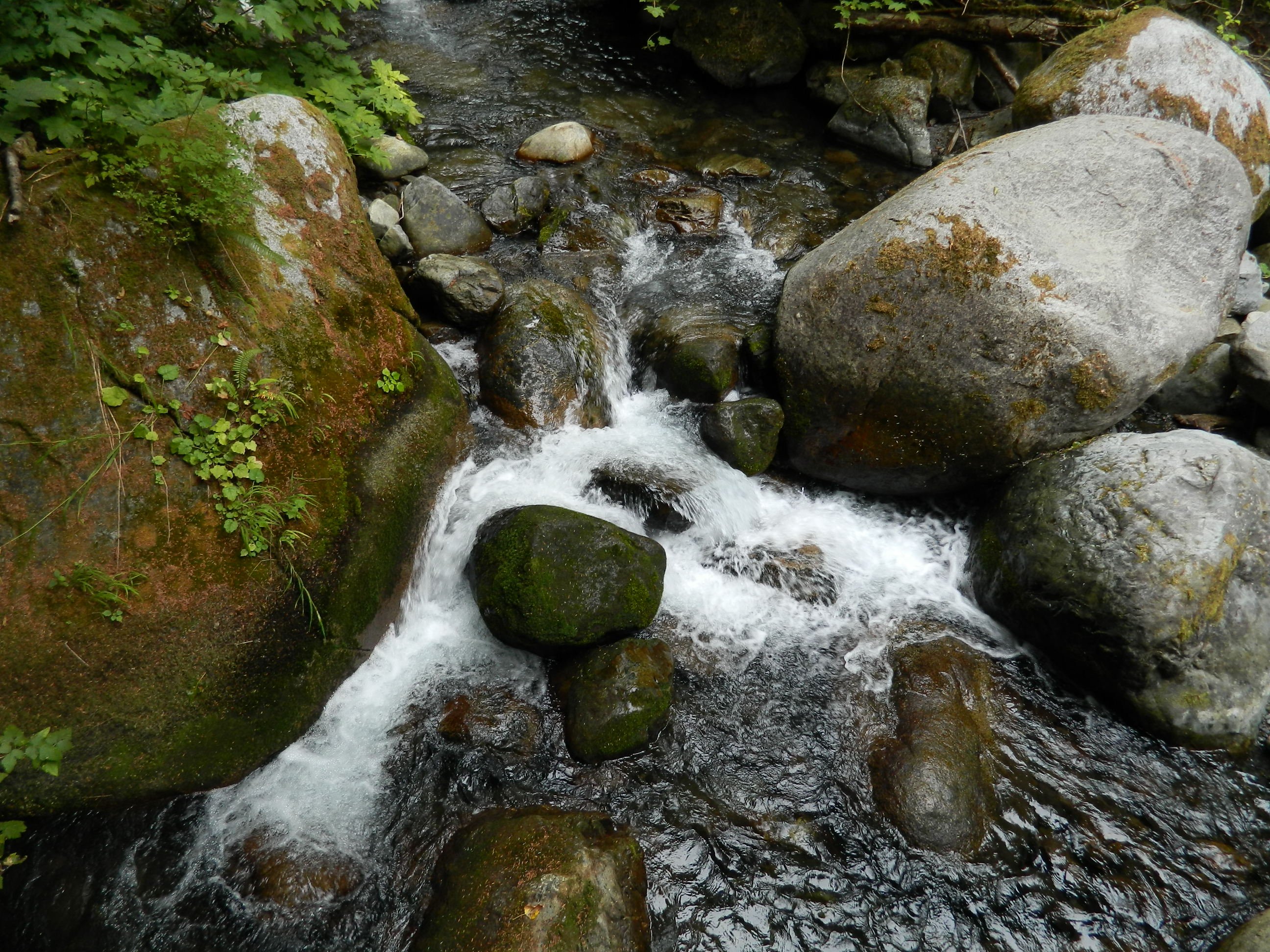
Wallace Falls, August 2015

Last week I posted Part 1 of my interview with Sandra Ford Walston, who is internationally known as The Courage Expert. Sandra is an author, speaker, human potential consultant, and courage coach. In this year of living kindly I’ve seen countless times that a life of kindness often requires courage. There are times when kind actions make us vulnerable, or when our kindness is rejected or even ridiculed. Sometimes kindness means standing up to a bully or acting contrary to what is expected of us. Sometimes it means speaking up, and sometimes remaining silent. Courage is required if we are to overcome all of those risks and extend the kindness that comes from our most authentic self.

If you missed last week’s introduction to Sandra Ford Walston and her work on courage, you can read it here. Now, we pick up where we left off…

YOLK: It’s clear from your work that it takes courage to live with intentionality every day, or to say or do something that may be counter to prevailing attitudes or behaviors. It takes courage to live authentically and be willing to put yourself out there. How can one claim their courage or perhaps reinforce it?

SFW: I don’t think you can ever have too much courage—and I don’t mean being foolhardy. I know when my reservoir is low. Most people will change when the pain of staying in the old pattern is greater than the pain of change. But, why go through so much suffering? There is choice: you can choose to build and draw from a reservoir of courage. This supports you to stand up for the self you know to be you. The choice is yours and it starts with whether you will choose to give yourself permission to claim your individual courage, and to be conscious about your spirit’s dignity and true essence. This is not found in Business 101! You know when you’ve stayed on a job far too long because it’s bleeding your heart, not feeding your spirit. When you choose to design new choices you limit the residual of regret. The more you exercise your courage, the more courage you will have.

YOLK: Could you talk a bit about vulnerability? I’ve seen that true kindness often requires us to reveal our most vulnerable self. You’ve expressed a similar connection between vulnerability and courage.

SFW: Self-awareness offers us opportunities for an honest assessment of our vulnerabilities. We discover that vulnerability comes in many forms, such as acknowledging our unhappiness, learning to move on through calamitous events, and learning not to deny or manipulate failures or mistakes. The more intense the circumstances, the more risky it seems to admit our vulnerabilities—especially in the context of work—but trying to manipulate these circumstances serves only the ego’s need to feel in control and generally backfires. Few people have the courage to reveal vulnerability, acknowledge it and overcome it.

Revealing vulnerability demonstrates maturity in the development of your true self and demonstrates great courage. It takes enormous courage to forego manipulation.

YOLK: What are some of the ways we can move through our vulnerability and claim our courage?

SFW: With self-awareness, we begin to notice our personal forms of manipulation—from bullying, to indifference, to passive aggressive behaviors. Facing a decisive moment provides an opportunity to reveal vulnerability. Do you confess your shortcomings and missteps? For example, if you lack knowledge about a topic, do you respond in a deceptive manner that keeps your ego intact? The honest response would be to reveal your vulnerability by admitting that you do not know the answer. Confessing is good for the spirit when done in a timely manner and with positive intent. The process helps us face the truth. We take responsibility for our lives and our actions.

Revealing vulnerability allows our best lights to shine. Where our ego mentality insists that vulnerability is a sign of weakness and must be hidden, the deeper truth is that revealing our vulnerability represents integrity and conveys our true identity. The alternative—hiding our mistakes and weaknesses and pretending to be what we are not—can only be accomplished through manipulation, which undermines our integrity, breeds distrust and stifles our true “heart and spirit” identity. As poet e.e. cummings wrote, “It takes courage to grow up and turn out to be who you really are.”

In summary, vulnerability supports self-realization, underscoring a human being’s essence—the true Self. Far from being a bad thing, vulnerability leads us to our most authentic self.

YOLK: I know you’ve interviewed hundreds of people over the years in your research about courage. Has kindness emerged for you as a courage issue?

SFW: Indirectly…. I often use a phrase that reveals a higher integral level of courage consciousness: “where courage meets grace.” I would say that this intersection of courage and grace requires an inbred kindness. I also detect kindness in courage advocacy, such as speaking up on someone’s behalf or, or saying kind words about someone to set the tone for receptivity. Kindness shows up when you’re “a word en-courager.” A word en-courager boosts people rather than busts people. If you think of a list of virtues such as compassion, grace, tolerance or humility, I feel they all fall under courage, since it means “heart and spirit” or coming from your true Self. Hence, if I am centered in my courage I will naturally display kindness.

YOLK: You’ve also written about the epidemic of incivility and discourtesy in modern society. About how the manners that were instilled in so many of us—by our parents and our teachers—seem to be disappearing. Why do you think that is, and do you see any role for courage in bringing back civility?

SFW: Courage and civility are essential to foster good citizenship. It often seems that common courtesy and simple manners have gone the way of one-speed bicycles and black-and-white TVs. Regaining those niceties could do a lot toward redefining the workplace environment as a place of willing and generous productivity. Those of us who were raised with manners have gotten lazy. In our laziness, we’ve raised a second generation of individuals who are simply and often sincerely ignorant of such values as respect for others, kindness, generosity, and common decency, such as holding the door open for the person following you. These are not dated, “old fogey” concepts. They take virtually no additional time or energy, and their returns are great.

Broadening this issue, we find ourselves at the heart of moral courage which I define as an attitude of willingness to choose differently in spite of personal hardship or prevailing attitudes. It requires a higher level of integrity than required for the easy alternative. Moral courage is like a compass. If we stay on-course, we will get to our desired destination. But if we are even one degree off-course, we will eventually find ourselves far from where we wanted to be.

YOLK: What would you say to someone who would like to increase their capacity for courage, or claim the courage that often gets stuck inside? Or to a parent who wants to help their child grow up confident in their courage?

SFW: Some of the things we’ve talked about already, such as being mindful and courage-centered, and allowing ourselves to be vulnerable. Make use of the Source Wheel; place it somewhere prominent where you can see it and be reminded of the energies and actions of courage.

I also encourage people to support their courage with some form of meditation. Meditation is the protective shelter from the ego’s storms. It helps us to become more centered and more able to recognize when and how to claim our courage.

To a parent I’d say start using the word courage with your kids. Talk about what courage means and let them talk about and claim their courage. We need to help our kids grow up comfortable in their courage and able to see it in others. My nine-year-old niece and I talk about courage. She was just telling me how it takes courage to speak up and to refuse to engage in saying unkind things about other girls. She’s going to be a courageous woman.

YOLK: Any last words for us?

SFW: In my coaching I often ask my clients two questions. I’ll pose them here:

  1. Are you willing to give yourself permission to claim your courage? This is something that only you can do for yourself.
  2. What action would you do right now if you had unlimited courage?

YOLK: Those are great questions, and ones we can ask ourselves over and over. Sandra Ford Walston, thank you so much for sharing your wisdom and your courage expertise with us. It’s been a pleasure talking with you.

“Life shrinks or expands in proportion to one’s courage.” (Anaïs Nin)

Kindness Requires Courage: An Interview with Sandra Ford Walston

“Courage is the first of human virtues because it makes the other virtues possible.” (Aristotle)

Attribution: Donna Cameron

Wallace Falls, August 2015

As I’ve been exploring kindness this year, I’ve been struck many times by the fact that it often takes courage to be kind. Extending kindness to others—and even to ourselves—risks judgment, rejection, or going against prevailing winds. Sometimes it means we make ourselves vulnerable or chance looking foolish. Courage is required if we are to overcome all of those risks. As Wayne Muller said, “A kind life…is fundamentally a life of courage.”

I know of no one more qualified to talk about courage than my friend and colleague Sandra Ford Walston. Sandra is a speaker and internationally known as The Courage Expert.  She’s the author of several books, including Courage: The Heart and Spirit of Every Woman/Reclaiming the Forgotten Virtue, The Courage Difference at Work: A Unique Success Guide for Women, and Face It! 12 Courageous Actions that Bring Success at Work and Beyond. Sandra is a human potential consultant, speaker, trainer, and courage coach.  She has graciously agreed to be interviewed and to share her wisdom about courage with A Year of Living Kindly.

YOLK: Sandra, the kind of courage you write and speak about isn’t the daring of jumping out of a plane, or running into a burning building, or even the bravery of facing a life-threatening illness. How would you describe the courage that you’ve researched, written and spoken about for so many years?

Sandra Ford Walston: Traditionally, courage is viewed as withstanding danger or facing fear under perilous circumstances. Such acts as running into a burning building, pushing a pedestrian out of the way of a speeding car, tackling a robber in flight, or a soldier throwing himself on a grenade to save his squad are readily accepted instances of courage. But split-second heroism and everyday courage are not one and the same. What I am suggesting is that everyday people like you and me display courage constantly and subtly. Courage is much more complex than spontaneous reactions to traumatic events. We “everyday people” can embrace our courage and pass it on to others. We do it by inviting the original definition of courage into our lives.

YOLK: What is that original definition?

SFW: Courage originates from the Old French corage, meaning “heart and spirit.” This takes us beyond the narrow definition of bravery in the face of danger to encompass mental or moral strength. When I apply this original definition to my life, I feel more empowered to be discerning and better able to respond to my inherent energy of courage. The word “virtue” in Latin is virs, meaning “energy.” Some people who have trouble claiming their courage might find it easier if they think of courage as energy—as their life energy.

Paradoxically, hiding my courage drains my energy. By paying attention, I know when my reservoir of courage is low or brimming over. My reservoir is full when I turn down a piece of business because it doesn’t feel like the right fit. I also know when I swallow my voice or sell my soul that my courage is low. When I constantly ask, “Am I being true to who I am?” I know I am applying the original definition to my life. I have the dignity to dare.

YOLK: What are some other examples of “everyday courage”?

SFW: Sometimes small acts require great courage. We see it in the workplace when one has the courage to ask for the long overdue raise, or take the risk to leave a job without another in place, or confront a workplace bully. Elsewhere in our lives, one may demonstrate courage when summoning the strength to get a divorce or end a relationship, or the conviction to get married or enter a relationship. For women, especially, learning to ask for what you want is often an act of courage.

YOLK: You write a lot about courage related to women and girls. How is courage different for males and females?

SFW: While I haven’t conducted research on courage gender differences, we know that gender colors behavior, perception and perspectives. I have researched and discovered that throughout history, women have generally acted from their hearts, thus male notions of courage as heroic actions tended to diminish recognition of feminine courage. Perhaps women have been unconscious to the truth that they have always been courageous. Discovering courage awakens an ancient feminine energy that every woman should utilize.

When women exhibit courage in the workplace, such as taking a stand, speaking up, or accepting a new role or a professional risk, they tap into that valuable personal reserve called courage. Courageous women step up to the next level. And they design their own professional path rather than letting outside influences dictate who they are or what they should be.

I encourage women to ask themselves, “Are you a profile in courage at work?” Most of us probably don’t think of ourselves in that way. Going back to that original definition of the word, courage is the awareness of the heart. The heart has an unlimited capacity to hold all that we are to be.

YOLK: I like that. It sounds like mindfulness is an essential element of courage, just as I believe it is of kindness. We need to continually be mindful and pay attention to our lives. It’s so easy to miss the opportunities to be courageous, as well as to recognize when we have acted courageously. I see it with kindness, too: it’s easy to miss opportunities to extend kindness if we walk around in a state of obliviousness.

SFW: Yes! We claim our courage when we come to understand and practice the art of being present. Present to our actions, present to our experience, and present to our emotions. As a result of learning to live wholly in the moment and having the courage to stop and reflect, we are able to process choices clearly and quickly, take action more readily, and stay centered in our own truth.

YOLK: I loved a line I read in a recent blog post of yours: “Courageous women recognize defining moments as they happen.” That certainly reinforces the need for mindfulness, but there’s more to it. What did you mean by that statement?

SFW: How often do we see a red flag but do nothing to change the situation it is warning us about? Sometimes we see 50 red flags before we finally act. Staying centered in our courage allows us to see these defining moments and respond to the first warning sign, rather than deny it or deceive ourselves. Another instance of recognizing and seizing a defining moment is a woman I spoke to just a few days ago. She told me that she had interviewed for a job and for the first time ever in such a situation she chose to affirm her strength and her self-esteem and she asked for everything she wanted from the potential employer. Not only did she get the job, she got everything she asked for. Women don’t do that often enough; we allow misplaced fears to hold us back. Fear is often the chatter of learned responses and it keeps us from speaking up or recognizing that something isn’t right. As we are more aware of that, we conquer it.

YOLK: You describe twelve behaviors of courage. Do you think that any of them are particularly essential for leading a kind life?

SFW: Through my research, I’ve identified twelve behaviors of courage, which are shown on the Source Wheel. People I coach and speak with often exhibit many of these behaviors and see a need to strengthen others. In different situations, we call on different energies of our courage for the strength to stand up for ourselves and remain true to our self. Any of these energies may be summoned to express kindness.

Courage Source Wheel

My conversation with Sandra was so rich—we could have talked all day! Rather than try to condense it, I’ve divided it in two parts. I’ll post part 2 next week. In the meantime, take some time to think about where courage shows up in your life … and perhaps where it doesn’t. Proudly claim the courage that is yours and yours alone. I invite you to use the comments section below if you’re willing to share a story of your courage.

“Everyday courage has few witnesses. It is no less noble because no drum beats and no crowds shout your name.” (Robert Louis Stevenson)