Raising Kind Children … by the books

“There are many little ways to enlarge your child’s world. Love of books is the best of all.” (Jacqueline Kennedy Onassis)

Attribution: Ness Kerton/ AusAID [CC BY 2.0 (http://creativecommons.org/ licenses/by/2.0)], via Wikimedia Commons

Attribution: Ness Kerton/ AusAID [CC BY 2.0 (http://creativecommons.org/
licenses/by/2.0)], via Wikimedia Commons

I recently came across a study that reported that kind children grow up to be the most successful adults. That’s encouraging news, but the big questions is: how do we raise kind children?

It seems to me that the most important factor is what behaviors their parents, and then other adults in their lives, model. If they see consistent kindness, they are likely to be consistently kind. If the people around them are unkind, how likely is it that they can overcome that example and become models of compassion themselves?

Another factor is surely the media they are exposed to, perhaps “bombarded by” is a more accurate description. What do they see on TV, what do they experience in online games, what do they read or have read to them?

I went on a hunt in our local library for children’s books about kindness, and I’ve spent the last week reading them every evening. So, with Friday marking the start of the holiday shopping season, I thought I’d share with you some fun kids’ books that have kindness as a theme.

One caveat: as I have mentioned before, I do not have kids, I have had virtually no contact with children in my life, and I have never entirely seen the point of them. That being said, I have high hopes that they will make a better world than we have.

When I think back on my childhood Christmases, the best gifts I got were books. One year, my parents gave me the entire set of Cherry Ames books. First in the series was Cherry Ames, Student Nurse, and there were dozens that followed (27 in all). Cherry was plucky, daring, quick-witted, and always embroiled in some mystery or adventure. The series included Cherry Ames, Flight Nurse…School Nurse…Camp Nurse…Cruise Nurse…even Department Store Nurse. I devoured them. Unlike Nancy Drew, Cherry seemed to have a brief shelf-life. Has anyone else ever read (or heard of) Cherry Ames?

Another year I got a box with the entire set of classic comic books—these were my first introduction to A Tale of Two Cities, Wuthering Heights, Ivanhoe, and countless others. One of the best things about getting books for Christmas was that I could spend the rest of the day reading, and then the rest of the Christmas vacation. It’s still my favorite thing to do on a holiday or vacation.

For Middle Grade Readers

Back to my recent bedtime reading: Most of the books I read were for little kids, but this first one would be for somewhat older kids—probably in the range of 8-12, maybe 3rd to 7th grade. Actually this book was so good, I would recommend it to any adult who wants to experience the joy of reading—and thinking—again.
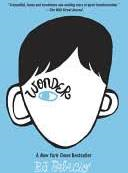
Wonder 2Wonder, by R.J. Palacio, is the story of August (Auggie) Pullman, who was born with severe facial disfigurement that prevented him from going to a regular school—until now. He’s about to start 5th grade, and not only is he the new kid, he’s the new kid who’s also a freak (his words). Wonder follows the challenges he faces as an ordinary kid whom no one else can see as ordinary, the effect on his family, and the responses to him of teachers, students, and their parents. Auggie is the primary narrator, but Palacio occasionally shifts perspective to other characters. She does it deftly and to great effect—this is a well-written book. Wonder is funny and warm—at times sad—and has a delightfully happy ending. This would be a great book for parents to read at the same time as their kids and have discussions around the dinner table. It would also be a great book for parents to read to think about how they would respond if Auggie were their child, or if Auggie became a classmate of their own child. It’s terrific!

Books for Little Kids

The remainder of the books I’m listing below are for much younger children. I guess you’d call them picture books. Not having any experience with kids, I’m not sure of the ideal age ranges—but I suppose if it’s a picture book, they’re going to be non-readers or at least pretty new to reading….what’s that, maybe 2-5 years old?

I will digress here to explain that age-appropriate reading was not part of my upbringing. My mother started passing her Harold Robbins, Henry Miller, and similarly adult books to me when I was about ten. I still remember the look of horror on my 6th grade teacher’s face when he asked me what I was going to write a book-report on. I told him I had just finished reading Peyton Place, and his eyes got very wide. I ended up writing the book-report on Jane Eyre. I think he gave me an “A” out of pure relief.

Zen TiesThis book was charming. In Zen Ties, Stillwater the Panda is visited by his haiku-speaking young nephew, Koo. Together with their human-children friends they enjoy summer activities and assist a “scary” elderly neighbor, who turns out to be a lovely new friend. I really liked the art in this book, and was totally captivated by the irrelevant but delightful inside cover art of pandas doing tai chi. It’s a fun story of kindness and friendship and our connections to one another. Author and Illustrator: John J. Muth

Paulie PastramiPaulie Pastrami Achieves World Peace would be an enjoyable book to read with a child. It’s silly. Paulie—something of a misfit nerd—wants to achieve world peace before he turns eight. He does it by engaging in simple acts of kindness, and eventually his father joins him and they achieve world peace together. Tolstoy it’s not, but it made me smile and would probably do the same for a little kid. It’s funny and cute, and likely to generate a good conversation about kindness. Author and Illustrator: James Proimos

Each KindnessEach Kindness was the winner of a Coretta Scott King Award and the Jane Addams Peace Award. This would be a thought-provoking book for little ones, and one that could resonate as they make their own decisions about friends and friendship. A new girl, Maya, has joined Chloe’s class, but no one wants to play with her. Chloe and her friends reject Maya’s attempts to join in, and they make fun of her strange ways and second-hand clothes. Later, when their teacher gives a lesson about kindness and asks each child to describe a kindness they have shown, Chloe is unable to think of anything. She realizes how unkind she has been to Maya, and decides she wants to be kind, but Maya has stopped coming to school and her family has moved away. The book ends with Chloe feeling regret for the opportunity she missed to be kind. This one should spark all sorts of good conversations about kindness, bullying, inclusion, and awareness of other people’s feelings. The illustrations are quite lovely. Author: Jacqueline Woodson; Illustrator: E.B. Lewis

Little BirdLittle Bird: I’m a sucker for birds. In this colorful book, a funny little man drives his truck up to a cliff’s edge and opens the back to let out a flock of diverse, strange, and beautiful birds. However, one small bird remains—afraid or unable to fly away. The man and the little bird bond. After sharing a sandwich, the man tries to teach the bird to fly—comically illustrated and with delightful results. It’s a story of friendship, caring, and mutual support. The blocky illustrations in primary colors were fun and kids would probably get some giggles, as well as a warm message. Author: Germano Zullo; Illustrator: Albertine

The Invisible BoyBrian is The Invisible Boy. As the shy and quiet boy in class, neither his classmates nor his teacher seem to ever notice him or include him in anything. When a new boy, Justin, comes to class, they befriend one another and things start to change for Brian. By the end, the two boys are accepted have made other friends, too. The illustrations in this one are engaging, especially Brian, who is drawn as small and only in blacks and greys early in the book, but as he becomes less invisible, he becomes larger and more colorful. Shy kids would find this book affirming. It also includes discussion questions that one could have with a child after reading the book together. Author: Trudy Ludwig; Illustrator: Patrice Barton
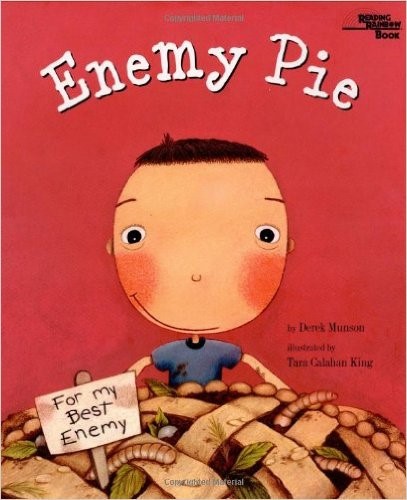
Enemy PieIn Enemy Pie, a new kid moves into town and “ruins” the summer for our unnamed hero/narrator. Dad offers to bake an “enemy pie”—guaranteed to get rid of the new boy. But there’s a catch, before enemy pie can work, our hero must spend one entire day with his enemy. So that’s what he sets out to do, and, of course, by the end of the day, the two boys are fast friends. It’s a sweet book, with endearing illustrations and a simple but important message about friendship and getting to know people before we judge them or shun them. It’s not Proust, but what 5-year-old wants Proust? Author: Derek Munson; Illustrator: Tara Calahan King
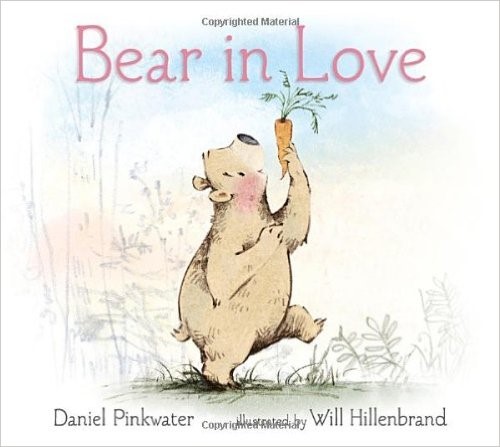
Bear In LoveSpeaking of not being Proust, Daniel Pinkwater’s Bear in Love is a cute story of a bear with a secret friend who is leaving delicious carrots and other treats for him every night. Unable to stay awake to identify the mystery creature, the bear leaves treats for it, and, of course, a friendship is formed between two very different animals. There’s no deep meaning here—just a sweet story of friendship, unexpected kindness, and sharing. You need to be outrageous and somewhat theatrical while reading this one out loud to a child. If you can do that, you—and the book—will probably be a hit. Author: Daniel Pinkwater; Illustrator: Will Hillenbrand

If any of these sound good to you, see if your local library has them (warning: they are likely to be a bit sticky), or take a chance and order from your local bookseller. Use them as an opportunity to have a conversation about kindness with the child in your life.

Are there books you’d recommend for helping kids or teens learn the importance of kindness?

If we’re ever going to have a kind world, it will be because we learned how to raise kind children. What better place to start than the books we give our children or grandchildren, or the books we read to them as we put them to bed?

Anybody know where I could rent a kid? 

“There are perhaps no days of our childhood we lived so fully as those we spent with a favorite book.” (Marcel Proust)

Oh, The Stories We Tell!

“The beginning of personal transformation is absurdly easy. We have only to pay attention to the flow of attention itself.” (Marilyn Ferguson) 

Attribution: Donna CameronWe learned in drivers’ training that everyone has a blind spot, or scotoma. Because of the way the eye is constructed, every human being has one. It is a location with no photoreceptor cells, where the retinal ganglion cell axons that compose the optic nerve exit the retina (the biology lesson ends here, I promise).

We may never be aware of our blind spots, though, because we’re really good at compensating—our brains are able to fill in the gap so the surrounding picture appears absolutely complete.

Beyond the physical level, we have blind spots on a psychological level, too, and our brains also attempt to explain the unknown data—with mixed results. We’ve all been there: when we lack information our brains make up stories to fill in the gaps—often the stories are both erroneous and damaging.

Perhaps two co-workers whom you often lunch with head out at noon without asking if you’d like to join them. Bewildered, you make up a story: You offended Carrie when you said you didn’t have time to check the figures on the budget she was working on, or you ticked Erika off by not stopping to chat when you came in this morning. They probably think you’re mad at them, and now they’re mad at you. They’re at lunch talking about you and saying nasty things about you.

By the time they return from lunch 30 minutes later, you’ve woven such a tale of perfidy that you’ve convinced yourself they no longer want to be your friend and nobody else in the office wants to be either. Why should they, after all, you’re a terrible, horrible, very bad person…?

When Carrie and Erika walk in, carrying fast-food take-out bags, you learn that Erika dropped her car off for servicing and Carrie followed to pick her up and drive her back to the office. As they’d feared, it took so long that they only had time to stop for some mediocre take-out, which they’ll now have to eat at their desks.

The story you constructed was entirely false—nobody was mad, nobody was offended, nobody was saying terrible things about you behind your back, and you are not a terrible, worthless person.

Sound ridiculous? Maybe it’s a bit of an exaggeration, but we do it all the time. We don’t know the reason someone acted the way they did and we make up a motive that has no basis in reality. It might suit our mood, or our current level of insecurity, or maybe our flair for the dramatic.

How many times has your spouse or significant other seemed a bit distant and you’ve attributed it to anger, lack of interest, or smoldering resentment because you failed to wash your lunch dishes? When the truth is that he is just trying to remember the name of his 8th grade math teacher—and it’s driving him crazy that he can’t.

Many, many years ago, I learned that the board of directors of an organization I served as executive director for held a board meeting without telling me. I stewed for 24 hours. Why would they meet without me? Did I do something terrible they needed to talk about without me present? Are they going to fire me? Finally, I picked up the phone and called the board president. I explained that association boards should never meet without the knowledge and presence of their executive director. It was my job to make sure they never violated any antitrust regulations or nonprofit laws. What, I asked, could possibly have motivated them to hold a meeting without me? There was a long pause at the other end of the line. A very long pause. Finally Doug said, “We do know that, Donna, and ordinarily we’d never meet without telling you, but our conference is coming up and we wanted to honor you for great job you are doing for us. We were talking about the best time to have a special ceremony and what we could buy you for a thank-you gift.”

I felt like bug spit.

Ever since that embarrassing moment, I’ve tried to imagine positive reasons for inexplicable actions rather than—or at least in addition to—negative ones. My positive stories are generally just as erroneous as my negative ones, but while I’m in that suspended limbo of not-knowing, why not enjoy my imaginings rather than agonize and fret over them?

Kindness Lessons

There are some great kindness lessons for us if we take time to think about how we feel and what we do when we have gaps in our knowledge:

Lesson #1: It’s not always about us … in fact, it’s usually not about us. Just because we’re the center of our own universe, it’s very unlikely we hold that exalted position in many other minds. I find this reminder immensely freeing: “Forget what everyone else thinks of you; chances are, they aren’t thinking about you at all.”

Lesson #2: Yield to the curiosity triggered by not-knowing. As we talked about in an earlier post, “Kindness and curiosity leave no room for anger and resentment.” Employ curiosity to seek kind and compassionate answers to gaps in our knowledge.

Lesson #3: We can assume one another’s good intent. Instead of attributing a silence or an ill-chosen word to malice or resentment, we can just as easily say to ourselves, “That didn’t come out the way she meant it to … I know her intention was positive.” Why wouldn’t we want to believe the best rather than the worst?

Lesson #4: We always have a choice about the stories we make up. Even if we are drama queens and kings, we can make up stories based on positive assumptions. All it takes is some awareness on our part.

Lesson #5: We can always choose peace. We have control over both our perceptions and our reactions. We can choose the path that leads us to peace. It takes practice, but it’s within our capabilities.

The stories we tell ourselves have power—power to change the world. When was the last time you made up a story to fill a gap in your knowledge? Was it a positive story or a negative one? What are you going to do next time?

“We do not actually know other people; we only know our judgments.” (Bryant McGill)

Choosing Our Cyber-Voices

“The true essence of humankind is kindness. There are other qualities which come from education or knowledge, but it is essential, if one wishes to be a genuine human being and impart satisfying meaning to one’s existence, to have a good heart.” (The Dalai Lama)

Troll dolls came originally from Denmark; inexplicably, they were one of the biggest toy fads of the 1960s in America.

Troll dolls came originally from Denmark; inexplicably, they were one of the biggest toy fads of the 1960s in America.

Over the summer, I wrote a few posts about bullying. I thought I was done with the subject, but one aspect of bullying I didn’t spend much time on is cyberbullying. The more I read and learn about bullying, the more I see how cyberbullying has taken bullying to new and insidious heights. I’ve been shocked to learn about the extent of it and the number of suicides and attempted suicides it has triggered—mostly in children and teens.

My friend Ann shared an excellent article with me from the Nov/Dec 2014 issue of Scientific American Mind. “Virtual Assault” describes the many ways people are bullied online or through social media, and the psychology of people who engage in such poisonous activities. It noted, interestingly, that “contrary to popular wisdom, bullies are not merely compensating for their own low self-esteem,” but often they are “perched at the top of the social hierarchy and demean others to cement their position.”

I also learned that people who engage in cyberbullying and attacking others on-line or through social media are referred to as “trolls.” It’s often up to the on-line community, says article author Elizabeth Svoboda, to establish norms and tell trolls in no uncertain terms that bullying is not acceptable. Svoboda also says one way to counter the damage of bullying is to step in and offer support to the victim. Silence isn’t golden.

The Damage Trolls Do

A front page article in the Seattle Times earlier this month addressed how Donald Trump is effectively using Twitter to outpace his Republican rivals for the presidential nomination. The article strayed from mere politics to describe how last year Trump devastated actress Kim Novak by posting a cruel tweet.

The reclusive actress—a glamorous movie star in the 1950s, now in her 80s—was convinced by friends to make a rare public appearance at the 2014 Academy Awards. As she was on stage making a presentation, Trump tweeted, “I’m having a real hard time watching. Kim should sue her plastic surgeon.”

Ms. Novak was devastated. She retreated to her Oregon home and didn’t leave for months, having fallen into a self-described “tailspin.” When she finally did comment, she called Trump a bully. Many other people expressed their disgust at his comment and he eventually backtracked. Later, he expressed regret for sending the tweet. He said, “That was done in fun, but sometimes you do things in fun and they turn out to be hurtful.” At the same time, he stood by equally unkind comments he has made about other celebrities.

It saddens me that so many Americans are supporting a person who believes sending so public and so cruel a message is “fun.” Just because you may have a “fun” thought doesn’t mean you should send it out to millions of people who, themselves, may forward it further. Words can hurt. Kindness counts.

YOLK Fights Temptation

I have to make a confession here: Ever since I learned that cyberbullies are called “trolls” and subsequently read about Trump’s cruel tweet regarding Kim Novak, I have mentally photo-shopped Donald Trump’s head onto a troll-doll, such as the one at the beginning of this post. Now, when I picture Mr. Trump that is the image I see.

I was oh, so tempted to actually photo-shop the picture that is in my head and post that on today’s blog. There’s no question that it would have been fun, and it would even convey a timely message about bullying, but it would not have been kind. I would be engaging in exactly what I am decrying. Although I am often willing to overstep political correctness for a cheap laugh, I knew I wouldn’t feel good about doing something like this. If I believe we have a responsibility to use the internet and social media for good, I can’t justify sending out an unkind image—however adorable it may be. I leave it to my readers’ imaginations.

Another Segue—But It’s All Still Connected

I recently watched a very interesting TED talk featuring Monica Lewinsky—yes, that Monica Lewinsky. Nearly 20 years after she was involved in one of the biggest scandals in modern American history, she is now an articulate and poised woman in her early 40s. She spoke movingly about her extremely high-profile humiliation in the late 1990s, about the aftermath that nearly drove her to suicide, about her decade-long silence, and her subsequent decision to take a vocal stand against cyberbullying. Many things struck me in her very candid and thought-provoking talk—I encourage you to listen for yourself—and one was extremely simple: our clicks matter.

We can change the unkindness being spread online and through social media by not clicking on it. Not clicking when we see a venomous, cruel, or provocative headline, not clicking when we encounter negative articles and message boards. It’s that simple: we manifest what we give our attention to, and if our attention is on the cruel and the crude, it will foster more of the same. Likewise, we can foster a positive and healthy cyberspace by choosing kindness, making kind comments, and taking the time to encourage rather than berate. With every click, we make a choice.

Trusting the Kindness of Others

When I started planning and setting up this blog nearly a year ago, I read a couple of books and a number of articles about blogging. I also talked to a few experienced bloggers. Out of the many pieces of excellent advice I got, there was one I chose to ignore.

Everyone said to set up the blog so I could moderate comments before they went public, or at least moderate the first comment someone makes, then, if I approve their comment, that individual is “pre-approved” for future comments. The other option was viewed as dangerous: to allow any comments to appear without an opportunity to weed out the crackpots.

WordPress is a great platform and it gives the novice blogger plenty of guidance and plenty of options. During set-up, I clicked the button that allows comments to appear without any moderation. It seemed to me if I was going to commit to kindness, I needed to trust that any readers who might visit the blog and take the time to comment would have good intent. I haven’t regretted it. I will also admit, though, that I did think that if anyone posted a rude or malicious message, it would give me an opportunity to test my kindness resolve—could I be gracious and compassionate if attacked online?

Without exception, the comments readers have made have been thoughtful, wise, and also kind. They’ve inspired me to think, sometimes to laugh, and always to feel grateful for the time commenters have taken to share their thoughts. If there are any crackpots out there, I haven’t encountered them (okay, maybe my husband, but being a crackpot is one of his most endearing qualities).

Through this blog and the WordPress community, I have met countless interesting, funny, wise, generous, smart bloggers. There is so much positivity in this community and I am better for the connections I have made here. That’s why I’m so surprised when I hear about the cruelty and malice some people engage in—usually anonymously. I don’t understand it; perhaps I never will. But if enough of us click mindfully, and choose kindness, perhaps the unkind voices will someday be stilled.

That will news worth tweeting….

“How would your life be different if…you stopped making negative judgmental assumptions about people you encounter? Let today be the day…you look for the good in everyone you meet and respect their journey.” (Steve Maraboli)

Strategies for Bringing Kindness into Your Life

“If the world seems cold to you, kindle fires to warm it.” (Lucy Larcom)

IonaNorthShore-RocksAs I was thinking about what to write this week, I stumbled upon an article that resonated deeply with me. Juliana Breines, PhD, a post-doctoral fellow at Brandeis University, wrote an article entitled “Three Strategies for Bringing More Kindness into Your Life” for U.C. Berkeley’s Greater Good Science Center.

She describes 10 core kindness practices, under three broad categories, that research shows will enhance kindness and generosity, leading to increased overall satisfaction with life. What’s not to like here?

Cultivating Feelings of Kindness

The first category of kindness practices deals with cultivating feelings of kindness. For each of the painless strategies enumerated, there are research studies showing their effectiveness in enhancing our desires to be kind and compassionate.

Feeling Connected Practice – This practice asks us to think about a time when we felt strongly connected to another person—perhaps by a shared experience or a profound conversation. Research has shown that this simple exercise increases concern for others and spurs intentions to perform generous acts. The explanation for this outcome, according to Breines, is, “feeling connected to others satisfies a fundamental psychological need to belong; when this need is unmet, people are more likely to focus on their own needs rather than caring for others.”

Feeling Supported Practice – Another simple practice, this one involves thinking about a time you were comforted or supported by others and the qualities and actions of those people who supported you. Research has shown that this practice increases our compassion and willingness to assist a person in need or in distress. In addition to instilling a feeling of “attachment security,” this practice reminds us of the qualities we want to exhibit in ourselves.

Take an Awe Walk – I love this one. An awe walk is a stroll to a place that makes us feel “connected to something greater than ourselves.” It might be the ocean, a forest, or whatever to us seems immense and “perspective-shifting.” For each of us, that awe walk may be a different destination—it might be a lengthy hike, or a few steps from our back door. What’s your awe walk?

Compassion Meditation Practice – This is often referred to as lovingkindness meditation. It’s a practice combining breathing with extending feelings of goodwill toward oneself, one’s loved ones, acquaintances and strangers, and even people we dislike. Breines cites research that just two weeks of compassion meditation result in more generous behaviors and even alteration in the part of our brains that govern compassion and emotional responses. You can find many guides to compassion meditation on-line, including the Greater Good in Action website.

Pause: Before we move to the next category of kindness practices, pause and think about doing some of the above. Schedule an awe walk or think about when you feel connected or supported. Look into the lovingkindness meditation practice.

Increasing the Happiness We Get from Kindness

This next set of strategies deals with ways to be more intentional about practicing kindness in our own lives—and turning kindness into a habit. If you want to increase the number of kind and generous acts you perform, try these proven practices:

Random Acts of Kindness – Such acts are usually simple, spontaneous actions, such as picking up the tab for a stranger’s coffee, putting money in the meter so someone doesn’t get a ticket, or donating blood. This practice suggests performing five random acts in a single day and then writing about the experience. If you’d like more ideas about random acts of kindness, Buzzfeed has a great list of 101 suggestions. Breines notes that performing random acts of kindness both lifts our spirits and increases our self-esteem.

Making Giving Feel Good – There’s a difference between giving because we feel pressured or obligated to do so and giving because we want to. The former may not feel good and may even lead to resentment. The latter does feel good and increases our personal satisfaction. To avoid the negative feelings, we need to make giving a choice—whether we are being asked to give or asking others to give—it must be okay to say no. An additional way to make giving feel good is to make a connection with the recipient of your kindness—don’t just hand a homeless person a couple of dollars and hurry on; take a moment to make eye-contact and exchange a few kind words—it’s easy and it will make you both feel good. Another is to learn about the impact of your generosity—if you give time or money to a cause, take time to learn about how people are positively impacted by your generosity.

Inspiring Kindness in Others

The next set of practices are ways to help others see the value of kindness and engage in kind actions.

Reminders of Connectedness – This is simply examining our surroundings and looking for ways to create reminders of the importance of kindness and connectedness. It might be pictures of people working together placed on the walls of a classroom, a letter of thanks from someone who was helped by our work on the bulletin board at our office, or an inspiring quotation at the top of a board meeting agenda. Look around your place of work for places to convey your team’s connectedness or your shared mission.

Putting a Face on Human Suffering – Sometime kindness requires a kick in the pants—to help us overcome that powerful inertia that keeps us from acting. Sharing pictures or stories of people in need often lights a fire of action and involvement—motivating people to help. Remember the pictures last month of the Syrian child who had drowned in his family’s harrowing sea journey to freedom? That photo motivated more people to action than all the faceless reports of data related to the humanitarian crisis. Similarly, we’ve seen many times that a photo of an abandoned dog or cat in a cage at the humane society spurs the adoption of stray animals far better than reports citing the statistics of homeless animals.

Shared Identity – This practice asks us to explore ways of forging a sense of our common humanity across group boundaries. Whether it is our common love for our children or mutual passion for a sport, we can overcome fear and mistrust by developing a sense of shared affinity. When we take time to think about it, we have so many more similarities than differences with the people who may seem alien to us.

Encouraging Kindness in Kids – If we can instill kindness at an early age, we can change the world. Strategies for nurturing children’s natural propensity toward kindness and generosity include avoiding external rewards for kind behavior so kids see that kindness is its own reward; praising kids’ character so they come to see themselves as kind; when criticism is called for, criticizing the child’s behavior, not their character; and modeling kindness ourselves.

As I review this list of strategies and behaviors that promote kindness, I’m struck by the fact that none of them are difficult, they simply require practice. Like anything we want to do well—from public speaking, to ping-pong, to piano playing—we get good at it by practicing. I can’t think of anything more worthwhile to practice than kindness. Can you?

“You must take personal responsibility. You cannot change the circumstances, the seasons or the wind, but you can change yourself. That is something you have charge of.” (Jim Rohn)

9 Barriers to Kindness

“I expect to pass through life but once. If, therefore, there be any kindness I can show, or any good thing I can do to any fellow being, let me do it now, and not defer or neglect it, as I shall not pass this way again.” (William Penn)

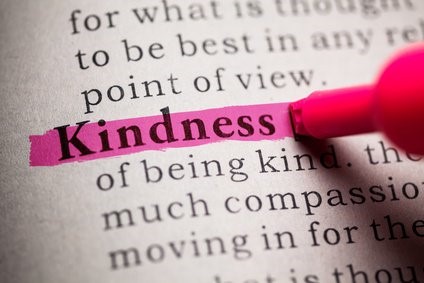
kindness highlightedWhen things get out of hand, we all have different ways of regaining control of our lives. When I am feeling overwhelmed, I organize.

I need to make a distinction between organizing and cleaning: I don’t clean, my husband will be the first to tell you that, so to prevent him from posting an unflattering—but entirely true—description of just what a slob I am, I will repeat: I do not clean, I rarely straighten, I tend to be entirely oblivious to clutter. I’m not proud of that fact, but sadly, it’s absolutely true.

However, when I am besieged by deadlines and overcome by the sheer volume of tasks and responsibilities facing me, I get busy organizing. Once I have organized my life, I feel like I am back in control and able to tackle all of my obligations steadily and timely—and even enjoy doing them.

My first step in organizing is to make a list, or, more accurately, multiple lists. I make lists of everything I need to do and then sub-lists of the various steps to doing them. I make lists of things I need to remember. I make chronological lists, shopping lists, task lists … and when things get truly overwhelming, I make a list of lists I need to make. That is the point I have reached this week.

It was in this list-making frenzy that I realized I haven’t made many lists related to kindness. Maybe I hadn’t yet reached the stress-level needed for that. Fortunately, the universe has conspired to remedy that, and kindness has joined the ranks of lists that I employ to organize and bring order to my life.

The first list I sat down to write enumerates the barriers to kindness—the things that get in the way of our being kind or compassionate. I’ve identified nine factors that might keep us from being our best self. They are in no particular order, but the first is probably the biggest:

Fear – I could write an entire post just about fear (oh, in fact I did), but to condense it here, there’s a smorgasbord of fears to choose from:

  • Fear of Rejection – the gift of our kindness might be misunderstood or spurned. Ouch!
  • Fear of Embarrassment – what if I extend kindness clumsily and look foolish? Ouch, again!
  • Fear of Judgment – people will say I’m weak or maybe gullible. More ouch.

Better to do nothing than to risk the vulnerability…or is it? Part of the solution to dealing with fear is to focus not on the bad things that might happen but on the good outcomes you are seeking to bring forth. That’s a sure way to banish fear.

Laziness and Inertia – While there are certainly kind actions we can take that don’t require a lot of energy (a smile, a compliment, a door held open), many kindnesses do require that we extend ourselves. They require that we get off our butts, go out of our way, and sometimes even leave our comfort zones. Usually it’s just a matter of taking the first step and then our intentions take over and kindness ensues. But the hurdle is that first step and overcoming the inertia to take it.

Indifference – The antithesis of kindness, indifference is a barrier to living a kind life. One cannot be kind if caring is absent; one cannot be kind if one is willing to shrug and say, “It’s not my problem.” Indifference may be how we protect ourselves from strong feelings, from the caring that moves us to action. It may be comfortable to wallow in indifference, but kindness requires that we stop being a spectator and jump into life.

Entitlement – Sadly, there are many people who see kindness—if they see it at all—as something that can be selective. It’s not as essential to show kindness to the clerk, the cashier, or the homeless person as it is to the VIP who can help one get ahead or feel powerful. There’s an adage that says “a person who is kind to you but rude to the waiter is not a kind person.” It’s so true; selective kindness isn’t kindness, it’s opportunism. Kindness is something we extend to everyone at every opportunity.

Obliviousness – It’s easy to miss opportunities to be kind if we aren’t paying attention to what’s going on around us. We may not notice that there is a person behind us for whom we can hold a door, or that someone needs help carrying their groceries, or that a child is frightened or sad. Too often, we allow technology to take precedence over human connection—we are constantly absorbed in our hand-held devices, oblivious to the life around us and the myriad opportunities we have to offer the gift of our kindness. We can even be oblivious to our own need for self-care—unaware that we have depleted our energy and need to engage in some personal renewal if we want to be able to care for others. Paying attention to our lives is easier said than done, but it’s one of the essential elements of a kind life.

Habit – If we are in the habit of saying no, it’s hard to say yes—to someone who asks for assistance, for our time, or for a dollar or two to help them make it through the day. Of course, we can’t say yes to everything or everyone, but whichever answer we choose should come out of conscious conviction, rather than robotic routine.

Not enough timeIt takes time to be kind—to pause and think about what the kind response is, to offer assistance knowing that it might delay us from our tightly-packed schedule, to connect on a human level with the people we encounter throughout the day. It even takes time to be kind to ourselves—an essential quality to being able to extend kindness to others. In the face of so much hurrying, it helps me to remind myself that my number-one job is kindness; all else comes second.

ImpatienceImpatience might be a subset of feeling one doesn’t have enough time, but it’s more than that. We may have all the time in the world and still be impatient with someone who lacks skill or understanding in something. It’s just easier to roll our eyes and do it ourselves than to extend the kindness—the patience—to teach, or coach, or watch while someone fumbles or stumbles. Offering genuine patience is always a kindness.

FatigueResearch has shown that when we’re over-tired we’re not only more prone to accidents, have difficulty learning, and feel stressed, but we are also more likely to commit unethical or unkind acts. As I’ve gotten older, I’ve come to value sleep more than ever—and knowing that it helps make me kinder just makes my bed even warmer and cozier.

Having made a list, I already feel better. No OCD tendencies here. Have I left anything out? When you miss an opportunity to be kind, can you ascribe it to any of the above, or are there other reasons?

“Constant kindness can accomplish much. As the sun makes ice melt, kindness causes misunderstanding, mistrust, and hostility to evaporate.” (Albert Schweitzer)