Unknown's avatar

About Donna Cameron

After many deeply-satisfying years in non-profit management, I’ve been spending my time exploring the good life that Rachel Remen describes as “pursuing unanswerable questions in good company.” I blog about the power of kindness, and my book, A YEAR OF LIVING KINDLY, will be published in September 2018. Always looking for ways to convey the power of stories in our lives, I believe that we can change the world through our stories . . . and through kindness. https://ayearoflivingkindly.com/

Looking Forward: Will Kindness Rally in 2017?

“If you ask me what I came to this world to do, I will tell you: I came to live out loud.” (Emile Zola)

Attribution: Donna CameronI try always to spend some time in contemplation at the end of each year. I’m not big on holiday celebrations, decorations, or entertaining, but I like to use that time to find my quiet center and think about the year that is coming to a close, as well as to set intentions for the year ahead.

I’ve probably said enough about 2016, the year of the bully, the year we saw the phrase “anything is possible” come to mean “welcome to the apocalypse.” I will only say that kindness took quite a hit. But it’s not down and it’s not out. That brings me to the new year.

As I look forward to 2017, I’m noticing a complexity to my intentions. It seems like it is not so much setting goals as managing polarities—trying to find the right balance between seemingly opposite, conflicting objectives.

Kindness vs. Confrontation:

I want to be kind. I also want to stand up to injustice and bigotry with all my strength and with my full voice. These two things need not be in conflict, but sometimes it is hard to be kind when face-to-face with deliberate incivility, prejudice, and disregard for the truth. I struggle with the challenge of remaining kind while also standing up to lies and bigotry. I remind myself to call out the behavior not the person, but there are people whose behaviors speak so loudly of who they are that it is hard to separate the two. And maybe sometimes we can’t…and shouldn’t. I will be ready. I will practice standing up to bigotry without expressing similar intolerance. I will think now about what I will say if I see someone being harassed because they are a minority, or a member of the LGBTQ community, or differently-abled—be it on a plane, in a store, or online. I will not be silent.

Isolation vs. Activism:

I want to withdraw into a place where the gloom is not so constant, where I can sometimes forget for a few hours that values like honesty, integrity, and equality have been kicked to the curb. I want to lick my wounds and take care of myself and the people I love. At the same time, more than ever I want to speak out, to march, to use whatever meager talents I have to stand for what I believe to be right. I recognize that self-care must be a priority if I am to be in this fight for the long-haul, and if I am to avoid becoming perpetually angry and a hardened cynic. As something of an introvert, I know that for me self-care means residing in quiet places where I can replenish my spirit and reconnect with my deepest values. When refueled, I can cluster with like-minded people, draw strength from them, and let them draw strength from me. I will not be silent.

Optimism vs. Pessimism:

I want to be an optimist; that is my default setting (while my husband has firmly claimed the opposite position). But I also know that mindless optimism is dangerous. I have to be realistic and cognizant to the fact that there are people in positions of power who are counting on the obliviousness and optimism of their foes. If I deny the damage they can do and simply trust that “all will be well,” their greed, bigotry, and deceit will grow and take a deeper hold. So, I’m going to try for what I’m calling optimistic realism: I anticipate that the year ahead is going to introduce us to rings of hell we never imagined, and I also recognize that those of us standing up to prejudice and the misuse of power will ultimately triumph over those destructive forces by our sheer numbers and our unwavering commitment. I will not be silent.

What Remains Sacred

Even with these apparent polarities to be managed, there are still some things that brook no compromise, that stand alone as values to be upheld—no matter what:

Truth is one such absolute. Sadly, the biggest casualty of 2016 was the truth. We have seen that there are people for whom the truth is only important when it serves their interests, and who will trample on it if it gets in their way. History has shown us what happens when people allow truth to be selective and manipulated. Truth may not always be pretty, and it may not be soothing, but we must face it and act accordingly. We must not be silent.

Integrity, like truth, is not conditional. We either act with integrity or we don’t. Most of us know the difference. Those who don’t need to be enlightened and if they still disregard integrity, they need to be removed from power. We must not be silent.

Justice and equality. These two go together. There is no justice if standards apply differently depending on the ethnicity, gender, or status of the individuals. There are no groups that are inherently superior, none that are intrinsically entitled. Having said that, there may be times when justice and equality dictate that we offer an advantage to make up for decades of disadvantage. Someone once said, “At the table of peace there will be bread and justice.” That table has no place for those who measure success by wealth and who equate affluence with power. We must not be silent.

Since launching this blog, I’ve started and ended each year with one particular quote from Neil Gaiman. This year, it’s still Neil Gaiman, but it’s a different quote:

Be kind to yourself in the year ahead. Remember to forgive yourself, and to forgive others. It’s too easy to be outraged these days, so much harder to change things, to reach out, to understand. Try to make your time matter: minutes and hours and days and weeks can blow away like dead leaves, with nothing to show but time you spent not quite ever doing things, or time you spent waiting to begin. Meet new people and talk to them. Make new things and show them to people who might enjoy them. Hug too much. Smile too much. And, when you can, love.

Peace and thanks to all of you, my friends. Sharing with you the joys, sadnesses, challenges, and disappointments of 2016 has strengthened me and fed my resolve. I feel blessed to be part of a warm and embracing community. My wish for you—for all of us—in the coming year is for health, happiness, laughter, strength, voice, community, and, of course, kindness.

The Surest Way to Have a Disappointing Holiday Season

snowflakeIf we want to experience joy this season, we need to stop keeping score in our relationships. I wrote and posted a message last January that seems especially relevant now, with the holidays upon us. Keeping score is the fastest way to assure disappointment and resentment. Click here to travel back in time and read the original post.


Don’t Underestimate the Power of Micro-Kindnesses

“Love doesn’t mean doing extraordinary or heroic things. It means knowing how to do ordinary things with tenderness.” (Jean Vanier)

attribution: Donna CameronDo you ever bypass opportunities to extend kindness because they’re just too puny? Just writing a quick note to express appreciation for a colleague’s wise advice, or just offering some leftover soup and store-bought bread to a neighbor—these things seem so small. Insignificant really. If I were really kind, I would send flowers to my colleague, or bake fresh bread for my neighbor. If I am to be a caring and compassionate person, I must express my kindness through grand gestures. Right?

Not so much.

While there’s nothing wrong with grand gestures, a kind life is composed of the myriad ordinary, day-to-day kindnesses that may seem small but accumulate like sand upon the shore.

While researching an article for a business publication, I came across the notion of TNTs, or “tiny noticeable things,” an idea promulgated by British speaker Adrian Webster. TNTs are those small and simple actions we take that brighten the lives of the people with whom we interact. A TNT is a smile, a word of appreciation, an offer of assistance, or the genuine interest we have for the people in our lives. None of these actions is grand or earth-moving, but cumulatively they change moods, change lives, and maybe even can change the world.

Along the same lines, MIT Professor Mary Rowe coined the term “micro-affirmations” when she was serving as the University’s ombudsman in the 1970s. Her job was to address bias against minorities, women, and people with disabilities in the MIT workplace. She described the importance of micro-affirmations, those “tiny acts of opening doors to opportunity, gestures of inclusion and caring, and graceful acts of listening. Micro-affirmations lie in the practice of generosity, in consistently giving credit to others—in providing comfort and support when others are in distress….”

She also identified what she termed “micro-inequities.” These are “apparently small events which are often ephemeral and hard-to-prove, events which are covert, often unintentional, frequently unrecognized by the perpetrator, which occur wherever people are perceived to be ‘different’.” Examples might include failing to introduce the participants at a meeting, being too busy to greet a colleague or welcome a guest, making an assumption about a person because of their race or gender, perhaps unintentionally making an insensitive comment. They have a cumulative corrosive effect.

While these terms were originally used to discuss workplace inequality and bias, I believe the concept applies equally to kindness. Let’s call them micro-kindnesses and micro-unkindnesses.

Think about the micro-unkindnesses we encounter daily. We often recognize them by the resigned sigh they evoke in us: a colleague’s scowl, the neighbor who fails to pick up his dog’s poop on your lawn, the long delay for which no explanation or apology is given.

Maybe we’re guilty of micro-unkindnesses ourselves, thinking it really doesn’t matter if we fail to greet our co-workers in the morning, or if we don’t acknowledge the driver who slowed so we could merge into her lane. Such trifling actions don’t really matter, do they? Oh, yes, they do!

Micro-kindnesses are often recognized by our spontaneous smile and accompanying warm feelings: a friendly greeting by the barista or bank teller, the colleague who steps in to help without being asked, the neighbor who shares the bounty from his vegetable garden.

While micro-kindnesses are often related to our interactions with others, they can also be things we do alone: picking up and disposing of trash when we take a walk, rolling the abandoned shopping cart from the parking lot back to the store, feeding a couple of quarters into an expired parking meter. Maybe they don’t feel like much, but imagine a world where such actions were standard operating procedure for most of us.

Like nearly everything that matters in life, micro-kindnesses will grow if we pay attention. If we allow ourselves to be awake and aware—and not completely absorbed by our devices or our tendency to wander into oblivion—we will notice all the little things that call to us: the child in the supermarket who wants us to notice the funny faces he is making (and make a face back at him), the person ahead of us whose hands are too full to open the door, even the small kindness we may need to give ourselves—a few moments of quiet, a walk around the block if we have been sitting too long at our desk.

A Kindness Challenge

With the holidays looming (some would say lurking), I’d like to propose a game for the coming week or two. Take one day to simply pay attention to how many micro-kindnesses you extend in a day. Notice, also, if you succumb to a few micro-unkindnesses. Keep a rough tally and let that number be your baseline. Then each day for the next week or longer, see if you can increase the number of micro-kindnesses and decrease the micro-unkindnesses. You’ll need to keep paying attention. As you notice places where your small acts of kindness are needed, do them. Try to keep track. If counting kindnesses seems just too compulsive and stresses you, don’t count, just pay attention. If it feels like you are doing more little kindnesses each day, then you are and good for you.

Ideally, you’ll like extending small kindnesses so much you’ll simply continue the practice, getting ever better at it. Pretty soon, kindness will become second-nature and you’ll be seeing opportunities—large and small—to extend your kindness everywhere.

Little things do mean a lot!

“On most days, the biggest thing you can do is a small act of kindness, decency or love.” (Cory Booker)

Revisiting Gratitude

“If the only prayer you ever say in your entire life is thank you, it will be enough.” (Meister Eckert)

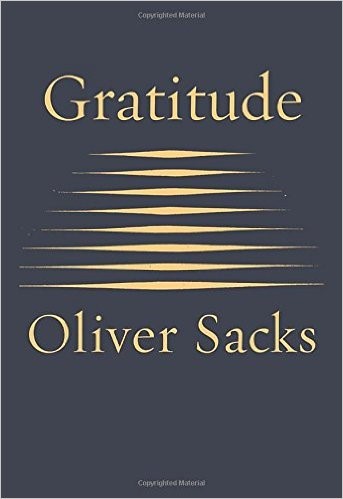
gratitude-book-coverStill very depressed by the election, and in anticipation of Thanksgiving, I dug out Oliver Sacks’ gorgeous little book, Gratitude. It’s composed of four lovely short essays, one written just before his 80th birthday and the other three following his terminal diagnosis a short time later. Each of them explores the richness and complexity of being human and convey Sacks’ gratitude for the privilege and gift of life. I thought I’d read one a day leading up to Thanksgiving, but just as I am unable to limit myself to one piece of See’s chocolate if I am given a box, I was not able to ration Sacks’ essays either. I read them all at one sitting—greedily and contentedly. And then I meandered through them again to savor his writing, which is both simple and elegant, and to revisit certain passages that had especially touched me.

Along with my wishes for a Happy Thanksgiving, I’ll share a few favorite Sacks’ quotes here, some from this book and some from other sources.

And, in case you’re looking for a gift for yourself or a special friend or family member—one that might help put the world in perspective—you can’t go wrong with Gratitude.

“I cannot pretend I am without fear. But my predominant feeling is one of gratitude. I have loved and been loved; I have been given much and I have given something in return; I have read and traveled and thought and written. I have had an intercourse with the world, the special intercourse of writers and readers. Above all, I have been a sentient being, a thinking animal, on this beautiful planet, and that in itself has been an enormous privilege and adventure.”

“Every act of perception, is to some degree an act of creation, and every act of memory is to some degree an act of imagination.”

“There will be no one like us when we are gone, but then there is no one like anyone else, ever. When people die, they cannot be replaced. They leave holes that cannot be filled, for it is the fate – the genetic and neural fate – of every human being to be a unique individual, to find his own path, to live his own life, to die his own death.”

“To live on a day-to-day basis is insufficient; we need to transcend, transport, escape; we need meaning, understanding, and explanation; we need to see overall patterns in our lives. We need hope, the sense of a future; the freedom to get beyond ourselves…in states of mind that allow us to rise above our immediate surroundings and see the beauty and value of the world we live in.”

“My religion is nature. That’s what arouses those feelings of wonder and mysticism and gratitude in me.”

Is It All a Crock?

“The times it’s most important to be kind are also when it’s hardest to be kind.” (Donna Cameron)

Attribution: Donna CameronI don’t want to write this blog post. I’m tired. I’m grumpy. I’m sick of the election and sick of talking or thinking about it. Like a petulant child, I demand a do-over.

Most times, I tend to be an annoyingly optimistic person, but it’s been hard to summon any of that buoyant nature. It’s just easier to snarl.

You’re probably tired, too, of passionate blog posts about the election and how the world is likely to disintegrate. A couple of my friends who follow this blog were Trump supporters. I rather suspect they are no longer following. That makes me sad. But it illustrates the polarization we saw on both sides throughout the election. Most of us (myself included) only wanted to hear or read what supported our own personal biases and beliefs. That’s probably why so many of us were stunned by the election results. The very wise Michelle at The Green Study, wrote an excellent post about becoming a more educated citizen by looking for new—and more objective—sources for news and information. I recommend it, as well as her many other thoughtful messages.

I’ve been delaying getting to the actual point of my post, which is:

What scares me most—even more than the election of someone I can never respect, whose values, words, and behaviors appall me—is the thought that maybe this is all a crock.

This kindness business. A crock.

A couple of days after the election my seriously depressed husband said something to the effect: “You’ve got it all wrong. Kindness doesn’t work. Hate won the election. Hate and lies and bigotry. Kindness can’t stand up to those things. People who claim to be moral were willing to overlook sexual offenses, lying, bullying, bigotry, and a petty, revenge mentality. Morality is clearly situational when self-interest is involved. Kindness doesn’t work.”

This kindness business. A crock?

Since the election, the news—which I am trying to avoid—has reported countless incidents of hate across the nation: Muslim women being harassed and having their hijabs torn off … gay and transgender people attacked … swastikas and “KKK” scrawled in public areas … and so many more. And these by the people who WON the election. The winning candidate purports to disavow these actions (“Please stop,” he says), but his whole campaign deliberately fostered this sort of hate and fear. It’s not something that can be turned off like a faucet.

But I digress again. I’m trying to avoid my central question: Is kindness a crock? Is my husband right that it doesn’t work and the election proves it?

My answer is shaky. It’s doleful. But also mostly determined. No, kindness isn’t a crock. Kindness does work. We may not be able to see it now, but it’s there, it’s powerful, and ultimately it will prevail. If it doesn’t, then the world becomes a dark and doomed place and I’m not willing to accept that.

The well’s a bit dry now, but it will continue to fill up—from below—from the depths where human goodness resides and always will. It will fill up as we hear more stories like: the good people of Tucson who replaced messages of hatred toward a mosque with ones of love … or the people who painted over the swastikas and hate messages … or those who stood up to the bullies who were harassing others for being unlike themselves.

Kindness has to counter the fear that is at the heart of hate and anger. And we must always remember that kindness is not weak (that’s what they’re counting on!). Kindness is a strength—a superpower—and it’s one that each of us has at our command. It’s going to take time and it will take an army—a kindness army.

Like any superpower, kindness is most effective when employed with other weapons of mass construction: activism, reason, political savvy, knowledge, strategy, determination, solidarity, and an unwillingness to back down or stay silent in the face of injustice, lies, or incivility.

As long as we believe in kindness and continue to act on our belief—even despite overwhelming evidence to the contrary—it will ultimately prevail.

To believe otherwise makes it just too hard to get up in the morning. What do you think? Is kindness a crock?

“If a person seems wicked, do not cast him away. Awaken him with your words, elevate him with your deeds, repay his injury with your kindness. Do not cast him away; cast away his wickedness.” (Lao Tzu)