Operating Instructions for a Kind Life

“Every once in a while take out your brain and stomp on it—it gets all caked up.” (Will Rogers)

seashellMy friend Kathi introduced me to the concept of a “hermit crab essay.” The term was coined by essayists Brenda Miller and Suzanne Paola and refers to writing that—like a hermit crab living in the shell of another creature—uses an entirely different form to convey the narrative. It might be a recipe, a police report, a to-do list, or countless other structures. Here’s an example of self-exploration in the form of a personality quiz, and another addressing romantic temptation in the form of a medical diagnosis.

I wanted to try my hand at hermit crabbing, so I have attempted to write operating instructions for living a kind life. Thanks for indulging me and thanks, Kathi, for introducing me to something new.

Operating Instructions for the Commitment to Kindness Kit™ 2.0

Thank you for investing in the 2016 Commitment to Kindness Kit™, version 2.0. These operating instructions should help you make the most of your investment. As you know, this is a particularly challenging year, with elections demonstrating the worst of human behaviors. Your interest in creating a kinder world places you with millions of other humans who are pledging to make kind choices, even as they witness contrary behaviors. These directions will help you become a kindness ambassador—modeling kindness and compassion wherever you are and changing the world for the better, one act of kindness at a time.

Materials Needed: Before we begin, let’s review the supplies and skills that you will need. First of all, you will need patience. This is not an overnight endeavor. You will also need courage, curiosity, and grace under pressure. A sense of humor will often come in handy, too. Manufacturer recommends a daily application of gratitude to assure optimum performance and possibly extend the life of the operator. Do not worry if you don’t always have these tools at the ready; they will come with practice, sometimes appearing when you least expect it.

Step One: Suspend judgment. When in situations where the behavior of others baffles or annoys you, switch on your ability to empathize and give the benefit of the doubt. Assume their good intent and look for a possible explanation for the behavior. Perhaps they are afraid or stressed. Maybe they are embarrassed. Could they be facing a challenge that you are unaware of? Assume that they are doing their best and not intentionally disrupting your life. If all else fails and you cannot excuse the behavior, imagine that they have been put in your path to teach you something you need to learn. What is it? Approach with curiosity and compassion. Note: Step one requires practice; nobody gets it right the first time. Remember that you are in good company.

Step Two: Start small. Unless you are a bona fide saint or holy person, you may have years of obliviousness to overcome. One good way to start is by frequently asking yourself these questions: What is the kind response here? and How can I make this person’s day? Sometimes a smile, a gracious word, eye-contact, or a door held open are all the kindness needed to ignite joy.

Step Three: Let go of fear. Fear blocks the path of kindness. Whether it’s fear of embarrassment, rejection, getting it wrong, or being vulnerable, take a deep breath and let it go. Replace fear with the courage borne of your best intentions. Think about the possibilities your kindness might manifest and proceed confidently.

Step Four: Pause frequently. Instead of acting instantly in response to external stimuli, pause and think about whether your reflexive response will improve or worsen the situation. Assess the actual need for the sarcastic comment or the clever put-down…or even the subtle eye rolls. Note: Remember that a pause is not a vacant space; it’s a choice point. Choose wisely.

Step Five: Pay attention. Kindness is all around, as are opportunities to extend kindness. Kindness requires presence and practice. It is recommended that you refer to these instructions frequently, until operation of your kindness mechanism becomes second nature.

Step Six: Remember to refuel. Sustained kindness is powered by self-care and ample rest. Kindness begins with each of us. If we can’t be kind to ourselves or don’t think we’re worthy of kindness, we can’t be consistently kind to others or to the world. Accordingly, get sufficient sleep. Being well-rested helps us make kind and ethical choices. Plus, we have the energy and reserves to deal with whatever comes up. Manufacturer cannot be responsible for actions taken when operator is running on empty.

Step Seven: Repeat as needed. Remember that kindness itself is not your destination, but it is the never-ending path you have chosen to follow. Occasionally you will stumble off the path. That’s normal, just try to stumble back on as soon as possible.

Warnings and Cautions: Users would be wise to remember that there are people who will denigrate or demean your kindness, mislabeling it as weak or inconsequential. Disregard to the degree possible. Occasionally, people will misinterpret your kindness, and may react to it in unexpected ways. Proceed with both caution and confidence. Ultimately, kindness is contagious; as others see you practice they may be inspired to do the same.

The manufacturer assumes no liability for results when product is used while operator is smug or sanctimonious. These behaviors generally reduce or eradicate effectiveness and may result in unexplained rejection, unwarranted suspicion, or warped interpretations. Should any of these occur, user is encouraged to apply fresh kindness liberally and await a different result. If instructions are consistently followed, operator will enjoy a lifetime of kindness and the associated pleasures it brings.

These instructions should assure thorough and long-term satisfaction in your 2016 Commitment to Kindness Kit™ 2.0. As further updates are made to this product, you will receive notification.

œ[Fellow bloggers: try writing a post or essay using a hermit crab format—a recipe, a letter, an obituary…whatever appeals to you. See if it brings you a fresh perspective. The possibilities are endless … and it’s a most enjoyable exercise.]

“Art doesn’t just happen by accident. It is about pulling out new tricks and trying new things.” (Nicholas Meyer)

 

What Comes Next? YOLK Welcomes 2016

“Do all the good you can. By all the means you can. In all the ways you can. In all the places you can. At all the times you can. To all the people you can. As long as you can.” (John Wesley) 

Attribution: Donna CameronOne of the big lessons of kindness I talked about last week was that kindness isn’t something that I can adopt for a single year and then move on. I’ve come to the conclusion that my #1 job is kindness. That’s what I’m here for. I may not be very good at it yet, but I want kindness to be my lifetime pursuit, and one about which I can say on my very last day, “Yes, I lived a kind life.”

So, no, dear husband, rest assured 2016 will not be “a year of living bitchy,” nor—to your great disappointment—will it be “a year of learning to dust and vacuum” (after all these years, it’s time to let that one go, Sweetie).

I want kindness to remain central to my life and I will continue to practice it and follow the path on which it leads me. I want to continue to write about kindness. I am one of those people who, like Joan Didion, write to find out what they are thinking.

So, I plan to keep the blog going, but I will certainly be less obsessive about posting every week at exactly the same time. I have truly enjoyed blogging, and the knowledge I’ve gained and the remarkable people I’ve connected with have exceeded any expectations I had a year ago. I will continue to write when I have something to say or share. I will also continue to compile the quotes and other resources that I’ve been collecting on the Resources page.

Since writing has always been a central passion in my life, I also plan to write about plenty of other things in 2016 and beyond.

A few people have very kindly asked me if I might turn these musings into a book, and that is something I would certainly love to do. I don’t know how to go about it…but I’m eager to learn. At this point I’ve written more than 62,000 words about kindness (can you say verbose?), so I hope there is something to work with here. I’d also like to speak about kindness and hope to make some opportunities to spread the word in an inspiring and enjoyable way.

The beginning of 2016 marks another big change in my life, as—after more than 30 years—I am stepping down from working day-to-day in association and non-profit management and opening myself to what comes next. I’m not calling it retirement—I still plan to consult with non-profits—but there are a boatload of other things I’m eager to try, as well. I may tell you about them here as I discover and explore what’s around the corner and waiting in the wings.

Even though I’m not going anywhere and I plan to continue blogging, I do want to take a moment to thank all of you who have been reading YOLK—whether you started with me way back in January of 2015 or you just came aboard this month. I can’t begin to tell you how I have appreciated your kind and thought-provoking comments and your encouragement. You often inspired me to think more critically or dive deeper into ideas. Some of you are my dear friends, and some have become friends—even though we’ve never actually ”met”—that’s one of many really cool things about blogging and the blogging community. Thank you all for your kindness.

For any of you who may have joined our kindness community later in the year, I invite you to read earlier posts. They are launched from this home page.

A closing thought about kindness for 2015: we always have the choice to interrupt the cycle of unkindness by letting it stop with us, and we have the choice to deliberately extend kindness wherever we can. Sometimes it’s hard, and we won’t always make the right choice. But if we do our best and keep our intention in front of us, we can—little-by-little—change the world. And that’s pretty awesome.

Finally, because I like symmetry, it feels most fitting to end this year of living kindly with the same Neil Gaiman quote I used to open the year. I hope you like it as much as I do, and I hope it will inspire you to make 2016 your year of living exactly the life you most want to live. My blessings and grateful thanks to you all. 

“I hope you will have a wonderful year, that you’ll dream dangerously and outrageously, that you’ll make something that didn’t exist before you made it, that you will be loved and that you will be liked, and that you will have people to love and to like in return. And, most importantly (because I think there should be more kindness and more wisdom in the world right now), that you will, when you need to be, be wise, and that you will always be kind.” (Neil Gaiman)

Gratitude: A Companion to Kindness

“If the only prayer you ever say in your entire life is thank you, it will be enough.” (Meister Eckert)

Attribution: Donna CameronThe American Thanksgiving holiday is just over a week away. It is an opportunity for us to pause and acknowledge all we have to be thankful for. Ideally, we should be doing this every day of our lives, but sometimes business and busyness crowd out gratitude.

Throughout this year of living kindly, I’ve noticed over and over that kindness and gratitude go hand-in-hand and also bolster one another. When I am in touch with my gratitude, kindness flows naturally and effortlessly. And if kindness feels hard to summon, taking a moment to appreciate my surroundings, my friends and loved ones, or little things that fill me with delight, inspires a surge of kindness.

I’ve come to see that there are many ways that kindness and gratitude together produce almost alchemical results:

Slowing Down

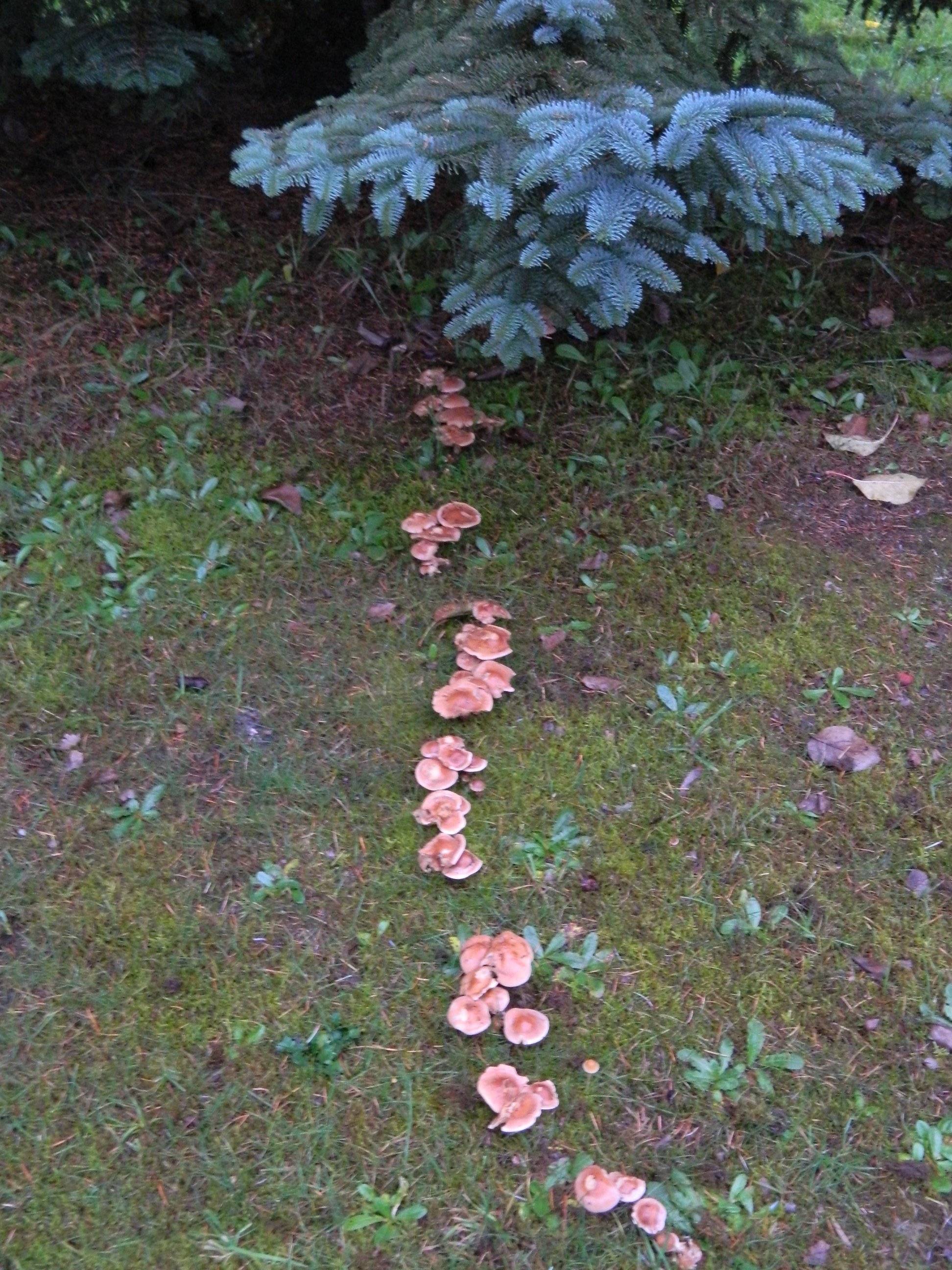
Both gratitude and kindness ask us to slow down. Slowing down isn’t always easy in our overscheduled and over-active lives. I often feel like I’m rushing from one deadline to the next, one obligation to the next, ruled by a lengthy to-do list. But slowing down is essential if we are to notice and appreciate the sunrise, the mushrooms growing at the base of a pine tree, the birds circling overhead like ice-skaters with wings. And slowing down is essential if we are to notice the smile on the cashier’s face, the door held open for us, or the myriad opportunities before us each day to extend our own kindnesses.

An Open Heart

When I experience gratitude, my heart feels open. It is an experience of abundance and sufficiency. This is all I need. It is also a feeling of presence—what happened five minutes ago doesn’t matter, and what will happen five minutes from now doesn’t matter. I am in the moment.

Likewise, the experience of kindness—whether given, received, or even just witnessed—opens my heart and allows me to feel fully present in the moment. For that brief moment, kindness is all that matters. It reminds me of one of my very favorite quotes, by Henry James: “Three things in human life are important. The first is to be kind; the second is to be kind; and the third is to be kind.”

Abundance, too, is a byproduct of kindness. If we believe we are enough, we can easily believe we have enough. Both of these beliefs help us to reserve judgment and extend kindness. And that sense of abundance, whether related to gratitude or kindness—or most likely, both—inspires us to be generous, with our time, our words, our deeds, and our resources.

Negative Emotions

I think it’s difficult to be angry or fearful when one experiences gratitude. I was surer of this last week that I am today, given the horrific events in Paris this past weekend. Those attacks surely brought fear and anger, not just to the people of France, but people all over the world. While there may also be gratitude that one’s family and friends were spared, can gratitude wipe out the fear and anger? I think not. But maybe there can be moments when gratitude at least overrides fear and lets us see that there is much to appreciate even amidst the horror of an attack such as this, or amidst the devastation of a natural disaster, or a personal catastrophe. Maybe it’s gratitude that helps us recover from the worst things that can befall us.

Kindness is also our answer to fear and anger. If we can recognize that our impulse to be unkind or say something unkind is a response to our fear or anger, we can often overcome it. If we can recognize that another person’s unkindness is their response to feeling fearful, we can often respond with kindness through that understanding. Fear often inhibits us from acting kindly—fear that our action will be misunderstood, fear that we will be rejected or embarrassed. Choosing kindness over fear is an act of courage.

Service to the Planet

When we are grateful for something, our instinct is to protect and defend it. If we stand in awe at the edge of the ocean, or if we marvel at the canopy of trees above us as we hike through the nearby hills, our natural desire is to shield them from harm, to assure that they will always be there for us and for future generations to appreciate. Our gratitude puts us in service to life—what could be more important?

Kindness, too, places us in service to life. It’s our acknowledgment that the ultimate kindness is to honor the Earth and our fellow inhabitants—human and otherwise. A healthy planet and sustainable practices is the kindest gift we can offer our planet and the generations that follow us.

Gratitude Practices

It’s lovely if gratitude comes to us frequently and effortlessly, but that is not always the case. Gratitude, like kindness, golf, or piano-playing, is strengthened with practice. The more we do it, the more we experience it and the better we get at expressing it. If you Google “gratitude practices” you will find countless suggestions, from daily meditation, to keeping a gratitude journal, to prayer. I confess that I haven’t yet established a consistent practice, but I try to spend a few moments each morning before I get up thinking about the things I have to be grateful for (the first is always that goofy guy sleeping beside me).

There’s another splendid gratitude practice that I love and practice sporadically. The wonderful physician and teacher Dr. Rachel Remen teaches this; she learned it from anthropologist Angeles Arrien. It takes very little time:

At the end of each day, sit down for a few minutes and answer these questions:

  • What surprised me today?
  • What moved or touched me today?
  • What inspired me today?

Your answers can just be a few words. What you’re trying to do is summon the memory of something that moved you.

As Dr. Remen describes: “The most interesting thing happens, then. Often people are surprised eight or nine hours after something happens when they look back on it deliberately. But [by doing this exercise] that gap shortens until eventually they are able to see in the very moment what surprises them, what touches them, and what inspires them. And then everything changes. The world has not changed, but they have begun to be able to see the world, and they can communicate that experience….It changes everything. It’s a question of paying attention.”

It’s true. At first this is difficult. You may come up blank day after day. “Nothing surprised me” or “Nothing inspired me.” But if you keep searching, you will think of something. Oh, yes, I was touched when I saw those children playing in the park. And just as Dr. Remen says, with practice you begin to notice things that touch or surprise or inspire you in the moment they happen. That creates an enduring state of gratitude—not to mention presence.

Another lovely gratitude practice: For the month of November, my fellow blogger and new friend, Dr. Catherine Cheng—whose wonderful blog, Healing Through Connection, explores (among other terrific things) fixing our healthcare system by improving communications and relationships between physicians and patients—has issued a post daily featuring something in her life that she’s grateful for. Some are things you might expect: her family, good health. Some have surprised and delighted me: Kung Fu Panda, actor George Takei, volleyball…. I look forward each day to seeing what Catherine has chosen to express gratitude for.

Catherine’s posts remind me to think about what I am grateful for—both the expected and the quirky. Whether or not we take the time to write them down, daily recognition of big and little things we have to be grateful for is a wonderful way to live in perpetual thanksgiving.

“Gratitude unlocks the fullness of life. It turns what we have into enough, and more. It turns denial into acceptance, chaos to order, confusion to clarity. It can turn a meal into a feast, a house into a home, a stranger into a friend.” (Melody Beattie)