Choosing to Be For or Against…

“Tell me what you pay attention to, and I will tell you who you are.” (Jose Ortega y Gasset)
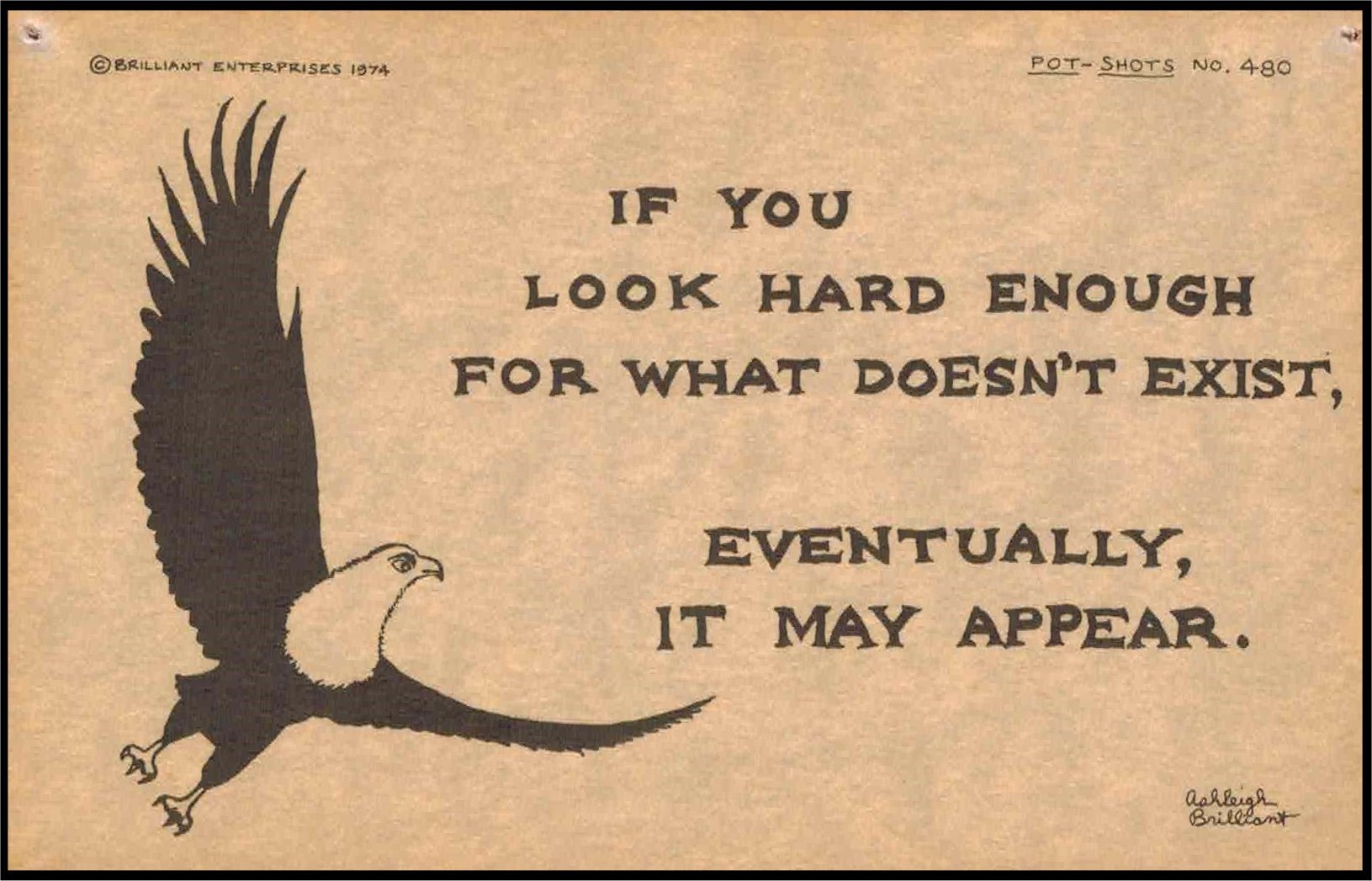
EagleThese days, when I read the newspaper or listen to the news, I find myself looking or listening for stories about kindness. I like to think that I’m developing a radar of sorts—an inner honing device that seeks and recognizes kindness. I’m a firm believer in the idea that we tend to see whatever it is we’re looking for. If we spend our days looking for what’s wrong, we will become skilled at finding what’s broken, insufficient, or flawed. And if we look for what’s good and right, that’s we will find.

For a couple of decades I’ve had pinned to my bulletin board an old Ashleigh Brilliant postcard that says, “If you look hard enough for what doesn’t exist, eventually it may appear.” A few years ago, a friend noticed it and asked me why that was on my wall, when all my other quotes and cartoons were so positive. I was baffled.

I told her, “But that is positive. It tells me to keep believing, even when I don’t yet see what I’m seeking. It’s all about the power of belief. How do you see it?”

Quite differently, it would seem. She told me, “If I think my husband is cheating on me and I look hard enough, I’ll find out it’s true.”

Well, I guess that is one way of looking at it. [Spoiler alert: the marriage didn’t last much longer.]

To a large degree, I think we do make our own reality. I’ve known people who have had more than their share of loss, illness, and misfortunes, yet they maintain a positive outlook and still manage to find something good in every mishap. They are a joy to be around.

I’ve also known people who see every loss and every misfortune as proof that the world is against them and life’s not fair. More of the same is pretty much all they expect of life, and that pervading gloom is what they convey to others. Spending time with such people can be draining—I’ve heard them referred to as energy vampires.

I’m not advocating being a Pollyanna. Perpetual and mindless cheerfulness can be as tiresome as the persistent pessimist. Each of us needs to be an activist in our own life. When we see unkindness, injustice or prejudice, we must speak out and stand up for what’s right. But if our radar is focused like a heat-seeking missile on finding mistakes and shortcomings, then life is probably pretty bleak. It’s the old glass-half-full or glass-half-empty conundrum.

Mother Teresa is reported to have said, “I was once asked why I don’t participate in anti-war demonstrations. I said that I will never do that, but as soon as you have a pro-peace rally, I’ll be there.”

I was reminded of that quote when I read Jerry Large’s column in The Seattle Times the other day. He wrote about a woman in the nearby town of Snohomish who was being removed as a volunteer leader in Young Life, a well-established Christian organization for high-school students. Pam Elliott’s “crime” was participating with other mothers in making decorations for the Seattle Pride Parade later this month, and posting the pictures on her Facebook page. She did it in support of a friend and the friend’s gay son, and because she believes in equality for everyone.

“Love is love,” Elliott said. “I am not a big activist, I’m supporting my friend. This is what we do for each other, we love each other’s kids like our own.”

The Young Life people gave her a choice. Ms. Elliott can continue her work as a volunteer leader—work which she loves—if she retracts her Facebook posting and stops aligning herself with the gay rights movement. The choice she made was to continue to support her friend and her friend’s son … and what she knows to be right. I’m not comparing Pam Elliott with Mother Teresa, but, like Mother Teresa, Ms. Elliott chose to stand for something, rather than against something else.

The more we choose positive over negative, good over bad, kindness over apathy or unkindness, the closer we all move toward manifesting the world we want to live in, and want future generations to know without question.

That’s what I look for when I read the news…

“What we choose to love is very important for what we love leads our eyes, ears, and hearts on a pilgrimage that shapes the texture of our lives.” (Wayne Muller)

Kindness and Vulnerability

“A gift is like a seed; it is not an impressive thing. It is what can grow from the seed that is impressive. If we wait until our seed becomes a tree before we offer it, we will wait and wait, and the seed will die from lack of planting…. The miracle is not just the gift; the miracle is in the offering, for if we do not offer, who will?” (Wayne Muller)

Attribution: Donna CameronPeriodically, the universe sends me a message. It’s not some disembodied James Earl Jones voice, or a bolt of lightning that rattles my foundation; more often than not, it’s a barely perceptible tap on my shoulder that says, “Pay attention here.”

I was at a conference last week where I happened to overhear two people talking about vulnerability and about Brené Brown’s TED talk on the subject. Then, last night, I was reading an article in a writer’s magazine that spoke of the writer’s need to be vulnerable, and also referred to Brené Brown’s TED talk. I felt that tap on my shoulder and heard that inner whisper, “Pay attention.”

The wonderful and sometimes dreadful thing about modern life is that we can easily and instantly access almost anything. Within seconds and a few keystrokes on Google, I was watching Dr. Brown’s 2010 talk, “The Power of Vulnerability.”

Wow! If you haven’t seen it, it’s worth your time, I promise you. This delightful and insightful talk explored a trait that whole-hearted people share: vulnerability. It described the willingness we must have to “allow ourselves to be seen,” with all our imperfections, in order to fully embrace our lives.

I can’t do justice to her words. You want to hear them first-hand. Really.

Whether we’re committing to love, or art, or business, or kindness, we must have the courage to do it whole-heartedly, with full awareness that there will always be those who find us lacking. In a way, knowing that frees us—if we can just embrace our vulnerability—for if we stop trying to please everyone, we can focus on being who we were meant to be. And isn’t that all life is asking of us?

Of course, this talk about vulnerability got me to thinking about kindness, and the connection between kindness and vulnerability. I’ve talked before about the difference between being kind and being nice. I don’t think “nice” requires us to be vulnerable. I can be nice without risk, and without exposing too much of myself. I can be nice without making a connection, or without really caring whether or not you benefit from the encounter. Nice, while often pleasant, doesn’t require sincerity or commitment.

To me, “kind” is very different. Kind means connecting; it means being conscious and intentional about the impact my words or actions may have; it means expending energy and effort and caring about the outcome. It also means suspending judgments and accepting people as they are. Kind can be messy and may take me to places where I am awkward, clumsy, and tongue-tied. Kindness requires me to take a risk. Kindness requires me to be vulnerable.

Since starting this year of living kindly, I have tried to make a conscious effort to do things kindly that I once may have done nicely. Outwardly, there’s probably not a lot of difference. In the past, if I chose to give a dollar or two to someone who asked me for money, I would do so quickly, and hurry on, sometimes wondering if the person was really in need, or if they were just lazy and saw me as an easy mark. Now, I try to pause and exchange a few words, make eye-contact, and wish them well. In most cases—though not all—I feel a connection between me and the person I am engaged with. For a brief time, we are both vulnerable, and it feels good. I don’t worry about whether their need is genuine or whether I am being a schmuck; I just hope in some way I am helping.

There is even a vulnerability to writing about kindness and to inviting people to read my periodic musings. Am I saying too much about myself? Too little? Am I pontificating (God, I hope not!)? Has it all been said before and said better? Am I missing the point entirely?

If I allow myself to be vulnerable, the answer is it doesn’t matter. As Brené Brown eloquently explains, connection is why we’re all here, sharing this planet, and it’s what gives meaning and purpose to our lives. To make that deep connection, we have to allow ourselves to be seen. That means having the courage to be imperfect, to expose our flaws, and the willingness to be vulnerable.

Living our most authentic life, whatever that means to each of us—for me it’s choosing kindness—requires that we let go of our shield and lower our guard, and that we embrace our flaws and our vulnerability. It’s scary, but, oh, the rewards of living an authentic life are beyond measure!

“Love doesn’t mean doing extraordinary or heroic things. It means knowing how to do ordinary things with tenderness.” (Jean Vanier)

[Before I close, I want to encourage you to watch Brené Brown’s TED talk. I promise it’s worth 20 minutes of your life—maybe it’s even a message from the universe to you.]

On the Receiving End of Kindness…

“One who knows how to show and to accept kindness will be a friend better than any possession.”  (Sophocles)

[As I wrote this post, I had the distinct impression that this might be a gender-specific issue.  So to any men who happen to read it, take what you will, and perhaps there will be something that you can relate to.  Accept that you are wise, and handsome, and remarkably accomplished….]

Attribution: Donna CameronEven if we don’t have the resources to give all that we would like to give, we always have the capacity to receive graciously.  It sounds so simple, but it can be surprisingly hard.  Think of the times someone tried to give you something and you demurred—perhaps because you didn’t think they could afford it, or you didn’t feel worthy, or it was simply your initial reaction to an awkward situation.  Maybe the gift wasn’t something you wanted; perhaps you didn’t want to feel indebted.  Or maybe you are among the cynical who wonder what’s the catch?

Did your refusal of their offer please them, or did it disappoint?  In retrospect, would a gracious thank-you have made both of you happier and immensely more comfortable?

Giving is such a pleasurable act.  Yet we often deny our friends and acquaintances—and even strangers—the joy and satisfaction of giving by being such terrible receivers.

And the gift doesn’t have to be something material.  How often do we devalue the gift of another’s words by refusing their compliments?  We deflect kind words about our appearance by saying, “No, I look terrible!  My hair needs cutting and I need to lose ten pounds, and look, I’ve lost a button on this shirt.”  Do you really think they complimented us just to hear us point out all our flaws?  I seriously doubt it.

How much better to respond with, “How nice of you to say so,” or “Thanks for your kind words, they make me feel great!”

In his book, Imperfect Alternatives, Dr. Dale Turner quotes a friend who chided him for brushing off a compliment: “When someone gives you a compliment in words, don’t disagree or minimize what he says, for words are gifts, too.  Accept them gratefully, even though you don’t think you deserve them….. A compliment is a gift not to be thrown away carelessly unless you want to hurt the giver.”

We also reject compliments on our achievements by down-playing them.  We say, “No, it really wasn’t anything special. Anybody could have done it.  I was lucky.” It’s as if we are saying, No, you dolt. Can’t you see I’m really an incompetent nincompoop?  It’s always great to share credit—that’s another form of kindness (not to mention decency)—but minimizing the overall accomplishment serves no one.

How much better to say, “Thank you, I’m really pleased with the result, too,” or “Yes! Don’t we have a fabulous team!?”

As I pose the question of why accepting compliments is something most of us aren’t very good at, I realize this is a much larger issue for women than for men. When was the last time you complimented a man on his new suit and he responded by saying that it makes his butt look big?  Doesn’t happen.

Most of the men I interact with know how to accept compliments about their work.  Hell, they expect kudos … and good for them for having those expectations.

A lot of women were raised with the direct or indirect instruction to hide their light under a bushel.  Our mothers told us to be modest.  Our teachers encouraged humility and restraint.  Somebody else kept mumbling that the meek will inherit the earth.

Let’s Reframe Our Response to Compliments

Perhaps if we reframe our response to gifts and compliments we can learn to receive them.  Instead of questioning whether we deserve them, or fearing that we will appear conceited, or that we are getting more than our share, let’s stop thinking about ourselves and think instead about the giver.  Think about the kindness we can extend to them by accepting their gift with grace.

Why don’t we all set an intention of receiving compliments graciously for the next 21 days and see how that feels.  No demurring.  No downplaying.  No false modesty.  And while we’re at it, let’s extend some compliments.  I don’t know anyone who couldn’t use a few.  Do you?

“Too often we underestimate the power of a touch, a smile, a kind word, a listening ear, an honest compliment, or the smallest act of caring, all of which have the potential to turn a life around.” (Leo Buscaglia)

Rejecting Kindness

“Kindness can become its own motive.  We are made kind by being kind.” (Eric Hoffer)

Attribution: Donna CameronIt can be upsetting and bewildering when someone rejects our kindness.  An act which was meant to be helpful and benign is rebuffed or rejected.  Sometimes, the intended recipient even lashes out at us.  What did we do wrong?  Are we in some way at fault, or inadequate?

As a result, the next time we want to extend a kindness, we hesitate—fearing rejection or scorn.  Our act of kindness dies before it is born.  Some weeks it feels like there is worldwide scarcity of kindness, and we must do our part to keep the impulses alive.

There is a simple saying that I use often in working with groups or in one-on-one situations:  We assume one another’s good intent.  So simple, and yet so powerful. If only we could always remember it!

The Seattle Times runs a daily section call “Rant and Rave.”  It invites readers to share examples of good and bad behavior and positive and negative encounters in our community.  The raves are frequently descriptions of generosity and kindnesses experienced and witnessed—they’re often uplifting and touching, little vignettes that reinforce our shared humanity.  Here’s an example: “For the Men’s Warehouse employees who helped my developmentally disabled son have the senior prom he’d dreamed of, and for his teachers who made it all happen. It was a night he’ll never forget!”

The rants, on the other hand, often describe careless, rude, or unscrupulous deeds or situations.  A rant caught my eye recently: “To the guy in the VW who flipped me the bird, mouthed obscenities through the glass and then sped off when I was knocking on his window to let him know his tire was flat.”

Who knows why the driver reacted as he did.  He may have been frightened, surprised, or embarrassed.  He may have thought he was caught doing something naughty.  He may have been having a lousy day and the knock on his window put him over the edge (if that’s the case, the dawning awareness of a flat tire a short time later can’t have added to the day’s enjoyment).  But how sad it is that the first reaction some people have to unexpected contact by strangers is to strike out at the individual.

Road Rage

We’ve all heard of road rage precipitated by a honking horn when someone fails to notice the light has turned green.  A tap on the horn is a kindness under those circumstances, one to be responded to with a wave of thanks as the driver proceeds through the light.  Too often it initiates an angry gesture, a curse, or even a brandished weapon.

For those reasons, we are often wary.  I’ve seen lines of cars patiently waiting through two green lights for the oblivious driver to notice that the light has changed (this is Seattle, remember, we are boundlessly courteous).  Rather than honk, I once saw a man get out of his car and politely tap on the driver’s window of the car ahead.  For his effort, he was rewarded with an unkind gesture and screech of tires as the driver shot through the now-yellow light.  I’m sure the driver was embarrassed, but what is it about embarrassment that makes some of us lash out.

Embarrassment

Embarrassment is part of the human experience.  It’s also what makes us human, whether an unzipped fly, a broccoli-adorned tooth, or a verbal gaffe.  It happens.  We’ve all been there.  To not risk embarrassment is to shun human contact entirely.  It seems to me that grace is the ideal response to those embarrassing moments.  More broadly, though, isn’t grace the best response to almost anything?

I hope the driver who knocked on the window of the VW isn’t deterred from doing so the next time s/he thinks a stranger would want to know what s/he has noticed.

And I hope we all (myself most definitely included) can learn to react with grace when someone tries to help us.

 “He who sows sparingly will reap sparingly, and he who sows bountifully will reap bountifully.” (St. Paul)