Unknown's avatar

About Donna Cameron

After many deeply-satisfying years in non-profit management, I’ve been spending my time exploring the good life that Rachel Remen describes as “pursuing unanswerable questions in good company.” I blog about the power of kindness, and my book, A YEAR OF LIVING KINDLY, will be published in September 2018. Always looking for ways to convey the power of stories in our lives, I believe that we can change the world through our stories . . . and through kindness. https://ayearoflivingkindly.com/

On the Receiving End of Kindness…

“One who knows how to show and to accept kindness will be a friend better than any possession.”  (Sophocles)

[As I wrote this post, I had the distinct impression that this might be a gender-specific issue.  So to any men who happen to read it, take what you will, and perhaps there will be something that you can relate to.  Accept that you are wise, and handsome, and remarkably accomplished….]

Attribution: Donna CameronEven if we don’t have the resources to give all that we would like to give, we always have the capacity to receive graciously.  It sounds so simple, but it can be surprisingly hard.  Think of the times someone tried to give you something and you demurred—perhaps because you didn’t think they could afford it, or you didn’t feel worthy, or it was simply your initial reaction to an awkward situation.  Maybe the gift wasn’t something you wanted; perhaps you didn’t want to feel indebted.  Or maybe you are among the cynical who wonder what’s the catch?

Did your refusal of their offer please them, or did it disappoint?  In retrospect, would a gracious thank-you have made both of you happier and immensely more comfortable?

Giving is such a pleasurable act.  Yet we often deny our friends and acquaintances—and even strangers—the joy and satisfaction of giving by being such terrible receivers.

And the gift doesn’t have to be something material.  How often do we devalue the gift of another’s words by refusing their compliments?  We deflect kind words about our appearance by saying, “No, I look terrible!  My hair needs cutting and I need to lose ten pounds, and look, I’ve lost a button on this shirt.”  Do you really think they complimented us just to hear us point out all our flaws?  I seriously doubt it.

How much better to respond with, “How nice of you to say so,” or “Thanks for your kind words, they make me feel great!”

In his book, Imperfect Alternatives, Dr. Dale Turner quotes a friend who chided him for brushing off a compliment: “When someone gives you a compliment in words, don’t disagree or minimize what he says, for words are gifts, too.  Accept them gratefully, even though you don’t think you deserve them….. A compliment is a gift not to be thrown away carelessly unless you want to hurt the giver.”

We also reject compliments on our achievements by down-playing them.  We say, “No, it really wasn’t anything special. Anybody could have done it.  I was lucky.” It’s as if we are saying, No, you dolt. Can’t you see I’m really an incompetent nincompoop?  It’s always great to share credit—that’s another form of kindness (not to mention decency)—but minimizing the overall accomplishment serves no one.

How much better to say, “Thank you, I’m really pleased with the result, too,” or “Yes! Don’t we have a fabulous team!?”

As I pose the question of why accepting compliments is something most of us aren’t very good at, I realize this is a much larger issue for women than for men. When was the last time you complimented a man on his new suit and he responded by saying that it makes his butt look big?  Doesn’t happen.

Most of the men I interact with know how to accept compliments about their work.  Hell, they expect kudos … and good for them for having those expectations.

A lot of women were raised with the direct or indirect instruction to hide their light under a bushel.  Our mothers told us to be modest.  Our teachers encouraged humility and restraint.  Somebody else kept mumbling that the meek will inherit the earth.

Let’s Reframe Our Response to Compliments

Perhaps if we reframe our response to gifts and compliments we can learn to receive them.  Instead of questioning whether we deserve them, or fearing that we will appear conceited, or that we are getting more than our share, let’s stop thinking about ourselves and think instead about the giver.  Think about the kindness we can extend to them by accepting their gift with grace.

Why don’t we all set an intention of receiving compliments graciously for the next 21 days and see how that feels.  No demurring.  No downplaying.  No false modesty.  And while we’re at it, let’s extend some compliments.  I don’t know anyone who couldn’t use a few.  Do you?

“Too often we underestimate the power of a touch, a smile, a kind word, a listening ear, an honest compliment, or the smallest act of caring, all of which have the potential to turn a life around.” (Leo Buscaglia)

The Power of the Pause

“Human freedom involves our capacity to pause, to choose the one response toward which we wish to throw our weight.”  (Rollo May)


Attribution: Donna CameronBetween Stimulus and Response

Some time ago, a friend happened to be looking at the huge collection of quotations I have tacked to a bulletin board that covers one wall of my den.  Inexplicably, she started to cry.  Then she grabbed a pen from her purse and wrote down this quotation from Stephen Covey:

“Between stimulus and response, there is a space.  In that space is our power to choose our response.  In our response lies our growth and our freedom.”

“That’s it exactly,” she explained.  “Whenever I am tempted to take a drink, I need to pause in that space between stimulus and response.  If I stop and think about it, I won’t drink.  If I don’t, I slip and have a drink.”  I knew my friend was in AA and that sobriety was still a struggle for her.

I looked at the quotation again and saw how many things it applied to.  Not just alcohol, but overeating, smoking, spending… or any number of actions we take automatically with little or no thought.  We allow an addiction or a learned response to overtake our free will.  And, as Covey describes, each time we don’t give in to the reflex response, we grow and claim our own precious freedom a little more.

I think his wise words are just as relevant to kindness.  Yesterday in a parking lot, I saw a man blast his horn at a woman whose car was blocking his exit.  When she didn’t move quickly, he blasted it again, and then a third time.

Admittedly, some people are just Bozos, and they always will be.  But I’d like to think that if he had paused, perhaps he would have chosen a different response.  Maybe he would have shrugged and looked at his watch and said, “I’ve got time.”  Or maybe he would have tried for a quick tap on the horn to alert her to his car, instead of three sharp and aggressive blasts.

I know I’ve been guilty of speaking sharply in response to a real or perceived stimulus of rudeness or bad behavior.  But that’s their problem.  It’s only mine if I let it be, if I let their Bozo-ness provoke me to similar behavior.  When I react in kind, it doesn’t improve the situation and it doesn’t make me feel any better.

I also know that when I snap back at someone (more often than not, my spouse), it’s because I’m tired, feeling overwhelmed, inadequate, or—I admit it—hungry.  A timely pause can keep the snapping-turtle in her shell, and maintain harmony.  It’s one of those lessons we learn and relearn over and over, until finally the pause becomes the automatic response.  At least I hope it does.

There’s a reason why our mothers used to tell us to stop and count to ten when we got angry.  It’s the power of the pause.

The Rotary Club has the right idea (sudden segue, but stay with me).

Rotarians have a four-question test that helps them decide whether and how to act or speak.  Before responding, they consider:

  • Is it the truth?
  • Is it fair to all concerned?
  • Will it build goodwill and friendship?
  • Will it be beneficial to all concerned?

If the answer is no, they keep silent.  Wise people, those Rotarians.

A pause is not a vacant space.  It’s a place of enormous potential and growth.  It’s where we choose who we will be in this moment, and the next, and the next.

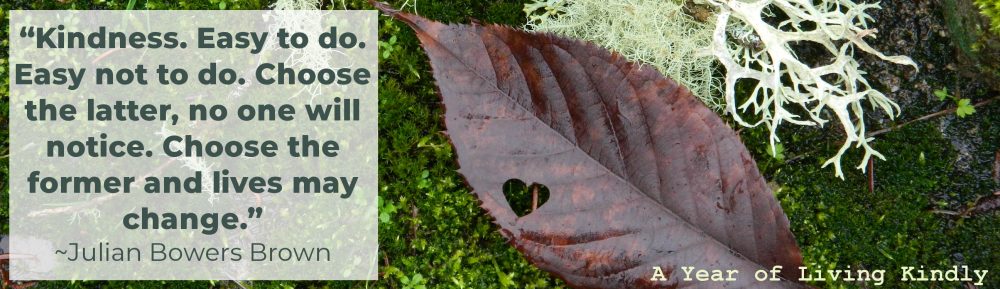
“Kindness. Easy to do. Easy not to do. Choose the latter, no one will notice. Choose the former and lives may change.”  (Julian Bowers Brown‏)

A Tribute to Men of Great Kindness

“Guard well within yourself that treasure, kindness. Know how to give without hesitation, how to lose without regret, how to acquire without meanness.”  (George Sand)

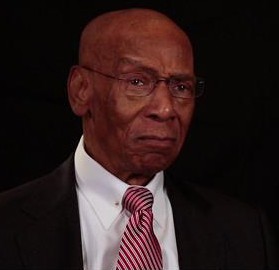
"14 Ernie Banks Medal of Freedom White House" by White House photographer - http://www.whitehouse.gov/sites/default/files/audio-video/video_thumbnail/thumbnail_banks.png. Licensed under Public Domain via Wikimedia Commons -

Ernie Banks, “Mr. Cub,” receiving the Presidential Medal of Freedom from President Obama in 2013. Licensed under Public Domain via Wikimedia Commons.

I had been planning something else for today’s post, but it can wait.  Today I want to remember someone who modeled a life of kindness, and bequeathed so much joy in his 83 years that his name alone makes me smile, though today with some sadness.  Ernie Banks died Friday.

I grew up watching and rooting for the San Francisco Giants.  My hero was Willie Mays (still is).  Before my father died, we went to at least a dozen games each summer at Candlestick Park.  We always tried to go when the Giants were playing either the Dodgers—San Francisco’s long-time rival—or the Cubs, our second favorite team.  My mom had grown up in Chicago and her fondness for the Cubs moved with her to the Bay Area.

As far as I’m concerned, Willie Mays and Ernie Banks rank high among the best ambassadors the game of baseball has ever had.  Their baseball cards were among my most treasured as a child.  I still have Willie’s.  Somewhere along the line, I lost Ernie’s.

Willie Mays

World Telegram & Sun photo by William C. Greene. Library of Congress via Wikipedia Commons

#24, Willie Mays, World Telegram & Sun photo by William C. Greene. Library of Congress via Wikipedia Commons

At the end of my 6th grade school year one of my classmates was hit by a car while riding his bicycle through a busy intersection.  He was badly injured, with numerous broken bones and internal injuries.  He was in a coma for weeks.  When he finally woke up and started the months of intensive therapy that stood between him and 7th grade, one of his first visitors was Willie Mays.  Willie was not accompanied by reporters or photographers.  He just came to Rob’s hospital room because he had heard about his injury and wanted to cheer him up.  That’s the Willie Mays I knew growing up.  That, and the sheer joy he demonstrated every day he was on the field.

I went to the first game Willie played at Candlestick Park after the Giants had traded him to the Mets in 1972 (what were they thinking!).  The stands were completely packed that evening.  The fans weren’t cheering for the Giants, or for the Mets.  They were cheering—wildly—for Willie. He tipped his hat to the roaring crowd at each at-bat. The Giants may have forsaken you, but we never will.

Ernie Banks

Ernie Banks, By Bowman [Public domain], via Wikimedia Commons

Ernie Banks, By Bowman [Public domain], via Wikimedia Commons

Cubs fans can cite similar stories about Ernie Banks.  His kindness to fans is legendary.

Listening to and reading the stories about Ernie these last few days, a couple of things stand out: The words “kind” or “kindness,” referring to Banks, are in every single story.  In addition, one cannot fail to see a man who was thoroughly in love with life and with his job.  The fact that he played his entire career on a perennially losing team didn’t bother him.  He fell in love with Wrigley Field the first day he walked onto the field.  He loved it so much he wanted to live in the apartment team owner Phil Wrigley maintained behind left field.

It’s also notable that in his 19-year career with the Cubs, Banks was never ejected from a game.  Hall of Fame umpire Doug Harvey said of Banks to The Associated Press: “He wasn’t a griper. Never complained about a strike or an out or a call. Some guys would turn their heads after a pitch and look at you like you were nuts. Not Ernie. It was always, ‘Isn’t this a great day to be alive and playing baseball?’’’

I try to imagine what the world would be like if each of us went to our job every day with the attitude Isn’t this a great day to be alive and [managing associations…selling shoes…waiting tables….].

Ernie Banks got his start in the Negro Leagues, where he would occasionally play three games in one day, sometimes in different cities.  Banks loved it.  He didn’t focus on the indignity of not being allowed in some restaurants or hotels, or of having to ride in the back of the bus.  He was playing baseball!  He loved the game so much that when he got to the Majors, he gained fame for the oft-repeated line: “Let’s play two.”

Some stats about Ernie Banks:

  • He played in 2,528 games during his 19 seasons
  • He averaged 150 games per year during his 16 prime seasons
  • He hit 512 career home runs, including five seasons with 40 or more HRs
  • He drove in 1,636 runs, including more than 100 RBIs in eight seasons
  • He won the National League MVP Award in back-to-back seasons (1958-59)
  • He was elected to the All-Star roster 14-times
  • He never charged for an autograph (as even my beloved Willie Mays does)

One of the few people with whom Banks had difficulties dealing was one-time Cubs manager, Leo Durocher, known for his cantankerous nature. Banks later said he followed his mother’s advice when interacting with Durocher: “She said, ‘Ernie, kill ’em with kindness.’ And that’s what I did.”  [It was the same advice I got from my own mother, as I wrote in an earlier post].

Interestingly, it was Leo Durocher who coined the phrase, “Nice guys finish last.”  How fitting that his words were disproved by one of his own players, Ernie Banks.

In his homage to Banks, Chicago Tribune reporter Paul Sullivan wrote last week, “Most great players are remembered for their stats or their style of play. Ernie Banks always will be remembered for showing us how to enjoy life every single day.”

Former Cub Mark Grace said of Banks: “What a wonderful, outgoing, terrific man. He was a Hall of Famer who didn’t act like one. He always had time for others, always asked about you. Never talked about himself. Just always was interested in you. What you were doing, what you had to say, it was important to him.”

In a 2009 interview with NPR, Ernie said he was uncomfortable when he was in the spotlight and he didn’t feel like he’d really done anything important.  What he’d really dreamed of, he said, and what had been his goal since he was 15 years old, was to win the Nobel Prize for Peace.

Alex Rodriguez

What, you may wonder, is A-Rod doing here?  If you follow baseball at all, you know that he is not well-respected, he’s viewed as a liar and a cheat, and is arguably the most hated man in baseball.  It wasn’t always so.

In March of 1997, the Seattle Times ran a story about Alex Rodriguez, the 20-year-old player who was then in his second year with the Mariners.  The story focused on how nice he was, how polite, how generous and self-effacing.  I saved that story for years, thinking, “Here is a man who is following the likes of Willie Mays and Ernie Banks.”  I tossed it a couple of years ago, but found it online again today.  Somewhere along the way—between 1997 and 2015, something went terribly wrong and the Alex Rodriguez that young man grew to be is anything but the embodiment of Ernie Banks or Willie Mays.  How that happened is a story that may someday be told, if it hasn’t already.  Suffice it to say that when people list the finest ambassadors for baseball, or the kindest athletes, Rodriguez will not be among them.  It saddens me.

Thanks, Ernie

Maybe Ernie Banks never got to collect that coveted prize in Stockholm, but the impact he made on baseball and on humankind will ripple beyond our imagining.  And maybe if peace ever comes to this world, we can credit this modest Hall of Famer for part of that achievement.

Thanks, Ernie Banks.  For showing us how to live life to the fullest … and to the kindest.


Extend Yourself

“My religion is very simple. My religion is kindness.”  (Dalai Lama XIV)

Dr. Dale Turner

Dr. Dale Turner

Years ago, theologian, speaker, and extraordinarily kind man, Dr. Dale Turner, handed out little green cards with two simple words printed on them: “Extend Yourself.”  I have no religious background or education, nor any inclination toward such, but every time I heard Dr. Turner, he touched me to the core.  He also made me laugh—a fine combination.  I’ve carried that little card in my wallet and had those two words clipped beside my desk for nearly three decades.  It seems to me that the phrase “Extend Yourself” captures the essence of kindness.  It also highlights the difference between niceness and kindness.

Nice is something we can be without extending ourselves.  Nice is tipping the hat, holding the door, smiling at the cashier.  Nice may even be dropping a dollar in someone’s hand if we do so without looking the person in the eye and saying a genuinely caring word.  Kind is asking how we can help, offering our hand, jumping in without being asked, and engaging in conversation that goes beyond the superficial.  All of these actions have an element of risk—we might be rebuffed, ignored, or disrespected.

Nice generally doesn’t inconvenience us.  I can share my bounty with you because I have plenty.  Kind is when we share knowing that we may not have as much as we would like, and that’s okay.  We often go out of our way to extend ourselves or to be kind.

Generosity

Extending ourselves is an act of generosity, whether material or relational.

Recently there was a story on NPR describing how the impulse to generosity seems to be hardwired in our brains.  In a study of children, researchers found that they smiled significantly more when they were giving treats away than when they received the treats themselves. But what the researchers found to be especially interesting was that the children smiled significantly more when they gave away their own treats than if they gave away an identical treat provided by the experimenter for the purpose of giving away.

I saw another story two days ago, about Calvin Olsen, a second grader in Las Vegas.  He told his parents that he had been given so much for Christmas he didn’t want anything for himself for his birthday.  Instead, he wanted “to give all my birthday presents to kids that need them.”  He asked for $25 gift cards for older kids and presents for the little kids.  Sixty people came to Calvin’s birthday party.  He collected over $600 in cash and gift cards for kids and teens in foster care, $100 of which was from his own savings.

That impulse to generosity that Calvin Olsen and the kids in the NPR study have seems to be an instinctive knowledge of the rightness of “extending yourself.”  Let’s hope as they grow older we don’t “help” them unlearn it.  Instead, let’s learn from them.

extend yourself


Rejecting Kindness

“Kindness can become its own motive.  We are made kind by being kind.” (Eric Hoffer)

Attribution: Donna CameronIt can be upsetting and bewildering when someone rejects our kindness.  An act which was meant to be helpful and benign is rebuffed or rejected.  Sometimes, the intended recipient even lashes out at us.  What did we do wrong?  Are we in some way at fault, or inadequate?

As a result, the next time we want to extend a kindness, we hesitate—fearing rejection or scorn.  Our act of kindness dies before it is born.  Some weeks it feels like there is worldwide scarcity of kindness, and we must do our part to keep the impulses alive.

There is a simple saying that I use often in working with groups or in one-on-one situations:  We assume one another’s good intent.  So simple, and yet so powerful. If only we could always remember it!

The Seattle Times runs a daily section call “Rant and Rave.”  It invites readers to share examples of good and bad behavior and positive and negative encounters in our community.  The raves are frequently descriptions of generosity and kindnesses experienced and witnessed—they’re often uplifting and touching, little vignettes that reinforce our shared humanity.  Here’s an example: “For the Men’s Warehouse employees who helped my developmentally disabled son have the senior prom he’d dreamed of, and for his teachers who made it all happen. It was a night he’ll never forget!”

The rants, on the other hand, often describe careless, rude, or unscrupulous deeds or situations.  A rant caught my eye recently: “To the guy in the VW who flipped me the bird, mouthed obscenities through the glass and then sped off when I was knocking on his window to let him know his tire was flat.”

Who knows why the driver reacted as he did.  He may have been frightened, surprised, or embarrassed.  He may have thought he was caught doing something naughty.  He may have been having a lousy day and the knock on his window put him over the edge (if that’s the case, the dawning awareness of a flat tire a short time later can’t have added to the day’s enjoyment).  But how sad it is that the first reaction some people have to unexpected contact by strangers is to strike out at the individual.

Road Rage

We’ve all heard of road rage precipitated by a honking horn when someone fails to notice the light has turned green.  A tap on the horn is a kindness under those circumstances, one to be responded to with a wave of thanks as the driver proceeds through the light.  Too often it initiates an angry gesture, a curse, or even a brandished weapon.

For those reasons, we are often wary.  I’ve seen lines of cars patiently waiting through two green lights for the oblivious driver to notice that the light has changed (this is Seattle, remember, we are boundlessly courteous).  Rather than honk, I once saw a man get out of his car and politely tap on the driver’s window of the car ahead.  For his effort, he was rewarded with an unkind gesture and screech of tires as the driver shot through the now-yellow light.  I’m sure the driver was embarrassed, but what is it about embarrassment that makes some of us lash out.

Embarrassment

Embarrassment is part of the human experience.  It’s also what makes us human, whether an unzipped fly, a broccoli-adorned tooth, or a verbal gaffe.  It happens.  We’ve all been there.  To not risk embarrassment is to shun human contact entirely.  It seems to me that grace is the ideal response to those embarrassing moments.  More broadly, though, isn’t grace the best response to almost anything?

I hope the driver who knocked on the window of the VW isn’t deterred from doing so the next time s/he thinks a stranger would want to know what s/he has noticed.

And I hope we all (myself most definitely included) can learn to react with grace when someone tries to help us.

 “He who sows sparingly will reap sparingly, and he who sows bountifully will reap bountifully.” (St. Paul)