How Time Flies When You’re Having Fun

“My religion is very simple. My religion is kindness.” ~Dalai Lama
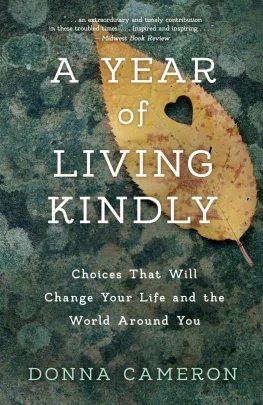
Year of Living Kindly cover for FrankfurtPlease indulge me while I gape at the mind-boggling fact that my book turns five today. Born out of this blog, it continues to find new readers and, I hope, inspire kindness.

Many of you have been part of this community since the YOLK blog started in 2015. Your interaction and encouragement spurred me to attempt to turn my ideas into a book. I am so grateful.

No one is more surprised than I by its success. Like the little engine that could, it continues to chug along. It is now in its 9th printing, with three foreign language editions out (take a gander at the covers below!) and two more currently in production. It’s been honored with more than a dozen literary awards.

Most important, it’s touching lives. I often hear from readers who tell me YOLK inspired them to extend a kindness or withhold a snarky comment, or that they more readily recognize the kindnesses all around them. I can think of nothing more satisfying.

I wish I could claim that nine years of studying, writing, and speaking about kindness have made me a paragon of compassion, patience, and understanding. But no, I’m still learning. There are still times when I’m bitchy, cranky, and oblivious, but those occurrences are less frequent. I think I am kinder, and I am so much more aware of kindness all around me. I’ve seen also that there is a direct connection between kindness and happiness. Continue reading

New Anthology Benefits World Central Kitchen

Never doubt that a small group of thoughtful, committed citizens can change the world; indeed, it’s the only thing that ever has. (Margaret Mead)

I’m honored to have had an essay (“What We Do with Words”) accepted for publication in this lovely new anthology, published last week by She Writes Press.

Art in the Time of Unbearable Crisis was conceived as a response by women writers and artists to the cataclysmic events of the last few years. Writing about the pandemic, Ukraine invasion, political and societal unrest, and more, authors address the vast range of human response to crisis in all its forms. They explore how we can find beauty, hope, and deeper interpretation—even when the world seems to have been turned upside-down, inside-out, and shaken.

The book is also intended to make a tangible difference. All royalties from book sales will go to support the tremendous work of chef José Andrés, his nonprofit World Central Kitchen, and their Ukrainian relief efforts.

If you’re interested in learning more about the book, or purchasing a copy, here’s a link to it on Bookshop.org, the wonderful discount retailer that supports independent bookstores. Of course, the book is also available through other online booksellers, and can be ordered through your local indie store. (As of this writing, the price is lower on Bookshop than on Amazon.)

Seattle Area Friends

If you happen to live in the Seattle area, please join me and seven other Puget Sound-area contributors on Thursday, August 11, at 7:00 p.m., at Third Place Books in Lake Forest Park. Continue reading

Good Riddance, Norman Mailer

“I have always imagined that Paradise will be a kind of library.” (Jorge Luis Borges)

Lately, I’ve been purging a lot. No, not the stomach-heaving purge of despair or disgust (though ask me again on November 4), but merely the welcome elimination of excess paper, emails, and detritus surrounding me.

While thus engaged, I came across a wonderful article I first encountered in 2017, “The Man Who Doesn’t Read Women.” This is a meaty article—definitely worth your time and attention—but I will only address one part of it here.

The author, Lorraine Berry, describes a conversation she had with her neurologist while he was treating her for severe migraine headaches by injecting Botox into the muscle next to her eye. Knowing that Berry was a writer, the doctor engaged her in chat about books and authors—he being a voracious reader. During the conversation, she was shocked to hear him admit quite matter-of-factly that he had never read a book written by a woman.

Then he corrected himself to say that oh, yes, he had read one: Charlotte’s Web. Continue reading

Back Off, Marie Kondo

The life-changing magic of NOT tidying up…

Bear hunting in our neighborhood

I have mild hoarding tendencies—nothing serious, but sometimes I find it difficult to discard items for which there may be some future use. My biggest problem is paper—articles I’ve saved for future reference, notes and handouts from conferences, and scraps on which I’ve scribbled brilliant, budding ideas that I hope will grow into mature, wise, and literate prose. One of my goals during this period of enforced isolation is to tackle the piles and files and miles of paper. I try not to be overwhelmed by the magnitude of the task, but to devote a certain amount of time each day to purging, sorting, and deciding what stays (and where!) and what goes.

I am frequently reminded of Marie Kondo’s best-selling book, The Life-Changing Magic of Tidying Up. I read it when it first came out and was inspired to . . . do very little.

Marie and I would not be friends. While I am sure she is a lovely woman, “tidying up” is not something I aspire to. Continue reading

The Gifts of Winter

“The more that you read, the more things you will know. The more that you learn, the more places you’ll go.” (Dr. Seuss)

Attribution: Donna CameronWhile much of the country suffered through the bitterest winter ever, we in the Seattle area watched wide-eyed, sympathetic, and thankful for our own temperate winter. By our household’s unscientific analysis—the frequency of having to thaw the water in the birdbath or replace frozen hummingbird water—it was a mild winter, indeed.

But early February brought us both humility and snow—lots of snow. More snow than most of us have ever seen in these parts. For an area as hilly as this, even an inch or two of snow can wreak havoc. And when it’s 18-24 inches, with brief thaws that then refreeze to create sheer ice slides, all but the most essential services come to a standstill. Kids have missed a week or more of school. To compound the problem, the fact that snow is such a rarity means we have limited snow removal equipment and it concentrates on the main roads and arterials, leaving the side streets and remoter areas to fend for themselves. Continue reading