“Humankind has not woven the web of life. We are but one thread within it. Whatever we do to the web, we do to ourselves. All things are bound together. All things connect.” (Chief Seattle, 1854)
 I try not to make it a practice to write about things of which I know nothing. That just seems common sensical. But sometimes, there are things that are so grand and so mysterious that writing about them is how I can get closer, how I can touch the magic.
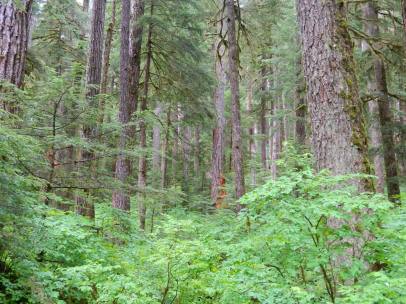
Recently, Bill and I spent a few days in the Olympic National Forest with some dear friends. After so many months of pandemic isolation, it felt wonderful to get away and to socialize among our fellow vaccinatees. When we move up to Seattle forty years ago, the place I wanted most to see was the Hoh Rainforest in the Olympic National Park. Life had other plans for us, however, and it took four decades for that expedition to take place.
It was worth the wait.
In anticipation of that adventure, and since our return, I’ve been reading about trees and forests. What I’ve learned has both inspired and disheartened me. There is so much we are only recently beginning to understand about forest ecology, or as some are calling it, the “Wood Wide Web.” What scientists are discovering is a game-changer for planetary health, but human action—or inaction—puts us in a race to heal the earth before it’s too late.
When most of us look at trees, we see only what is above-ground: the trunk, the branches, the leaves, maybe some of the creatures inhabiting it. We may notice that this tree is growing very closely to that one, or that mosses, fungi, and other smaller vegetation cluster in their vicinity, but we tend to see everything as separate—just as we view people as separate from one another.
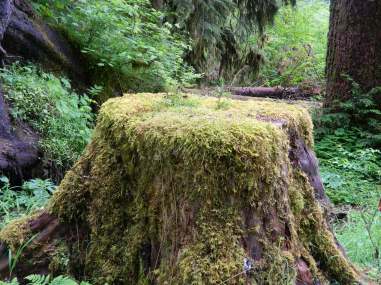
A Mother Tree, nurturing seedlings and providing nutrients for its neighbors
Evidence from science now clearly indicates the interrelatedness of all these living florae. Trees and plants and fungi are not only intertwined physically, they communicate in complex and sophisticated ways. They protect one another, they share essential nutrients, they warn of danger from insects, weather, or chemicals. If a tree is ailing, other trees—regardless of species—send nourishment its way. If a tree is dying, it “wills” its remaining vital nutrients to its neighbors. And even in death, a “mother tree” continues to nurture the forest, providing sustenance for the next generation of seedlings.
The beauty and complexity of these ecosystems is staggering and our ignorance of them is contributing to their demise, which may, in turn, contribute to our own. These essential forests help sustain our breathable atmosphere. They cool the earth by reflecting sunlight and providing precipitation; they capture and store carbon emissions and help regulate climate; they contribute to rich and fertile soil. Yet in much of the world, sustainable logging practices have been superseded by clear-cutting and other destructive practices that jeopardize land, soil, water, atmosphere, and living organisms across the planet.
Even now, as we are beginning to understand the critical importance of forests—especially old growth forests—we struggle to communicate it. Somewhere I read that most of us don’t even have the vocabulary to comprehend the complex bionetwork that has been evolving for as much as 600 million years into a vast and intricate symbiotic community. And we puny human newcomers pretend to have all the answers…. Our adorable arrogance may be our ultimate downfall.
In his extensively researched novel, The Overstory, Richard Powers explores the parallel world of the forest, revealing its magnificence and interconnectedness, and the potential catastrophe awaiting us if we fail to learn from it. The novel’s characters, settings, and stories are as interwoven as the forest itself, making for a read that is dense, breathtaking, and unputdownable. The book is well-deserving of its 2019 Pulitzer Prize in fiction. I recommend it highly.
There are plenty of non-fiction explorations of forests, as well. A good place to start is Ferris Jabr’s recent article for The New York Times Magazine, “The Social Life of Forests,” which follows Professor Suzanne Simard, ground-breaking forest ecologist and pioneer who is leading the way in this new field of research. Her own recent book, Finding the Mother Tree: Discovering the Wisdom of the Forest, is also a page-turner. Another book I just finished and absolutely loved was Lyanda Lynn Haupt’s Rooted, which talks extensively about trees, but also explores other amazing and complicated ways humans are connected to our wild and mysterious natural world.
There is still so much I want to learn and understand about forests and trees. They have a lot to teach the human community—if we would only listen. I feel blessed to have had a recent opportunity to see one of the most beautiful and awe-inspiring places on the planet. I hope what I saw and felt in the Rainforest will help me become a better and more responsible citizen of the earth.
“I do not think the measure of a civilization is how tall its buildings of concrete are, but rather how well its people have learned to relate to their environment and fellow man.” (Sun Bear of the Chippewa Tribe)
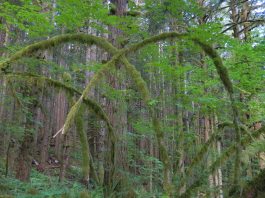
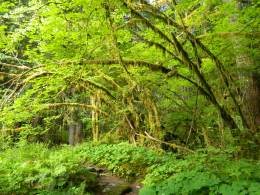

 This time of year makes me contemplative, and perhaps this year more so than ever: summer giving way to fall, another year speeding toward its conclusion, a pandemic that continually asserts its presence, and a sense that so many big things hang in the balance—democracy, planetary survival, even civility. While these are all issues I can take action on, I must also acknowledge that my individual efforts likely have little effect on the outcome. It doesn’t help that as I write this, the air in Seattle is heavy with smoke from wildfires in the central and eastern parts of our state, and from fires ravaging our northern neighbor, British Columbia.
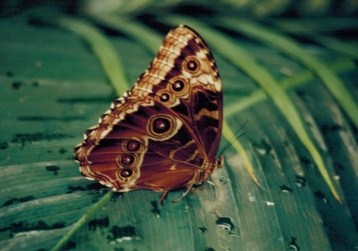 “It’s all a matter of paying attention, being awake in the present moment, and not expecting a huge payoff. The magic in this world seem to work in whispers and small kindnesses.” ~Charles de Lint
 A Year of Living Kindly