Gratitude: A Companion to Kindness

“If the only prayer you ever say in your entire life is thank you, it will be enough.” (Meister Eckert)
Attribution: Donna CameronThe American Thanksgiving holiday is just over a week away. It is an opportunity for us to pause and acknowledge all we have to be thankful for. Ideally, we should be doing this every day of our lives, but sometimes business and busyness crowd out gratitude.

Throughout this year of living kindly, I’ve noticed over and over that kindness and gratitude go hand-in-hand and also bolster one another. When I am in touch with my gratitude, kindness flows naturally and effortlessly. And if kindness feels hard to summon, taking a moment to appreciate my surroundings, my friends and loved ones, or little things that fill me with delight, inspires a surge of kindness.

I’ve come to see that there are many ways that kindness and gratitude together produce almost alchemical results:

Slowing Down

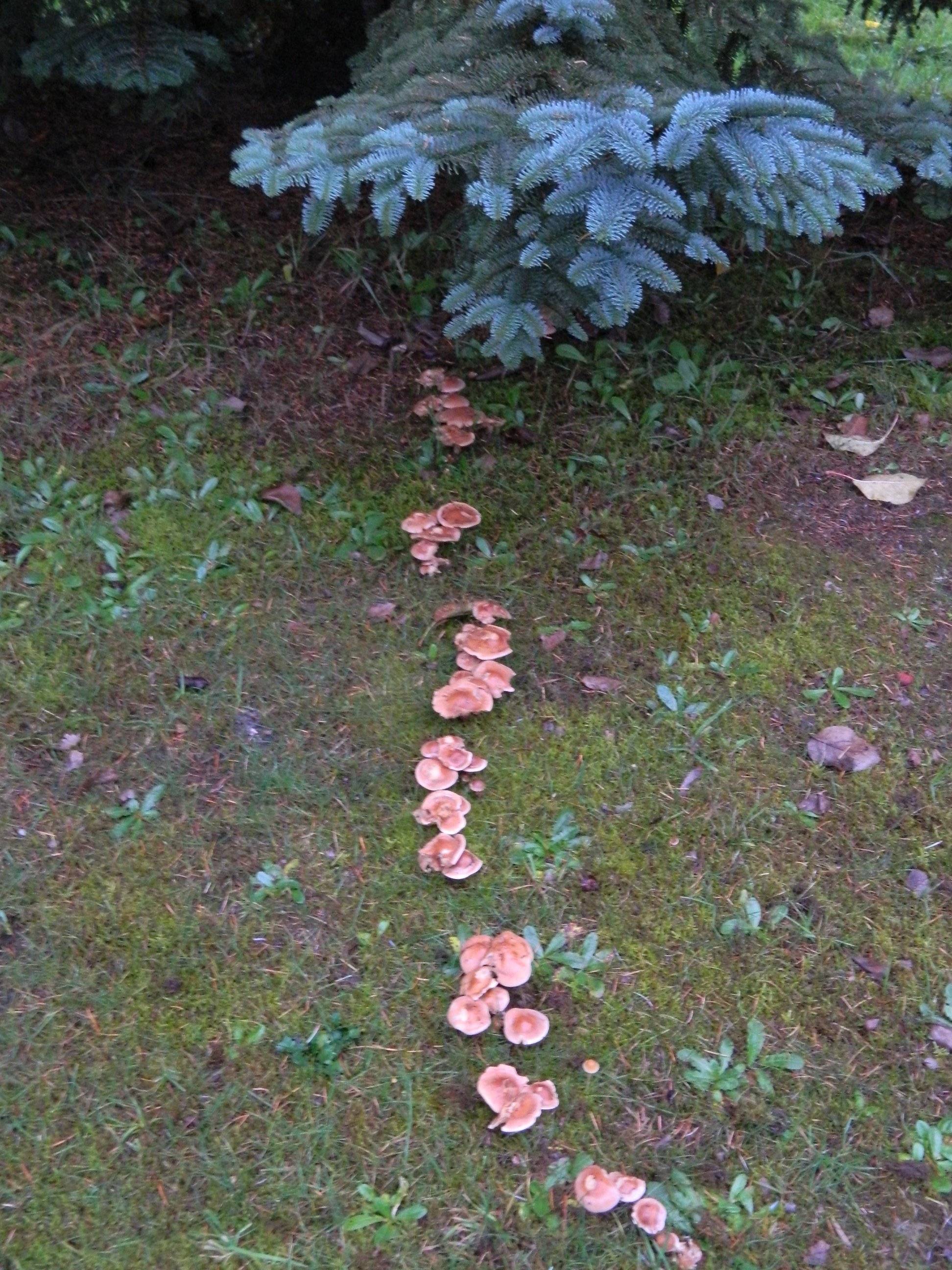
Both gratitude and kindness ask us to slow down. Slowing down isn’t always easy in our overscheduled and over-active lives. I often feel like I’m rushing from one deadline to the next, one obligation to the next, ruled by a lengthy to-do list. But slowing down is essential if we are to notice and appreciate the sunrise, the mushrooms growing at the base of a pine tree, the birds circling overhead like ice-skaters with wings. And slowing down is essential if we are to notice the smile on the cashier’s face, the door held open for us, or the myriad opportunities before us each day to extend our own kindnesses.

An Open Heart

When I experience gratitude, my heart feels open. It is an experience of abundance and sufficiency. This is all I need. It is also a feeling of presence—what happened five minutes ago doesn’t matter, and what will happen five minutes from now doesn’t matter. I am in the moment.

Likewise, the experience of kindness—whether given, received, or even just witnessed—opens my heart and allows me to feel fully present in the moment. For that brief moment, kindness is all that matters. It reminds me of one of my very favorite quotes, by Henry James: “Three things in human life are important. The first is to be kind; the second is to be kind; and the third is to be kind.”

Abundance, too, is a byproduct of kindness. If we believe we are enough, we can easily believe we have enough. Both of these beliefs help us to reserve judgment and extend kindness. And that sense of abundance, whether related to gratitude or kindness—or most likely, both—inspires us to be generous, with our time, our words, our deeds, and our resources.

Negative Emotions

I think it’s difficult to be angry or fearful when one experiences gratitude. I was surer of this last week that I am today, given the horrific events in Paris this past weekend. Those attacks surely brought fear and anger, not just to the people of France, but people all over the world. While there may also be gratitude that one’s family and friends were spared, can gratitude wipe out the fear and anger? I think not. But maybe there can be moments when gratitude at least overrides fear and lets us see that there is much to appreciate even amidst the horror of an attack such as this, or amidst the devastation of a natural disaster, or a personal catastrophe. Maybe it’s gratitude that helps us recover from the worst things that can befall us.

Kindness is also our answer to fear and anger. If we can recognize that our impulse to be unkind or say something unkind is a response to our fear or anger, we can often overcome it. If we can recognize that another person’s unkindness is their response to feeling fearful, we can often respond with kindness through that understanding. Fear often inhibits us from acting kindly—fear that our action will be misunderstood, fear that we will be rejected or embarrassed. Choosing kindness over fear is an act of courage.

Service to the Planet

When we are grateful for something, our instinct is to protect and defend it. If we stand in awe at the edge of the ocean, or if we marvel at the canopy of trees above us as we hike through the nearby hills, our natural desire is to shield them from harm, to assure that they will always be there for us and for future generations to appreciate. Our gratitude puts us in service to life—what could be more important?

Kindness, too, places us in service to life. It’s our acknowledgment that the ultimate kindness is to honor the Earth and our fellow inhabitants—human and otherwise. A healthy planet and sustainable practices is the kindest gift we can offer our planet and the generations that follow us.

Gratitude Practices

It’s lovely if gratitude comes to us frequently and effortlessly, but that is not always the case. Gratitude, like kindness, golf, or piano-playing, is strengthened with practice. The more we do it, the more we experience it and the better we get at expressing it. If you Google “gratitude practices” you will find countless suggestions, from daily meditation, to keeping a gratitude journal, to prayer. I confess that I haven’t yet established a consistent practice, but I try to spend a few moments each morning before I get up thinking about the things I have to be grateful for (the first is always that goofy guy sleeping beside me).

There’s another splendid gratitude practice that I love and practice sporadically. The wonderful physician and teacher Dr. Rachel Remen teaches this; she learned it from anthropologist Angeles Arrien. It takes very little time:

At the end of each day, sit down for a few minutes and answer these questions:

  • What surprised me today?
  • What moved or touched me today?
  • What inspired me today?

Your answers can just be a few words. What you’re trying to do is summon the memory of something that moved you.

As Dr. Remen describes: “The most interesting thing happens, then. Often people are surprised eight or nine hours after something happens when they look back on it deliberately. But [by doing this exercise] that gap shortens until eventually they are able to see in the very moment what surprises them, what touches them, and what inspires them. And then everything changes. The world has not changed, but they have begun to be able to see the world, and they can communicate that experience….It changes everything. It’s a question of paying attention.”

It’s true. At first this is difficult. You may come up blank day after day. “Nothing surprised me” or “Nothing inspired me.” But if you keep searching, you will think of something. Oh, yes, I was touched when I saw those children playing in the park. And just as Dr. Remen says, with practice you begin to notice things that touch or surprise or inspire you in the moment they happen. That creates an enduring state of gratitude—not to mention presence.

Another lovely gratitude practice: For the month of November, my fellow blogger and new friend, Dr. Catherine Cheng—whose wonderful blog, Healing Through Connection, explores (among other terrific things) fixing our healthcare system by improving communications and relationships between physicians and patients—has issued a post daily featuring something in her life that she’s grateful for. Some are things you might expect: her family, good health. Some have surprised and delighted me: Kung Fu Panda, actor George Takei, volleyball…. I look forward each day to seeing what Catherine has chosen to express gratitude for.

Catherine’s posts remind me to think about what I am grateful for—both the expected and the quirky. Whether or not we take the time to write them down, daily recognition of big and little things we have to be grateful for is a wonderful way to live in perpetual thanksgiving.

“Gratitude unlocks the fullness of life. It turns what we have into enough, and more. It turns denial into acceptance, chaos to order, confusion to clarity. It can turn a meal into a feast, a house into a home, a stranger into a friend.” (Melody Beattie)

I’m just sayin’ … honesty isn’t always kind

“Today I bent the truth to be kind, and I have no regret, for I am far surer of what is kind than I am of what is true.” (Robert Brault)

Attribution: Donna Cameron“I’m just saying this for your own good.”

“Don’t be so thin-skinned. I’m just telling it like it is.”

“Hey, I call it like I see it.”

“Jeesh, you’re so touchy!”

These phrases are often used to justify saying hurtful things. Sometimes the speaker may really believe that the listener needs to hear his unvarnished opinion about the poor sap’s looks, abilities, opinions, or prospects.

Speaking on behalf of poor saps everywhere, we don’t. We don’t need someone to tell us all the things that are wrong with us or all the things we don’t do as well as we should. That’s what that persistent little voice in our own head does—and it doesn’t need any help.

There are things that need to be said and things that don’t need to be said. If we pause to think before we speak, we generally know the difference.

“You’d be so much prettier if you’d just lose fifteen pounds,” doesn’t need to be said—ever.

“You might want to get that spinach off your front tooth before you make your presentation,” needs to be said. Thank you!

“The other kids in your class certainly have more artistic ability than you do,” doesn’t need to be said, even if it’s abundantly clear to everyone but your eight-year-old.

I don’t advocate lying. I was raised in a home where honesty was valued and I consider honesty to be one of the most important characteristics of good people. That being said, I believe there are times when telling the truth may not be the best course of action. And being able to discern the appropriate time for truth-telling and the appropriate time for silence or even a downright lie is another important characteristic of good people…certainly of kind ones.

Some lies are obvious, some a bit more subtle.

To the question, “Honey, does this dress make me look fat?” any spouse who answers that with anything but, “You look gorgeous!” or a similarly reassuring exclamatory statement really hasn’t thought through the business of being married.

“It’s perfect! Thank you so much!” in response to an ugly, impractical, or totally preposterous gift is always a wise response, even if it’s a whopper of a lie. Would you really rather hurt the giver’s feelings and then live with the regret of having done so? Receiving graciously—even when the gift is unwanted—is one of the kindest behaviors we can learn.

“I’m fine, thanks for asking.” There are times—and we usually know when they are—when telling an acquaintance about our persistent rash, impending colonoscopy, or chronic foot fungus is entirely unnecessary. The depth of the relationship is a good gauge of how much detail to provide when someone asks the innocuous and automatic question, “How are you?”

If you’re contemplating telling a lie, think about your motive behind it:

Are you lying to make yourself appear to be something that you are not—smarter, stronger, more successful or more interesting? Think again, and exercise your courage muscles. You’re fine exactly as you are—why pretend to be something that you’re not? Would you rather be authentic or an imposter? Would you rather people liked and respected you for who you really are, or because they think you’re something that you’re not? Besides, when you deceive others you must remember the story you fabricated—otherwise you are likely to get caught in your lie later—and you’ll either feel foolish or have to come up with more lies. It’s not worth it.

Are you lying to make a sale, deflect blame, get recognized, or advance your career? No matter how innocuous the lie may seem, your trustworthiness and integrity are at stake here—even if you’re the only one who knows that. Are they worth tarnishing for anything?  I recently came upon a quote by Ryan Freitas that sums it up pretty well: “Your reputation is more important than your paycheck, and your integrity is worth more than your career.”

Are you lying to spare someone’s feelings? Under these circumstances, lying may be both acceptable and desirable. Add another question: is anyone harmed … if I tell my work colleague that her new hair style is great when, in fact, my first thought was that she looks like a radish on a stick?

Other questions to consider:

  • If I were in his/her position, would I want the truth or a gentle lie? or
  • Which response best serves kindness: the truth, a considerate lie, or silence?

My sister and I still commiserate (it’s cheaper than therapy) over our mother’s “truth-telling” to us as children: to Kim that her smile showed too much of her teeth and gums—causing my sister for decades to cover her mouth when she smiled or laughed, rather than display her genuine delight; and to me that I could always have a nose-job if my nose got any bigger. Until my mother mentioned it, I had been totally unaware that my proboscis was anything less than perfect. Thanks, Mom! Fortunately, my husband thinks my patrician nose is beautiful.

It seems to me that another consideration of whether to tell the truth or to dissemble is whether you can make a contribution to the outcome.

If your colleague has already gotten the haircut, or your spouse has already bought and worn the loud Hawaiian shirt, then little is served by telling them what you really think. But if they ask you in advance how you think they would look with a radical ‘do, or wearing a bright yellow shirt with orange and purple parrots, a diplomatic truth might help them make a different decision.

Similarly, we don’t need to be the people who point out the typo, criticize the amount of cumin in the soup, or correct a stranger’s mispronunciation. If someone asks for my input, I’ll gladly give it—unless it appears that they really just want support and kudos—then I’ll give those. I’ve found as I’ve gotten older that I’ve also gotten quieter. I don’t need to point out somebody else’s foibles and failures. I’ve got plenty of my own.

But my nose, fortunately, is quite perfect.

“If you have to choose between being kind and being right, choose being kind and you will always be right.” (Anonymous)

Ever Onward, Billy Strayhorn…

“I think everything should happen at halfway to dawn. That’s when all the heads of government should meet. I think everybody would fall in love.” (Billy Strayhorn)

“Billy Strayhorn was always the most unselfish, the most patient, and the most imperturbable, no matter how dark the day. I am indebted to him for so much of my courage….” (Duke Ellington) Photo: Billy Strayhorn circa 1947; William P. Gottlieb Library of Congress Collection, public domain.

“Billy Strayhorn was always the most unselfish, the most patient, and the most imperturbable, no matter how dark the day….” (Duke Ellington) Photo: Billy Strayhorn circa 1947; William P. Gottlieb Library of Congress Collection, public domain.

I hope you’ll indulge me as I do something a bit different for today’s post. It’s still about kindness—one of the kindest people who ever lived—but it’s also a celebration of a life, and of music that will endure for generations.

When I was about 14, I heard a song that knocked my socks off—and all these years later (a lot of years), it still does. Lush Life is, in my inexpert opinion, the best jazz ballad ever written. The tune is elegant, the lyrics are both dexterous and wistful, and the rhyme is as adroit as any you’ll ever hear. I’m not alone in my estimation of Lush Life. You’ll find it at the top of many lists of the best jazz songs ever. Music historian Ted Gioia referred to Lush Life as his favorite song from the 20th century: “a perfect composition…one in which the melodic phrases, harmonies, and poetic sentiments are each unconventional yet sublime.” Tenor saxophonist Joe Henderson called Lush Life “the most beautiful tune ever written.”

The composer of this song—music and lyrics—was the incomparable Billy Strayhorn, and this month we celebrate the 100th anniversary of his birth. It’s likely to be overshadowed by the 100th anniversary—less than two weeks later—of the birth of a much more famous musician: Frank Sinatra (who, incidentally, agreed that Lush Life was one of the most perfect songs ever written).

But give me Billy any day. In fact, give me Billy every day. In addition to being one of the most talented composers and musicians who ever lived, he was extraordinarily kind. It may have been his kindness and self-effacement that prevented him from becoming as famous as Sinatra or any of the truly celebrated musicians of his day. He just didn’t care all that much for fame, and he only wanted to compose, play the piano, and work with other great musicians. Sadly, he also died much too soon, at age 51 from esophageal cancer.

If you can’t place the song, check out a few of the greats who have performed it. The very best is the 1963 recording by Johnny Hartman with John Coltrane (one of the best jazz records ever!). Sarah Vaughan, Nancy Wilson, Andy Bey, Chet Baker, and countless others also sing Lush Life, including a lovely film version by Queen Latifah. Did I mention that Billy Strayhorn was only 17 when he wrote this very sophisticated and world-weary song?

If you know of Strayhorn at all, it’s probably because he was Duke Ellington’s musical partner and collaborator from 1939 to Billy’s death in 1967. Many of the songs and albums attributed to Ellington—who was certainly a genius in his own right—were written by or written with Billy Strayhorn, often without credit to Strayhorn. Theirs was a synergistic relationship: Ellington was the extrovert, Billy the introvert. Ellington sought the limelight, Strayhorn prized his privacy. They knew each other’s musical minds inside and out.

Some of Duke Ellington’s most famous songs were by Strayhorn. Take the A Train—the song that became the Ellington band’s theme-song was composed by Strayhorn from subway directions Ellington gave Billy to Duke’s home in Harlem. Satin Doll, considered Ellington’s most recognized song, was also among the estimated 500 songs Strayhorn wrote alone or with Duke. Their versatility extended to stage shows, movie soundtracks, sacred music, and even a celebrated version of The Nutcracker Suite. Often even they weren’t sure who wrote what parts—that’s how seamlessly they collaborated.

If you like jazz, there are numerous songs you’d recognize that are Strayhorn compositions: Chelsea Bridge, Lotus Blossom, Something to Live For, Passion Flower…. Strayhorn’s roots were in classical music—you can hear it in many of his compositions—he originally intended to be a classical concert pianist … until he heard the likes of Art Tatum, Teddy Wilson, and Duke Ellington. But he carried his classical training with him when he turned to jazz.

Strayhorn’s actual 100th birth-date is November 29. I’m posting this now in hopes that you live in an area where you might have access to some of the Strayhorn centenary concerts. There will be three here in the Seattle area, performed by the Seattle Repertory Jazz Orchestra on November 7 (Seattle), November 8 (Kirkland), and November 9 (Edmonds). Oh, yes, we’re going!

There will also be celebrations in New York, Chicago, New Jersey, Philadelphia, Pittsburgh (where Strayhorn was born), New Orleans, Portland, OR, London, Paris, Italy, and undoubtedly other places.

David Hajdu, author of the definitive and completely absorbing biography of Strayhorn, aptly titled Lush Life, is going to be in Seattle during our Strayhorn celebration. Perhaps he’ll be in other cities later in the month. I recommend his book to anyone who’d like to know more about this remarkable man. I can’t possibly do him justice in a single blog post.

Duke Ellington and his band recorded a tribute album entitled “And His Mother Called Him Bill only three months after Strayhorn’s death. It is considered one of the very best Ellington recordings, and the playing by saxophonist Johnny Hodges—a good friend for whom Strayhorn wrote and arranged many songs—is sublime.

Beyond being a musical genius, Billy Strayhorn was supremely kind and generous. He coached countless musicians to improve their craft and often wrote music just for them to maximize their talents. As an openly gay African-American in the mid-twentieth century, he faced plenty of prejudice, yet always maintained his gracious demeanor and optimism. “Ever up and onward” was his catch-phrase. He was committed to the civil rights movement and a close friend and confidant of Dr. Martin Luther King, Jr. He viewed everyone equally and found something to appreciate in everyone he met—from a waitress in a diner to the Queen of England. He did not have a bad word to say about anyone. Some of Billy’s friends referred to him as “Buddha,” in recognition of his ability to be completely present with everyone he encountered.

In his eulogy to Strayhorn, Duke Ellington noted that Billy Strayhorn lived by four freedoms: “He demanded freedom of expression and lived in what we consider the most important of moral freedoms: freedom from hate, unconditionally; freedom from all self-pity (even throughout all the pain and bad news); freedom from fear of possibly doing something that might help another more than it would help himself; and freedom from the kind of pride that could make a man feel he was better than his brother or neighbor.” (Interestingly, Ellington repeated these words about Strayhorn on his 70th birthday in 1969 when he received the Medal of Freedom at a White House ceremony attended by then-President Richard Nixon. Nixon reportedly “withered” visibly as Ellington described Strayhorn’s virtues so pointedly.)

Even if you’re not a fan of jazz, adding Billy Strayhorn to your own list of heroes or people to admire will be a worthy addition. And if you’d like to get to know Billy Strayhorn better, here are some great places to start (check your local library):

  • And His Mother Called Him Bill, Ellington tribute album to Strayhorn, recorded shortly after Billy’s death in 1967
  • Lush Life, recorded in 1963 by Johnny Hartman and John Coltrane—arguably the best version ever—not to mention the entire album is pitch-perfect
  • Lush Life: The Music of Billy Strayhorn, Joe Henderson’s tribute album, also featuring Wynton Marsalis, Christian McBride, Stephen Scott, and Gregory Hutchinson
  • The Peaceful Side, Strayhorn’s own recording of some of his best songs
  • Lush Life, David Hajdu’s wonderful biography of Strayhorn

And don’t forget to see if there’s a 100th birthday tribute scheduled anywhere near you. If not, you can make your own. Happy birthday, Billy … and thank you!

“Ever up and onward.” (Billy Strayhorn)

Strategies for Bringing Kindness into Your Life

“If the world seems cold to you, kindle fires to warm it.” (Lucy Larcom)

IonaNorthShore-RocksAs I was thinking about what to write this week, I stumbled upon an article that resonated deeply with me. Juliana Breines, PhD, a post-doctoral fellow at Brandeis University, wrote an article entitled “Three Strategies for Bringing More Kindness into Your Life” for U.C. Berkeley’s Greater Good Science Center.

She describes 10 core kindness practices, under three broad categories, that research shows will enhance kindness and generosity, leading to increased overall satisfaction with life. What’s not to like here?

Cultivating Feelings of Kindness

The first category of kindness practices deals with cultivating feelings of kindness. For each of the painless strategies enumerated, there are research studies showing their effectiveness in enhancing our desires to be kind and compassionate.

Feeling Connected Practice – This practice asks us to think about a time when we felt strongly connected to another person—perhaps by a shared experience or a profound conversation. Research has shown that this simple exercise increases concern for others and spurs intentions to perform generous acts. The explanation for this outcome, according to Breines, is, “feeling connected to others satisfies a fundamental psychological need to belong; when this need is unmet, people are more likely to focus on their own needs rather than caring for others.”

Feeling Supported Practice – Another simple practice, this one involves thinking about a time you were comforted or supported by others and the qualities and actions of those people who supported you. Research has shown that this practice increases our compassion and willingness to assist a person in need or in distress. In addition to instilling a feeling of “attachment security,” this practice reminds us of the qualities we want to exhibit in ourselves.

Take an Awe Walk – I love this one. An awe walk is a stroll to a place that makes us feel “connected to something greater than ourselves.” It might be the ocean, a forest, or whatever to us seems immense and “perspective-shifting.” For each of us, that awe walk may be a different destination—it might be a lengthy hike, or a few steps from our back door. What’s your awe walk?

Compassion Meditation Practice – This is often referred to as lovingkindness meditation. It’s a practice combining breathing with extending feelings of goodwill toward oneself, one’s loved ones, acquaintances and strangers, and even people we dislike. Breines cites research that just two weeks of compassion meditation result in more generous behaviors and even alteration in the part of our brains that govern compassion and emotional responses. You can find many guides to compassion meditation on-line, including the Greater Good in Action website.

Pause: Before we move to the next category of kindness practices, pause and think about doing some of the above. Schedule an awe walk or think about when you feel connected or supported. Look into the lovingkindness meditation practice.

Increasing the Happiness We Get from Kindness

This next set of strategies deals with ways to be more intentional about practicing kindness in our own lives—and turning kindness into a habit. If you want to increase the number of kind and generous acts you perform, try these proven practices:

Random Acts of Kindness – Such acts are usually simple, spontaneous actions, such as picking up the tab for a stranger’s coffee, putting money in the meter so someone doesn’t get a ticket, or donating blood. This practice suggests performing five random acts in a single day and then writing about the experience. If you’d like more ideas about random acts of kindness, Buzzfeed has a great list of 101 suggestions. Breines notes that performing random acts of kindness both lifts our spirits and increases our self-esteem.

Making Giving Feel Good – There’s a difference between giving because we feel pressured or obligated to do so and giving because we want to. The former may not feel good and may even lead to resentment. The latter does feel good and increases our personal satisfaction. To avoid the negative feelings, we need to make giving a choice—whether we are being asked to give or asking others to give—it must be okay to say no. An additional way to make giving feel good is to make a connection with the recipient of your kindness—don’t just hand a homeless person a couple of dollars and hurry on; take a moment to make eye-contact and exchange a few kind words—it’s easy and it will make you both feel good. Another is to learn about the impact of your generosity—if you give time or money to a cause, take time to learn about how people are positively impacted by your generosity.

Inspiring Kindness in Others

The next set of practices are ways to help others see the value of kindness and engage in kind actions.

Reminders of Connectedness – This is simply examining our surroundings and looking for ways to create reminders of the importance of kindness and connectedness. It might be pictures of people working together placed on the walls of a classroom, a letter of thanks from someone who was helped by our work on the bulletin board at our office, or an inspiring quotation at the top of a board meeting agenda. Look around your place of work for places to convey your team’s connectedness or your shared mission.

Putting a Face on Human Suffering – Sometime kindness requires a kick in the pants—to help us overcome that powerful inertia that keeps us from acting. Sharing pictures or stories of people in need often lights a fire of action and involvement—motivating people to help. Remember the pictures last month of the Syrian child who had drowned in his family’s harrowing sea journey to freedom? That photo motivated more people to action than all the faceless reports of data related to the humanitarian crisis. Similarly, we’ve seen many times that a photo of an abandoned dog or cat in a cage at the humane society spurs the adoption of stray animals far better than reports citing the statistics of homeless animals.

Shared Identity – This practice asks us to explore ways of forging a sense of our common humanity across group boundaries. Whether it is our common love for our children or mutual passion for a sport, we can overcome fear and mistrust by developing a sense of shared affinity. When we take time to think about it, we have so many more similarities than differences with the people who may seem alien to us.

Encouraging Kindness in Kids – If we can instill kindness at an early age, we can change the world. Strategies for nurturing children’s natural propensity toward kindness and generosity include avoiding external rewards for kind behavior so kids see that kindness is its own reward; praising kids’ character so they come to see themselves as kind; when criticism is called for, criticizing the child’s behavior, not their character; and modeling kindness ourselves.

As I review this list of strategies and behaviors that promote kindness, I’m struck by the fact that none of them are difficult, they simply require practice. Like anything we want to do well—from public speaking, to ping-pong, to piano playing—we get good at it by practicing. I can’t think of anything more worthwhile to practice than kindness. Can you?

“You must take personal responsibility. You cannot change the circumstances, the seasons or the wind, but you can change yourself. That is something you have charge of.” (Jim Rohn)

Kindness and Generosity – Offering Our Unique Gifts

“Generosity brings happiness at every stage of its expression. We experience joy in forming the intention to be generous. We experience joy in the actual act of giving something. And we experience joy in remembering the fact that we have given.”  (Gautama Buddha)

Flowering Cherry and Moss 2A few posts ago, I wrote about the connection between kindness and a sense of abundance.  The logical next step when one’s view of the world is of abundance rather than scarcity is to express that abundance through generosity.

I have been blessed to be the recipient of so much generosity throughout my life—from my friends, my professional colleagues, my family, and even strangers.  Their generosity is expressed through the wisdom they so willingly share, through their time, their thoughtful actions, and their kind words.

When we think of generosity, our first thoughts are likely of material gifts or donations of cash, and, of course, these are elemental expressions of generosity, but they aren’t our only gifts.

The Three T’s

There’s an adage in the non-profit world that board members need to be willing to give the three T’s: Time, Talent, and Treasure.  Treasure is usually interpreted in monetary terms—especially for charitable and philanthropic non-profits.  If board members won’t donate to the cause, it’s hard to convince others to do so.  Hence, grant applications will often ask if 100 percent of the board has made a donation to the organization.  Boards with “high-rollers” can usually easily answer yes, but if members of the board are part of the constituency the organization serves, there may be some who have little to spare in the treasure department.  That’s why applications don’t ask how much board members have donated, only if they have.  A $10 donation from someone who may have to skip a meal to make that donation is just as important—perhaps more so—than the $50,000 donation from a corporate CEO.

Being generous with our talent asks only that we are willing to share what we do best, whether that’s fundraising, marketing, budgeting, schmoozing, or baking cupcakes.  Each of us has unique talents and part of the job of being human is recognizing them and sharing them where they are most needed.

Generosity of time is an essential element in non-profits and elsewhere.  As we have explored in an earlier post, we are often so pressed for time, so overscheduled, that we blow off opportunities to extend kindness.  Or maybe we don’t even see them in our rush to meet so many deadlines.  Generosity with our time when time is limited can be a kindness beyond measure—especially if we are able to give without conveying to the recipient our stress or our inconvenience.

Other Ways to Be Generous

Beyond the three T’s, there are a multitude of other ways we can be generous:

We can be generous in deed: It can be as simple as holding a door for someone, helping to carry a heavy load, or offering a hand.  It might be bringing freshly-baked bread to a neighbor or washing someone else’s dirty dishes without grousing.  There are so many generous deeds we can offer—big and small—and mostly it’s a matter of training our eyes to look for them.

We can be generous of word: It doesn’t take much to make someone’s day with a kind word.  Mark Twain famously said, “I can live for two months on a good compliment.”  Of course, he is also reported to have said: “I have been complimented many times and they always embarrass me; I always feel they have not said enough.”  Both quotes show how powerful a sincerely expressed compliment can be.  And the wonderful thing is that they’re easy!  We can compliment someone on the great service they provided, or the astuteness of an observation, a well-written report, or how their smile brightens a room.  All we have to do is pay attention.

We can be generous of spirit:  The Buddhist practice of metta, often translated as lovingkindness, teaches practitioners to repeat phrases—aimed first at oneself, then loved ones, then acquaintances and strangers, and finally even to adversaries.  The phrases express a wish for happiness, for safety, peace, freedom from pain, and so forth.  In offering metta to people with whom we share conflict or difficulties, people who have hurt or angered us, we are, says Buddhist teacher Sharon Salzberg, “recognizing our essential interconnectedness.”  Salzberg notes that in offering metta to a difficult person, we are not condoning bad or hurtful actions. “Instead, we are looking deeply into our hearts and discovering a capacity for lovingkindness that is not dependent on circumstances and personalities.”  We are expressing generosity not only to others but to ourselves.  That capacity for compassion is our gift to the world.

If we can give nothing else, let us at least give the benefit of the doubt.  This is easier to do with family and friends than with mere acquaintances and strangers.  If a friend or loved one says something that we find hurtful, it’s usually easy to excuse—“that wasn’t how she meant it to come out,” “I know he’s been under a lot of pressure; he didn’t really mean it.”  Why can’t we offer that same understanding to strangers when they say or do something questionable or hurtful?  Instead, we generally ascribe the worst motives and label them jerks.

In our office, we continually remind ourselves to “assume one another’s good intent.”  A simple statement, but enormously powerful.  If I ruled the world (a frightening thought if there ever was one), I’d have the phrase, “we assume one another’s good intent” printed at the top of every meeting agenda and posted on the wall of every room where people gather.  It all comes down to the simple generosity of giving the benefit of the doubt to everyone we encounter.

Generosity isn’t just something we do for someone else.  When I choose to act generously, the greatest beneficiary is always myself.  There is no better expression of the abundance in my life, nor of the confidence that I not only have enough, I am enough.  Giving creates a joyful sense of oneness with my world and my fellow creatures.

“No one has ever become poor by giving.” (Anne Frank)