How Time Flies When You’re Having Fun

“My religion is very simple. My religion is kindness.” ~Dalai Lama
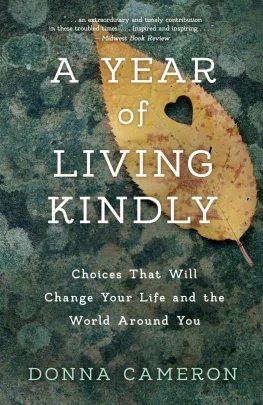
Year of Living Kindly cover for FrankfurtPlease indulge me while I gape at the mind-boggling fact that my book turns five today. Born out of this blog, it continues to find new readers and, I hope, inspire kindness.

Many of you have been part of this community since the YOLK blog started in 2015. Your interaction and encouragement spurred me to attempt to turn my ideas into a book. I am so grateful.

No one is more surprised than I by its success. Like the little engine that could, it continues to chug along. It is now in its 9th printing, with three foreign language editions out (take a gander at the covers below!) and two more currently in production. It’s been honored with more than a dozen literary awards.

Most important, it’s touching lives. I often hear from readers who tell me YOLK inspired them to extend a kindness or withhold a snarky comment, or that they more readily recognize the kindnesses all around them. I can think of nothing more satisfying.

I wish I could claim that nine years of studying, writing, and speaking about kindness have made me a paragon of compassion, patience, and understanding. But no, I’m still learning. There are still times when I’m bitchy, cranky, and oblivious, but those occurrences are less frequent. I think I am kinder, and I am so much more aware of kindness all around me. I’ve seen also that there is a direct connection between kindness and happiness. Continue reading
The Power of Presence

butterfly from somewhere else“It’s all a matter of paying attention, being awake in the present moment, and not expecting a huge payoff. The magic in this world seem to work in whispers and small kindnesses.” ~Charles de Lint
In our review of the skills we carry in our kindness toolbox, let’s look at a couple more.

Paying Attention

An essential skill of kindness is paying attention, being present to what’s happening around us. Not being so absorbed in our devices or our own internal drama that we don’t notice the car trying to merge, the person whose hands are full whom we could hold the door for, or a child in distress seeking our attention.

Beyond noticing our opportunities to extend kindness, it’s also being present to receive the kindnesses others offer us. At the library recently, I saw a man wait to hold a door for a woman who was a few steps behind him. She didn’t even look up from her phone, just walked through the open door into the library without a word. I’m sure he held the door because he wanted to be courteous and considerate; he didn’t do it to be thanked. And let’s give her the benefit of the doubt: she probably wasn’t being deliberately rude; it’s likely she didn’t even notice him, so occupied was she by her device. But what an opportunity missed. At least three people could have felt the endorphins created by kindness: he, the giver; she, the receiver; and I, a witness. Each of us would have had a burst of pleasure over something so small as the courtesy of a held door.

I’m not going to get on a soapbox about all the things people miss because they’re addicted to their phones. It’s a choice. When people realize how much actual life they’re missing, they’ll modify their habits.

It’s not just our devices that deter us from noticing kindness opportunities. We can be just as absorbed in the dramas we manufacture internally: Continue reading

That Special Occasion Is Today

“Don’t die with your best song still unsung.” ~Anonymous

LLV2

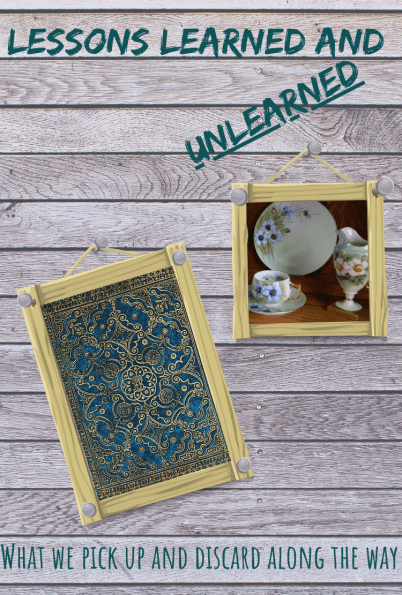
[While kindness has been and will remain one of the most important lessons of my life—and one I continue to learn daily—lately, I’ve been thinking about other lessons life has taught me. And I’ve become increasingly aware of the lessons that no longer serve and need to be “unlearned.” Like many writers who say they write to find out what they think, writing is how I make sense of my world. Periodically, I plan to explore some of my life lessons here. I invite you to share some of your own.]

I’m finally learning to use and enjoy the things I love—without worrying about whether I might break them, wear them out, or use them up. Growing up, I somehow ingested a notion that special things were to be saved for special occasions:

“We only use those dishes when we have company.”

“Those are your good shoes. You can’t wear them for everyday.”

For years—even long after I was out on my own—I didn’t wear the favorite sweater to go grocery shopping or just around the house. I didn’t serve dinner for only the two of us on the pretty china with the blue flowers, or pour water, lemonade, or wine into the delicate crystal glasses. I refrained from writing in the exquisite hand-sewn journal a dear friend gave me because my scribblings were just too mundane for such a gorgeous book.

But somewhere along the way—finally—it occurred to me that the sweater wasn’t made to spend its life in a drawer, the china and crystal would give us pleasure and maybe even psychologically elevate the quality of my mediocre cooking. And if I didn’t think my writing or my thoughts were worthy of a lovely journal (and a good pen to write with), then what kind of timid, phony writer am I? If I fill it up with my thoughts—however jumbled or humdrum—I can get another. I’m worth it. Continue reading

Hindsight 2020: How Will Our Children Remember COVID-19?

“If you can control your behavior when everything around you is out of control, you can model for your children a valuable lesson in patience and understanding…and snatch an opportunity to shape character.” (Jane Clayson Johnson)

When you were a child or adolescent, were there momentous historical events that altered your life and shaped who you ultimately became?

For me, it was the assassinations of John F. Kennedy, Robert Kennedy, and Martin Luther King, Jr., and also the war in Vietnam. For my parents, it was the Great Depression and World War II. For other generations, the 9/11 attacks or Hurricane Katrina may have etched permanent impressions.

The noteworthy historical event for today’s children or grandchildren could well be the COVID-19 pandemic. They’ll remember it not just as that year schools closed and we stayed home a lot, but also for the way we as individuals and as a nation responded to adversity.

Will they tell their own children and grandchildren stories of scuffles over toilet paper, of hoarding and profiteering, of finger-pointing at people of different nationalities? Will they recount the politicization of life-saving, common-sense measures? Or will they describe how, even in isolation, people found ways to connect with and support one another? How neighbor checked on neighbor, shared provisions, and made sure that those who were most vulnerable were not overlooked. Continue reading