Choosing to Be For or Against…

“Tell me what you pay attention to, and I will tell you who you are.” (Jose Ortega y Gasset)
EagleThese days, when I read the newspaper or listen to the news, I find myself looking or listening for stories about kindness. I like to think that I’m developing a radar of sorts—an inner honing device that seeks and recognizes kindness. I’m a firm believer in the idea that we tend to see whatever it is we’re looking for. If we spend our days looking for what’s wrong, we will become skilled at finding what’s broken, insufficient, or flawed. And if we look for what’s good and right, that’s we will find.

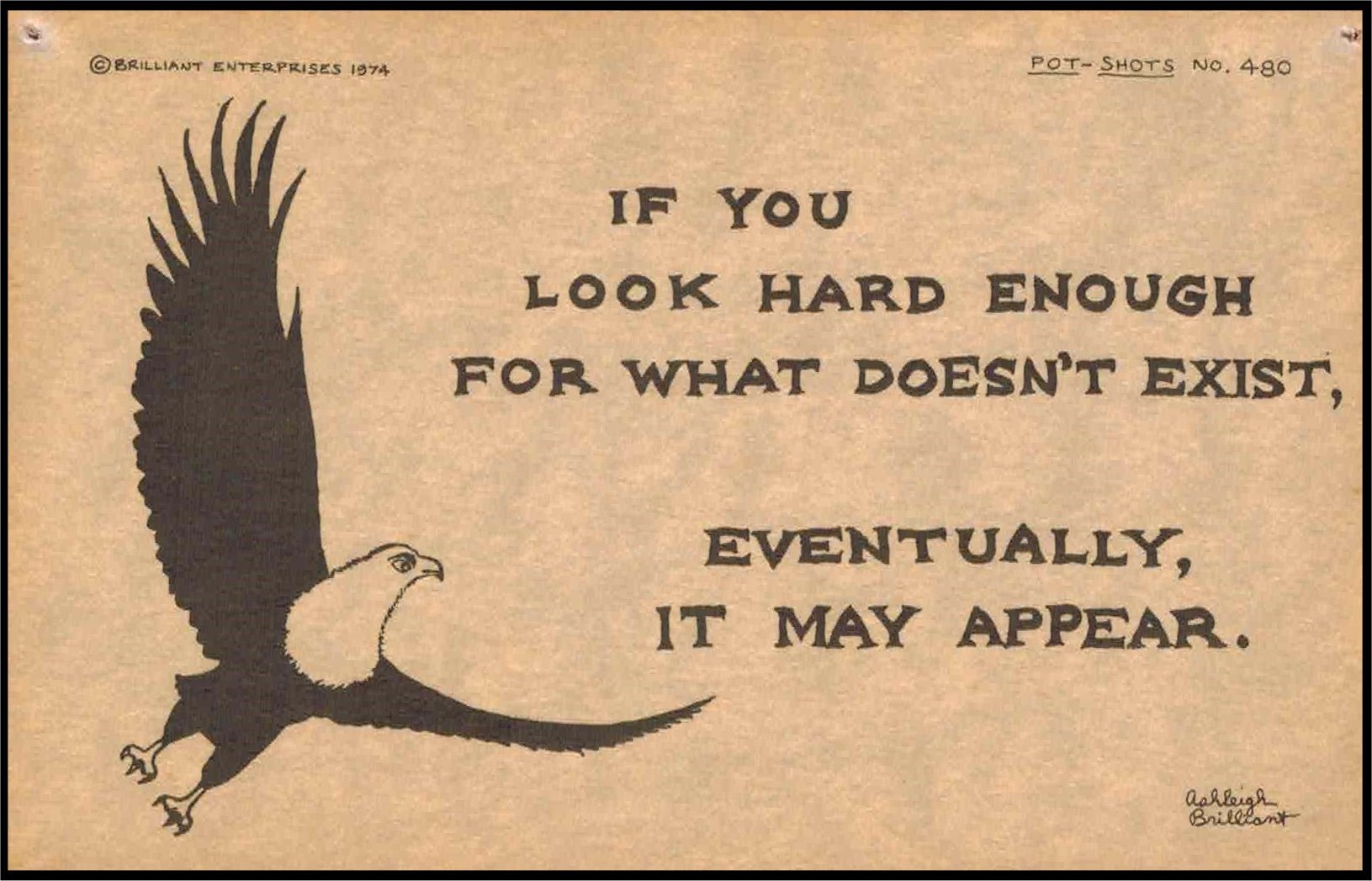
For a couple of decades I’ve had pinned to my bulletin board an old Ashleigh Brilliant postcard that says, “If you look hard enough for what doesn’t exist, eventually it may appear.” A few years ago, a friend noticed it and asked me why that was on my wall, when all my other quotes and cartoons were so positive. I was baffled.

I told her, “But that is positive. It tells me to keep believing, even when I don’t yet see what I’m seeking. It’s all about the power of belief. How do you see it?”

Quite differently, it would seem. She told me, “If I think my husband is cheating on me and I look hard enough, I’ll find out it’s true.”

Well, I guess that is one way of looking at it. [Spoiler alert: the marriage didn’t last much longer.]

To a large degree, I think we do make our own reality. I’ve known people who have had more than their share of loss, illness, and misfortunes, yet they maintain a positive outlook and still manage to find something good in every mishap. They are a joy to be around.

I’ve also known people who see every loss and every misfortune as proof that the world is against them and life’s not fair. More of the same is pretty much all they expect of life, and that pervading gloom is what they convey to others. Spending time with such people can be draining—I’ve heard them referred to as energy vampires.

I’m not advocating being a Pollyanna. Perpetual and mindless cheerfulness can be as tiresome as the persistent pessimist. Each of us needs to be an activist in our own life. When we see unkindness, injustice or prejudice, we must speak out and stand up for what’s right. But if our radar is focused like a heat-seeking missile on finding mistakes and shortcomings, then life is probably pretty bleak. It’s the old glass-half-full or glass-half-empty conundrum.

Mother Teresa is reported to have said, “I was once asked why I don’t participate in anti-war demonstrations. I said that I will never do that, but as soon as you have a pro-peace rally, I’ll be there.”

I was reminded of that quote when I read Jerry Large’s column in The Seattle Times the other day. He wrote about a woman in the nearby town of Snohomish who was being removed as a volunteer leader in Young Life, a well-established Christian organization for high-school students. Pam Elliott’s “crime” was participating with other mothers in making decorations for the Seattle Pride Parade later this month, and posting the pictures on her Facebook page. She did it in support of a friend and the friend’s gay son, and because she believes in equality for everyone.

“Love is love,” Elliott said. “I am not a big activist, I’m supporting my friend. This is what we do for each other, we love each other’s kids like our own.”

The Young Life people gave her a choice. Ms. Elliott can continue her work as a volunteer leader—work which she loves—if she retracts her Facebook posting and stops aligning herself with the gay rights movement. The choice she made was to continue to support her friend and her friend’s son … and what she knows to be right. I’m not comparing Pam Elliott with Mother Teresa, but, like Mother Teresa, Ms. Elliott chose to stand for something, rather than against something else.

The more we choose positive over negative, good over bad, kindness over apathy or unkindness, the closer we all move toward manifesting the world we want to live in, and want future generations to know without question.

That’s what I look for when I read the news…

“What we choose to love is very important for what we love leads our eyes, ears, and hearts on a pilgrimage that shapes the texture of our lives.” (Wayne Muller)

Kindness and Vulnerability

“A gift is like a seed; it is not an impressive thing. It is what can grow from the seed that is impressive. If we wait until our seed becomes a tree before we offer it, we will wait and wait, and the seed will die from lack of planting…. The miracle is not just the gift; the miracle is in the offering, for if we do not offer, who will?” (Wayne Muller)

Attribution: Donna CameronPeriodically, the universe sends me a message. It’s not some disembodied James Earl Jones voice, or a bolt of lightning that rattles my foundation; more often than not, it’s a barely perceptible tap on my shoulder that says, “Pay attention here.”

I was at a conference last week where I happened to overhear two people talking about vulnerability and about Brené Brown’s TED talk on the subject. Then, last night, I was reading an article in a writer’s magazine that spoke of the writer’s need to be vulnerable, and also referred to Brené Brown’s TED talk. I felt that tap on my shoulder and heard that inner whisper, “Pay attention.”

The wonderful and sometimes dreadful thing about modern life is that we can easily and instantly access almost anything. Within seconds and a few keystrokes on Google, I was watching Dr. Brown’s 2010 talk, “The Power of Vulnerability.”

Wow! If you haven’t seen it, it’s worth your time, I promise you. This delightful and insightful talk explored a trait that whole-hearted people share: vulnerability. It described the willingness we must have to “allow ourselves to be seen,” with all our imperfections, in order to fully embrace our lives.

I can’t do justice to her words. You want to hear them first-hand. Really.

Whether we’re committing to love, or art, or business, or kindness, we must have the courage to do it whole-heartedly, with full awareness that there will always be those who find us lacking. In a way, knowing that frees us—if we can just embrace our vulnerability—for if we stop trying to please everyone, we can focus on being who we were meant to be. And isn’t that all life is asking of us?

Of course, this talk about vulnerability got me to thinking about kindness, and the connection between kindness and vulnerability. I’ve talked before about the difference between being kind and being nice. I don’t think “nice” requires us to be vulnerable. I can be nice without risk, and without exposing too much of myself. I can be nice without making a connection, or without really caring whether or not you benefit from the encounter. Nice, while often pleasant, doesn’t require sincerity or commitment.

To me, “kind” is very different. Kind means connecting; it means being conscious and intentional about the impact my words or actions may have; it means expending energy and effort and caring about the outcome. It also means suspending judgments and accepting people as they are. Kind can be messy and may take me to places where I am awkward, clumsy, and tongue-tied. Kindness requires me to take a risk. Kindness requires me to be vulnerable.

Since starting this year of living kindly, I have tried to make a conscious effort to do things kindly that I once may have done nicely. Outwardly, there’s probably not a lot of difference. In the past, if I chose to give a dollar or two to someone who asked me for money, I would do so quickly, and hurry on, sometimes wondering if the person was really in need, or if they were just lazy and saw me as an easy mark. Now, I try to pause and exchange a few words, make eye-contact, and wish them well. In most cases—though not all—I feel a connection between me and the person I am engaged with. For a brief time, we are both vulnerable, and it feels good. I don’t worry about whether their need is genuine or whether I am being a schmuck; I just hope in some way I am helping.

There is even a vulnerability to writing about kindness and to inviting people to read my periodic musings. Am I saying too much about myself? Too little? Am I pontificating (God, I hope not!)? Has it all been said before and said better? Am I missing the point entirely?

If I allow myself to be vulnerable, the answer is it doesn’t matter. As Brené Brown eloquently explains, connection is why we’re all here, sharing this planet, and it’s what gives meaning and purpose to our lives. To make that deep connection, we have to allow ourselves to be seen. That means having the courage to be imperfect, to expose our flaws, and the willingness to be vulnerable.

Living our most authentic life, whatever that means to each of us—for me it’s choosing kindness—requires that we let go of our shield and lower our guard, and that we embrace our flaws and our vulnerability. It’s scary, but, oh, the rewards of living an authentic life are beyond measure!

“Love doesn’t mean doing extraordinary or heroic things. It means knowing how to do ordinary things with tenderness.” (Jean Vanier)

[Before I close, I want to encourage you to watch Brené Brown’s TED talk. I promise it’s worth 20 minutes of your life—maybe it’s even a message from the universe to you.]

Kindness and Curiosity

“Curiosity is the single most important attribute with which humans are born. More than a simple desire to discover or know things, curiosity is a powerful tool, like a scalpel or a searchlight. Curiosity changes us. It is also a way to effect change, perhaps even on a global level.” (Loren Rhoads)

Attribution: Donna Cameron

“The important thing is not to stop questioning. Curiosity has its own reason for existing.” (Albert Einstein)

Twice in the last week I’ve seen kindness equated with curiosity.  That made me curious. I’ve always thought curiosity is an important quality to have if one wants a rich and insightful life, but I hadn’t directly connected curiosity with the value I hold dear: kindness.

In an article entitled “Kindness and Curiosity in Coaching” that recently appeared in the Huffington Post, business consultant and executive coach Ruth Henderson described how her mother would posit a kind explanation for other people’s behavior: after being cut off by a speeder, Ruth’s mom speculated, “Maybe his wife’s having a baby and he’s trying to get to the hospital.”

Later, when Ruth was a business professional, her own coach encouraged her to approach difficult or frustrating situations with an inquisitive mind.  She told Ruth:  “Kindness and curiosity leave no room for anger and resentment.”

I think it’s true.  If I ponder a work situation where a colleague did something that seemed terribly inappropriate, or a client blew up and offended everyone within earshot, it’s easy to get angry or judge that person harshly.  But if I tap into my curiosity first, I have a very different response.  What made that colleague choose to act inappropriately?  Was she acting out of fear?  Was there a misunderstanding? Did she somehow not realize the nature of her action?  Was something else going on that I’m not seeing?

And what made that client blow up?  Fear is often behind many such outbursts—what might he be afraid of?  Or maybe he’s not feeling appreciated, or perhaps there’s a personal calamity in his life that has stretched him to his limits?  What don’t I know that might explain his behavior?

As soon as I yield to curiosity and allow for the possibility that there may be something going on that is beyond my awareness, I can replace my reflex response of anger or disgust with a desire to understand and even a desire to help.  Curiosity leads to kindness.

“When we aren’t curious in conversations we judge, tell, blame and even shame, often without even knowing it, which leads to conflict.” (Kirsten Siggins)

Curiosity vs. Discipline

In a recent article from the Harvard Business Review—one that I think should be required reading for anyone who manages or supervises other people, or who wants to—Stanford University research psychologist Emma Sepppala, PhD, describes how compassion and curiosity are more effective than frustration and reprimand in responding to an underperforming employee or one who has made a serious mistake.

Traditional, authoritarian management approaches tend to focus on reprimanding, criticizing, even frightening the employee—the rationale being that fear and embarrassment might teach the individual the error of his/her ways.  Instead, the research shows, it serves mostly to erode loyalty and trust and to impede creativity and innovation.

A more effective response to an employee’s error or underperformance is to first get our own emotions in control, and then view the situation from the employee’s eyes.  Here’s where curiosity comes into play.  What caused the mistake or what might be the reason for the poor performance?  What is the employee feeling about the error that he made?  Chances are he is horrified, embarrassed, and frightened.  A kind response—this doesn’t mean overlooking the error, but using it as a teaching or coaching opportunity and doing it compassionately—will engender loyalty, trust, and even devotion.  It will also be far more effective than reprimand or punishment in helping the employee avoid such mistakes in the future.

The loyalty engendered by the kind response extends beyond the particular employee you may be dealing with.  Seppala notes that “If you are more compassionate to your employee, not only will he or she be more loyal to you, but anyone else who has witnessed your behavior may also experience elevation and feel more devoted to you.”

It makes sense.  Everyone makes mistakes, and if our employees see their boss or manager respond kindly to a coworker’s blunder, they can feel secure in the knowledge that when they make a mistake, the response is likely to be similarly compassionate.  This fosters a culture of safety, one that encourages innovation, creativity, productivity, and loyalty—these are the qualities that the best and the brightest are seeking for their career homes.

Whoever said “curiosity killed the cat,” had it wrong.  Curiosity is one of the most beneficial qualities we can cultivate.  Combine it with kindness and magic happens!

“Let go of certainty. The opposite isn’t uncertainty. It’s openness, curiosity and a willingness to embrace paradox, rather than choose up sides. The ultimate challenge is to accept ourselves exactly as we are, but never stop trying to learn and grow.” (Tony Schwartz)

Kindness and Generosity – Offering Our Unique Gifts

“Generosity brings happiness at every stage of its expression. We experience joy in forming the intention to be generous. We experience joy in the actual act of giving something. And we experience joy in remembering the fact that we have given.”  (Gautama Buddha)

Flowering Cherry and Moss 2A few posts ago, I wrote about the connection between kindness and a sense of abundance.  The logical next step when one’s view of the world is of abundance rather than scarcity is to express that abundance through generosity.

I have been blessed to be the recipient of so much generosity throughout my life—from my friends, my professional colleagues, my family, and even strangers.  Their generosity is expressed through the wisdom they so willingly share, through their time, their thoughtful actions, and their kind words.

When we think of generosity, our first thoughts are likely of material gifts or donations of cash, and, of course, these are elemental expressions of generosity, but they aren’t our only gifts.

The Three T’s

There’s an adage in the non-profit world that board members need to be willing to give the three T’s: Time, Talent, and Treasure.  Treasure is usually interpreted in monetary terms—especially for charitable and philanthropic non-profits.  If board members won’t donate to the cause, it’s hard to convince others to do so.  Hence, grant applications will often ask if 100 percent of the board has made a donation to the organization.  Boards with “high-rollers” can usually easily answer yes, but if members of the board are part of the constituency the organization serves, there may be some who have little to spare in the treasure department.  That’s why applications don’t ask how much board members have donated, only if they have.  A $10 donation from someone who may have to skip a meal to make that donation is just as important—perhaps more so—than the $50,000 donation from a corporate CEO.

Being generous with our talent asks only that we are willing to share what we do best, whether that’s fundraising, marketing, budgeting, schmoozing, or baking cupcakes.  Each of us has unique talents and part of the job of being human is recognizing them and sharing them where they are most needed.

Generosity of time is an essential element in non-profits and elsewhere.  As we have explored in an earlier post, we are often so pressed for time, so overscheduled, that we blow off opportunities to extend kindness.  Or maybe we don’t even see them in our rush to meet so many deadlines.  Generosity with our time when time is limited can be a kindness beyond measure—especially if we are able to give without conveying to the recipient our stress or our inconvenience.

Other Ways to Be Generous

Beyond the three T’s, there are a multitude of other ways we can be generous:

We can be generous in deed: It can be as simple as holding a door for someone, helping to carry a heavy load, or offering a hand.  It might be bringing freshly-baked bread to a neighbor or washing someone else’s dirty dishes without grousing.  There are so many generous deeds we can offer—big and small—and mostly it’s a matter of training our eyes to look for them.

We can be generous of word: It doesn’t take much to make someone’s day with a kind word.  Mark Twain famously said, “I can live for two months on a good compliment.”  Of course, he is also reported to have said: “I have been complimented many times and they always embarrass me; I always feel they have not said enough.”  Both quotes show how powerful a sincerely expressed compliment can be.  And the wonderful thing is that they’re easy!  We can compliment someone on the great service they provided, or the astuteness of an observation, a well-written report, or how their smile brightens a room.  All we have to do is pay attention.

We can be generous of spirit:  The Buddhist practice of metta, often translated as lovingkindness, teaches practitioners to repeat phrases—aimed first at oneself, then loved ones, then acquaintances and strangers, and finally even to adversaries.  The phrases express a wish for happiness, for safety, peace, freedom from pain, and so forth.  In offering metta to people with whom we share conflict or difficulties, people who have hurt or angered us, we are, says Buddhist teacher Sharon Salzberg, “recognizing our essential interconnectedness.”  Salzberg notes that in offering metta to a difficult person, we are not condoning bad or hurtful actions. “Instead, we are looking deeply into our hearts and discovering a capacity for lovingkindness that is not dependent on circumstances and personalities.”  We are expressing generosity not only to others but to ourselves.  That capacity for compassion is our gift to the world.

If we can give nothing else, let us at least give the benefit of the doubt.  This is easier to do with family and friends than with mere acquaintances and strangers.  If a friend or loved one says something that we find hurtful, it’s usually easy to excuse—“that wasn’t how she meant it to come out,” “I know he’s been under a lot of pressure; he didn’t really mean it.”  Why can’t we offer that same understanding to strangers when they say or do something questionable or hurtful?  Instead, we generally ascribe the worst motives and label them jerks.

In our office, we continually remind ourselves to “assume one another’s good intent.”  A simple statement, but enormously powerful.  If I ruled the world (a frightening thought if there ever was one), I’d have the phrase, “we assume one another’s good intent” printed at the top of every meeting agenda and posted on the wall of every room where people gather.  It all comes down to the simple generosity of giving the benefit of the doubt to everyone we encounter.

Generosity isn’t just something we do for someone else.  When I choose to act generously, the greatest beneficiary is always myself.  There is no better expression of the abundance in my life, nor of the confidence that I not only have enough, I am enough.  Giving creates a joyful sense of oneness with my world and my fellow creatures.

“No one has ever become poor by giving.” (Anne Frank)


Kindness Counters Indifference … It Requires Engagement and Action

“They say philosophers and wise men are indifferent. Wrong. Indifference is a paralysis of the soul, a premature death.”  (Anton Chekhov)

Attribution: Donna CameronWhile the opposite of kindness is, logically, unkindness, I think equally opposite is indifference.  One cannot be kind if caring is absent.  Unless we are willing to suspend our spectator status and jump into our lives, we will probably wallow in a state of relatively comfortable indifference.

And indifference and kindness cannot coexist.

An anthem to indifference, entitled, “Outside of a Small Circle of Friends,” was written and sung by Phil Ochs in the 1960s, in response to the horrific murder of a young woman named Kitty Genovese in New York.  Dozens of people were awakened by her screams, and even watched from their windows as she was attacked and stabbed over a prolonged period.  Yet none tried to intervene or even picked up the phone to call the police.  It seems unbelievable that no one would step up to help in any way.  But they didn’t want to get involved; they couldn’t be bothered; they were afraid; perhaps they assumed someone else had already taken action.

Ochs’ song satirizes our indifference not just to a crime such as the Genovese murder, but also to poverty, inequality, and the needs of others.  Like so many of Ochs’ songs of protest (and he was a master of the protest ballad), the song is outdated now, too strident and a bit corny.  But it still has a bite.

Today’s “anthem” to indifference might be a one-word phrase that is generally delivered with an accompanying shrug and a roll of the eyes: “Whatever…”

There is so much packed into that little word: who cares? … I can’t be bothered … what’s the big deal? … so what?

“Whatever,” delivered with the accompanying tone and gestures of indifference, is not a kind word.  At best, it’s a lazy word; at worst, a door slamming on potential kindness.

We learn indifference and phrases like “whatever” from the people around us.  Children, especially, model what they see, and from the time they are very young, they see a great deal of indifference.  But just as indifference is learned, so is kindness.  The earlier we start learning kindness, the sooner we are able to practice it, thus staving off indifference.

Teaching Kindness

According to neuroscience expert Patty O’Grady, PhD, of the University of Tampa, children can learn kindness in school through the teaching of empathy.  She cites many classroom experiences that can demonstrate and reinforce kindness, among them simple acts such as charting kind actions, noticing kindnesses, teaching tolerance, and group participation in activities that spread kindness.

In an online article on the Psychology Today website, O’Grady notes: The neuroscience and social science research is clear: kindness changes the brain by the experience of kindness. Children and adolescents do not learn kindness by only thinking about it and talking about it. Kindness is best learned by feeling it so that they can reproduce it. Kindness is an emotion that students feel and empathy is a strength that they share.

Kindness and empathy are an antidote to indifference.  We cannot force kindness, any more than we can force love or respect.  But, the sooner we can replace shrugs with caring, and “whatever” with a smile and a genuine response, we will be on the way to countering indifference and engaging in the precious life that is only ours to live.

“Indifference.” Jerusha surprised herself with the answer. “Indifference, Gundhalinu, is the strongest force in the universe. It makes everything it touches meaningless. Love and hate don’t stand a chance against it. It lets neglect and decay and monstrous injustice go unchecked. It doesn’t act, it allows. And that’s what gives it so much power.” (Joan D. Vinge, The Snow Queen)