Big (But Quiet) Kindness Lessons

“Let the beauty we love be what we do. There are a hundred ways to kneel and kiss the ground.” (Rumi)

ttribution: Donna CameronI have encountered so many lessons during this year of living kindly. So many that I can’t name them all. And even if I try, I couldn’t do it in one blog post. So I thought I’d divide them into two posts and call one “Small Kindness Lessons” and the other “Big Kindness Lessons.” However, the more I thought about it, I see that there are no small kindness lessons, just as there are no small kindnesses.

We never know how far our kindness will reverberate. Will the smile we extended to the bus driver cause him to greet each passenger with a kind word, and will each of those people, in turn, extend a kindness that they otherwise might not have, and will one of those kindnesses—or a further kindness—mend a heart, lift someone from despair, or even save a life?

No, there are no small kindnesses. And likewise, the lessons of kindness may seem small, but they could extend far beyond our imagining.

That being said, as I think about this year of lessons in kindness, I see that some of them were quiet ahas, and others were cacophonous eurekas! Today, I’ll share what for me were some of the quiet ahas, though they are by no means small. Next time, it will be the thunderous eurekas. Where applicable, I’ll provide links to the post where I explored the idea.

Being kind and being nice are not the same thing. They’re not.  link

It takes patience to be kind and kindness to be patient.  link⇒

Curiosity can lead us to kindness. If we look for what’s behind unkindness, we will often reach a place of understanding.  link⇒

Kindness is an evolution, not a sudden transformation. Like most of the best things in life, developing a life of kindness is a gradual process. Kindness is a path that is its own destination.  link⇒

Being able to accept kindness is as important as being able to extend kindness.  link⇒

Kindness begins with me. A life of kindness begins with self-kindness. If I don’t think I’m worthy of my own kindness, how can I be consistently kind to others?  link⇒

Sometimes the kind thing to do is nothing.  link⇒

There’s no such thing as selective kindness. The person who is kind to you but unkind to the waiter is not a kind person.  link⇒

Kindness and gratitude go hand-in-hand.  link⇒

I can take kindness seriously without taking myself too seriously.

Like all things that we want to become good at, kindness takes practice.  link⇒

We teach kindness by modeling it, not by lecturing about it.

The kinder we are, the more kindness we experience.

Kind people are not without occasional bouts of pettiness, envy, anger or impatience, but they are able to rise above their impulses and express kindness. link⇒

If I am unable to see a way to express kindness I need to look more closely or broaden my field of vision.

All of these little ahas comprise a recipe for a kind life. None are terribly difficult, though practice is essential. If we can keep them in our hearts and in our awareness, we can not only enjoy a feast of compassion and connection, we can change the world.

These are just some of the hundred ways to kneel and kiss the ground.

“It’s all a matter of paying attention, being awake in the present moment, and not expecting a huge payoff. The magic in this world seem to work in whispers and small kindnesses.” (Charles de Lint)

What If I Don’t Feel Like Being Kind?

“You may be sorry that you spoke, sorry you stayed or went, sorry you won or lost, sorry so much was spent. But as you go through life, you’ll find you’re never sorry you were kind.” (Herbert Prochnow) 

Attribution: Donna CameronKindness isn’t always tidy and straightforward. It certainly isn’t always easy. Sometimes it’s awkward, bumbling, or misunderstood. Sometimes all we can do is guess, and hope that our kindness will have the result we intended. We can put it out there—how it is received or perceived is out of our control. 

True kindness might also sometimes be false kindness in the sense that to be truly kind means extending kindness even when we don’t feel it, and, in fact, when what we really want to do is say the snarkiest thing imaginable. Or when we just want to let the moment pass and pretend we didn’t see the opportunity to be kind. This is when choosing kindness really means something.

Just as it’s easy to be happy when the sun is shining and everything’s going our way, it’s easy to be kind when our kindness takes little effort … or when we know it will be appreciated … or when the recipient of our kindness is someone we know and like.

The key to true kindness—like the key to true happiness—is managing to maintain our attitude or keep our resolve when all hell is breaking loose. When the cat throws-up all over a favorite sweater, the car is making a strange and worrisome noise, you’ve been on and off hold with customer support for over an hour, and a neighbor yells at you because all the leaves from your big tree blew into his yard.

When it’s simply a crappy day, is just holding it together the best we can do, or can we move beyond our instant, emotional, and sometime automatic response and consciously choose the hard response, the one that we want to define us: the kind response?

Michael Broome put it well: “Character is when we have the discipline to follow through with the goal after the mood in which the goal was set passes.”

I had a realization about halfway through this year of living kindly that my most important job—even more important than the one that has sustained me for more than 30 years—is to be kind. That’s why I’m here, on the planet. With that awareness, I see that the biggest kindness challenge is to be kind when I may not feel it.

Kindness may be simple, but it sure ain’t easy.

Learning to Pause Is Essential to Kindness

I recently read that when we feel threatened or angry we drop into our “reptilian” brain, which is where our survival responses are. These include attack, aggression, revenge, fear, and territorial behavior, among other responses. Once in that primitive, reptilian state, it takes about 20 minutes to shift back to our thinking and coping frontal lobes. And being kind from that reptilian state may not be possible.

My friend Ann Macfarlane of Jurassic Parliament—who expertly and enjoyably teaches people how to have successful meetings—describes this state as “amygdala hijack,” when our brains respond to perceived threat with anger and rage.

Whether our higher brain is hijacked or taken over by reptilian instincts, we do have the ability to choose. We don’t have to react instinctively or act on the first snarky impulse. If we can just learn to pause, we can choose who we are going to be in the next moment, and then the one after that. And we can always choose kindness.

Also Essential: Maintaining Awareness

If we pay attention, we can probably avoid amygdala hijack or attack of the phantom reptile. And then we can choose kindness, and the wonderful thing is that the experience of our own kindness will usually lift us out of our funk or fury.

Another element of awareness is understanding why we want to be kind, and how we want to respond to unkindness. Am I being kind to this person who was appallingly rude to me because I want to show them that I am better and more highly evolved? … that they are wrong? … that I will not stoop to their level? Or am I being kind to this person because I want to be kind no matter what and because my kindness serves life—which is perfect in its imperfection? More and more, when kindness is hard and I choose it anyway, it’s for the latter reason. Life is sacred and no matter where I am, or however small I am, I can serve it.

Another form of unkindness that we can avoid by paying attention is indulging in the practice of gossip. It can be tempting to dish the dirt—we’ve all done it—talk about the absent colleague, the weird neighbor, the flakey relative. But it never feels good later—in fact, to use a technical term, it feels icky. Instead, the kind response is to interrupt the spiraling cycle of gossip by saying: “Let’s not talk about Genevieve behind her back,” or “She handled that unhappy customer so well last week—I was really impressed by her professionalism, weren’t you?” Or, at the very least, we can say, “I’m not comfortable with this conversation,” and leave the room.

Sometimes we find ourselves in the middle of these sorts of conversations without realizing how we got here. That’s where paying attention comes in. As soon as we start to get that uncomfortable feeling—for some of us it’s in our stomachs, for others in our shoulders or neck, or elsewhere—we need to think about what’s not right here: Is this a conversation that diminishes rather than builds? Am I overlooking an opportunity to be kind? Am I stuffing my real feelings to be part of the group?

As I’m approaching the end of this year of living kindly, I have a growing awareness that my ongoing task is to keep learning how to be kind when kindness isn’t easy: when I don’t feel like it, or when I’m responding to rudeness or unkindness.

On this never-ending path, the true challenge is to appreciate the moments when kindness is hard or the object of our kindness pushes every one of our buttons—for these are the times when we can fully own our commitment to kindness, when we can say, “Choosing kindness wasn’t easy … but I chose it anyway.”

“Kindness is an inner desire that makes us want to do good things even if we do not get anything in return. It is the joy of our life to do them. When we do good things from this inner desire, there is kindness in everything we think, say, want and do.” (Emanuel Swedenborg)

A Dozen Reasons to Choose Kindness

“Kindness is more important than wisdom, and the recognition of this is the beginning of wisdom.” (Theodore Isaac Rubin)

attribution: Donna CameronThe decision to make kindness a central element in our lives does not automatically imbue us with that important quality. Like so many other things we choose to care about, that’s just the beginning. Practice is required if we want to become proficient. Just as they say you need to practice if you want to play the piano well … or you need to write regularly if you want to be a writer … or you need to practice your swing if you want to shoot par in golf, you also need to strengthen your kindness muscle by using it regularly. The result—eventually—will be that kindness comes naturally and even sometimes effortlessly. That’s the sweet spot.

But, of course, if we’re going to practice something, there needs to be a good reason. If it’s writing, maybe you want to be published, or you want to be able to express yourself through stories that will entertain or inspire. If it’s piano, maybe you want to connect with the music, be part of a jazz combo, or entertain friends. If it’s golf, you’re simply a masochist.

With regard to kindness, it should be enough just to know it’s the right thing to do, but there are also some really good reasons to choose kindness and to practice it until it becomes ingrained in our reflexes. Here are a few:

  1. Kindness is good for our health. There have been several studies about the health benefits of kindness. They show that people who are routinely kind get relief from chronic pain, stress, and insomnia, and they also have increases in happiness, optimism, and self-worth. More specifically:
  2. Kindness has a positive effect on the body’s immune system, as well as on the production of serotonin in the brain.  Serotonin is a chemical created by the human body that has a calming, anti-anxiety effect.
  3. Kindness is good for your heart: Acts of kindness often generate an emotional warmth, which produces the hormone oxytocin in the brain and body, which, in turn, releases nitric oxide in blood vessels causing them to dilate and lower one’s blood pressure, acting as a cardio-protective agent. Oxytocin also reduces levels of free radicals and inflammation in the cardio-vascular system, thus reducing heart disease.
  4. Kindness slows aging: That same reduction of free radicals and inflammation slows aging in the human body. Compassion has similarly been linked to activity in the vagus nerve, which also regulates heart rate and controls inflammation levels in the body.
  5. Kindness makes us happier: Kindness elevates the levels of dopamine in the brain, giving us a “natural high.” It has been shown to substantially increase happiness and reduce depression.
  6. Kindness improves relationships: Connecting with one another is actually a genetic predisposition, according to researcher David Hamilton, PhD: “Our evolutional ancestors had to learn to cooperate with one another. The stronger the emotional bonds within groups, the greater the chances of survival, so ‘kindness genes’ were etched into the human genome.” As a result, kindness helps us build new relationships and enhance existing ones.
  7. Kindness is contagious: Just as colds and flu are contagious in a bad way, so is kindness in a good way. Kindness begets more kindness. “When we’re kind,” Dr. Hamilton says, “we inspire others to be kind, and it actually creates a ripple effect that spreads outwards to our friends’ friends’ friends—to three degrees of separation.” Whether one extends kindness, receives kindness, or merely witnesses kindness, the result is the same: it acts as a catalyst for more kindness.
  8. Kindness alleviates social anxiety: Recent research showed that engaging in acts of kindness reduced levels of social anxiety and social avoidance. Individuals who performed acts of kindness reported lower levels of discomfort and anxiety about social interaction, and were more able to participate in group activities.
  9. Kindness is a good reason to get ample rest and sleep: It’s been shown that sleep helps us be kinder. So getting your zzzz’s is a way of extending kindness toward yourself and the planet. You don’t need an excuse for that afternoon siesta! In addition, extending kindness when we’re tired can be as replenishing as a cat-nap, or a jolt of java.
  10. Kindness has been linked to greater life satisfaction: Those who regularly extend generosity and perform acts of kindness report higher degrees of satisfaction with their lives.
  11. Kindness make the workplace more productive and enjoyable: – A kind work environment helps employees feel more engaged; it improves morale, builds loyalty and engagement, reduces absences, and increases profits. Forget all those old-school books on winning through intimidation and fear; kindness is a better business model.
  12. Kindness serves life: Kindness guides us to look for the positive rather than the negative, to seek the best in the people we encounter, and to embrace abundance: we have enough and we are enough. When we do these things, we offer our best selves to life, and help manifest the world as we want it to be.

We don’t really need reasons to extend kindness—kindness is simply the best expression of who and what we are. But in the face of myriad deadlines and obligations it’s easy to look for shortcuts and overlook opportunities to extend kindness, so it never hurts to remind ourselves that there are really good reasons to be kind.

And to practice kindness daily….

“Our greatest gift is to allow ourselves to feel alive in this sea, moving with the tides of lovingkindness as they move into us, through us, out of us into others, only to return again and again.” (Wayne Muller)

Kind Actions That Don‘t Take Time and Won’t Cost a Dime

“There is a vitality, a life force, an energy, a quickening that is translated through you into action, and because there is only one of you in all of time, this expression is unique. And if you block it, it will never exist through any other medium and it will be lost. The world will not have it. It is not your business to determine how good it is nor how valuable nor how it compares with other expressions. It is your business to keep it yours clearly and directly, to keep the channel open.” (Martha Graham)

038A large element of kindness is giving—perhaps money, perhaps time. And being able to give without thoughts of getting in return is certainly essential to a kind life. However, there may be times when neither time nor money are available to us. Does that mean we cannot still be generous … or kind?

Au contraire! We can always be kind. There are countless ways to be kind that don’t require investments of time or money. They are not without some effort, though. Here are a few that come to mind. Some are self-explanatory, such as:

  • We can make eye-contact, smile, and say “good morning.”
  • We can say “thank you” or “I’m sorry.”
  • We can hold a door or offer help in carrying a heavy load.
  • We can let the car merge in front of us.
  • We can say something nice about an absent friend when others are gossiping about her.
  • We can load the dishwasher even if they aren’t our dirty dishes.
  • We can acknowledge our own imperfections and overlook the foibles of others.

Other little-time-no-cost expressions of kindness invite us to delve deeper into their meaning:

  • If we can give nothing else, we can always give the benefit of the doubt. Rather than assume the worst, let the stories we make up about people or things we don’t know be positive and affirming. We can assume one another’s good intent—and life will be so much richer if we do.
  • We can let go of anger or resentment. We can forgive. Carrying around anger and resentment toward others, or regrets and recriminations toward ourselves serves no one. Kindness happens when we learn from mistakes, slights, and injuries, forgive and open up to a new story.
  • We can listen for the music rather than the missed note. There are people who spend their time looking for the typo, catching others’ errors, and playing “gotcha” with life. While sometimes that’s our day job if we’re an editor, diagnostician, accountant, building inspector, or the like, it needn’t be our personal mission. The rest of the time, we can practice looking for what’s right and letting go of the rest. Learning to let go is one of the great lessons of kindness. One of the best things we can learn is when something needs to be said, and when it doesn’t.
  • Kind words are powerful, and always welcome. We can compliment someone on the great service they provided, or their perspicacity, a well-written report, or how their smile brightens a room. It’s rare that we can’t find something kind to say.
  • We can pay attention and express appreciation for all that we notice. Paying attention to our lives is one of the secrets to a consistently kind life. If we are unaware of what’s going on around us, it’s so easy to miss opportunities to be kind, or miss the kindnesses extended to us by others. Opportunities to express kindness are all around us, but they’re also easy to overlook if we aren’t paying attention.

Of course, there are still many kindnesses that ask us to open not just our hearts, but also our wallets, and ask us to commit our time as well as our intentions. It’s rarely an either/or. When our hearts are open we will do what we can, recognizing that we offer the best of who we are when we choose kindness.

 “You can’t live a perfect day without doing something for someone who will never be able to repay you.” (John Wooden)

Gratitude: A Companion to Kindness

“If the only prayer you ever say in your entire life is thank you, it will be enough.” (Meister Eckert)
Attribution: Donna CameronThe American Thanksgiving holiday is just over a week away. It is an opportunity for us to pause and acknowledge all we have to be thankful for. Ideally, we should be doing this every day of our lives, but sometimes business and busyness crowd out gratitude.

Throughout this year of living kindly, I’ve noticed over and over that kindness and gratitude go hand-in-hand and also bolster one another. When I am in touch with my gratitude, kindness flows naturally and effortlessly. And if kindness feels hard to summon, taking a moment to appreciate my surroundings, my friends and loved ones, or little things that fill me with delight, inspires a surge of kindness.

I’ve come to see that there are many ways that kindness and gratitude together produce almost alchemical results:

Slowing Down

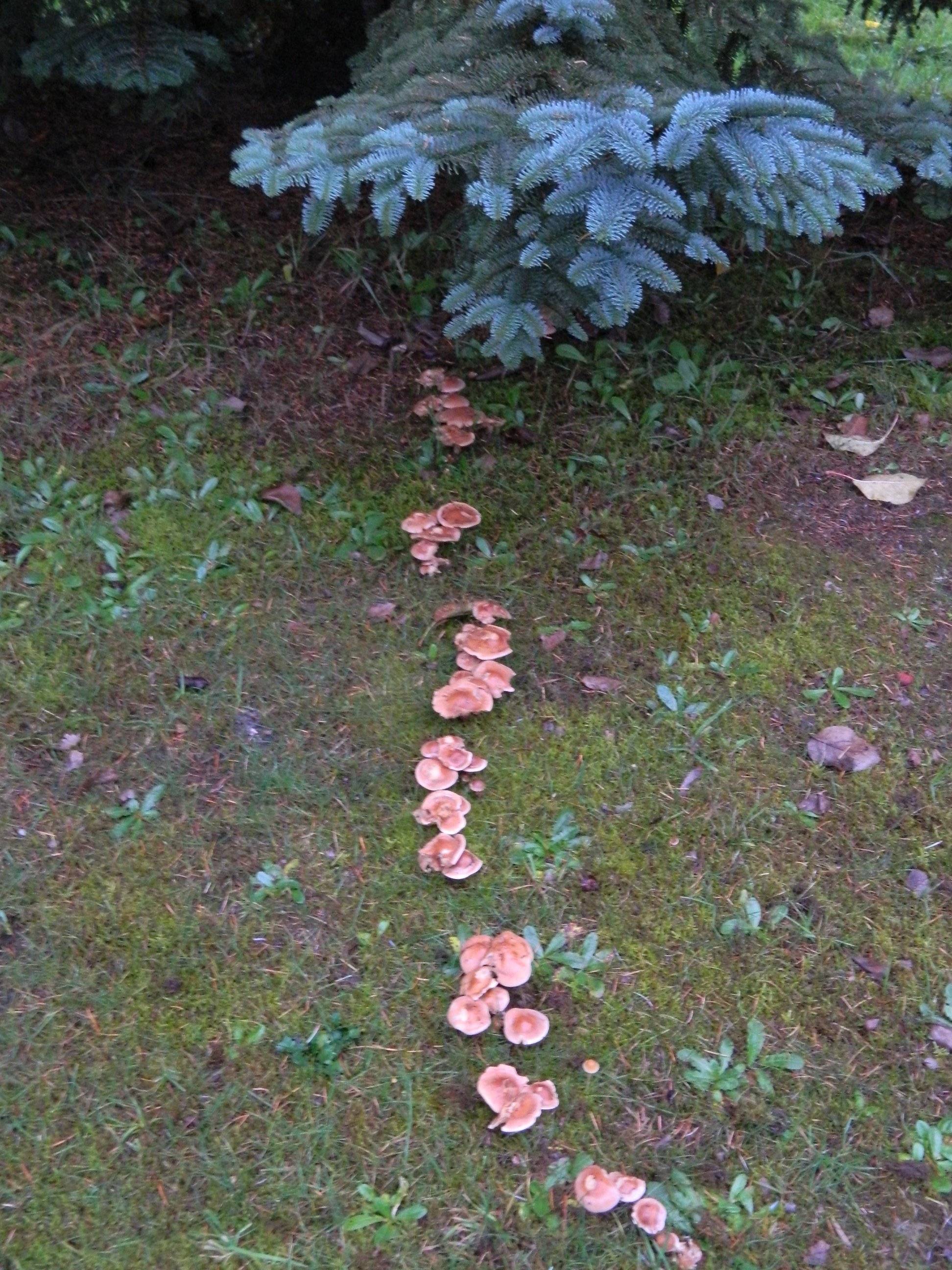
Both gratitude and kindness ask us to slow down. Slowing down isn’t always easy in our overscheduled and over-active lives. I often feel like I’m rushing from one deadline to the next, one obligation to the next, ruled by a lengthy to-do list. But slowing down is essential if we are to notice and appreciate the sunrise, the mushrooms growing at the base of a pine tree, the birds circling overhead like ice-skaters with wings. And slowing down is essential if we are to notice the smile on the cashier’s face, the door held open for us, or the myriad opportunities before us each day to extend our own kindnesses.

An Open Heart

When I experience gratitude, my heart feels open. It is an experience of abundance and sufficiency. This is all I need. It is also a feeling of presence—what happened five minutes ago doesn’t matter, and what will happen five minutes from now doesn’t matter. I am in the moment.

Likewise, the experience of kindness—whether given, received, or even just witnessed—opens my heart and allows me to feel fully present in the moment. For that brief moment, kindness is all that matters. It reminds me of one of my very favorite quotes, by Henry James: “Three things in human life are important. The first is to be kind; the second is to be kind; and the third is to be kind.”

Abundance, too, is a byproduct of kindness. If we believe we are enough, we can easily believe we have enough. Both of these beliefs help us to reserve judgment and extend kindness. And that sense of abundance, whether related to gratitude or kindness—or most likely, both—inspires us to be generous, with our time, our words, our deeds, and our resources.

Negative Emotions

I think it’s difficult to be angry or fearful when one experiences gratitude. I was surer of this last week that I am today, given the horrific events in Paris this past weekend. Those attacks surely brought fear and anger, not just to the people of France, but people all over the world. While there may also be gratitude that one’s family and friends were spared, can gratitude wipe out the fear and anger? I think not. But maybe there can be moments when gratitude at least overrides fear and lets us see that there is much to appreciate even amidst the horror of an attack such as this, or amidst the devastation of a natural disaster, or a personal catastrophe. Maybe it’s gratitude that helps us recover from the worst things that can befall us.

Kindness is also our answer to fear and anger. If we can recognize that our impulse to be unkind or say something unkind is a response to our fear or anger, we can often overcome it. If we can recognize that another person’s unkindness is their response to feeling fearful, we can often respond with kindness through that understanding. Fear often inhibits us from acting kindly—fear that our action will be misunderstood, fear that we will be rejected or embarrassed. Choosing kindness over fear is an act of courage.

Service to the Planet

When we are grateful for something, our instinct is to protect and defend it. If we stand in awe at the edge of the ocean, or if we marvel at the canopy of trees above us as we hike through the nearby hills, our natural desire is to shield them from harm, to assure that they will always be there for us and for future generations to appreciate. Our gratitude puts us in service to life—what could be more important?

Kindness, too, places us in service to life. It’s our acknowledgment that the ultimate kindness is to honor the Earth and our fellow inhabitants—human and otherwise. A healthy planet and sustainable practices is the kindest gift we can offer our planet and the generations that follow us.

Gratitude Practices

It’s lovely if gratitude comes to us frequently and effortlessly, but that is not always the case. Gratitude, like kindness, golf, or piano-playing, is strengthened with practice. The more we do it, the more we experience it and the better we get at expressing it. If you Google “gratitude practices” you will find countless suggestions, from daily meditation, to keeping a gratitude journal, to prayer. I confess that I haven’t yet established a consistent practice, but I try to spend a few moments each morning before I get up thinking about the things I have to be grateful for (the first is always that goofy guy sleeping beside me).

There’s another splendid gratitude practice that I love and practice sporadically. The wonderful physician and teacher Dr. Rachel Remen teaches this; she learned it from anthropologist Angeles Arrien. It takes very little time:

At the end of each day, sit down for a few minutes and answer these questions:

  • What surprised me today?
  • What moved or touched me today?
  • What inspired me today?

Your answers can just be a few words. What you’re trying to do is summon the memory of something that moved you.

As Dr. Remen describes: “The most interesting thing happens, then. Often people are surprised eight or nine hours after something happens when they look back on it deliberately. But [by doing this exercise] that gap shortens until eventually they are able to see in the very moment what surprises them, what touches them, and what inspires them. And then everything changes. The world has not changed, but they have begun to be able to see the world, and they can communicate that experience….It changes everything. It’s a question of paying attention.”

It’s true. At first this is difficult. You may come up blank day after day. “Nothing surprised me” or “Nothing inspired me.” But if you keep searching, you will think of something. Oh, yes, I was touched when I saw those children playing in the park. And just as Dr. Remen says, with practice you begin to notice things that touch or surprise or inspire you in the moment they happen. That creates an enduring state of gratitude—not to mention presence.

Another lovely gratitude practice: For the month of November, my fellow blogger and new friend, Dr. Catherine Cheng—whose wonderful blog, Healing Through Connection, explores (among other terrific things) fixing our healthcare system by improving communications and relationships between physicians and patients—has issued a post daily featuring something in her life that she’s grateful for. Some are things you might expect: her family, good health. Some have surprised and delighted me: Kung Fu Panda, actor George Takei, volleyball…. I look forward each day to seeing what Catherine has chosen to express gratitude for.

Catherine’s posts remind me to think about what I am grateful for—both the expected and the quirky. Whether or not we take the time to write them down, daily recognition of big and little things we have to be grateful for is a wonderful way to live in perpetual thanksgiving.

“Gratitude unlocks the fullness of life. It turns what we have into enough, and more. It turns denial into acceptance, chaos to order, confusion to clarity. It can turn a meal into a feast, a house into a home, a stranger into a friend.” (Melody Beattie)