What If I Don’t Feel Like Being Kind?

“You may be sorry that you spoke, sorry you stayed or went, sorry you won or lost, sorry so much was spent. But as you go through life, you’ll find you’re never sorry you were kind.” (Herbert Prochnow) 

Attribution: Donna CameronKindness isn’t always tidy and straightforward. It certainly isn’t always easy. Sometimes it’s awkward, bumbling, or misunderstood. Sometimes all we can do is guess, and hope that our kindness will have the result we intended. We can put it out there—how it is received or perceived is out of our control. 

True kindness might also sometimes be false kindness in the sense that to be truly kind means extending kindness even when we don’t feel it, and, in fact, when what we really want to do is say the snarkiest thing imaginable. Or when we just want to let the moment pass and pretend we didn’t see the opportunity to be kind. This is when choosing kindness really means something.

Just as it’s easy to be happy when the sun is shining and everything’s going our way, it’s easy to be kind when our kindness takes little effort … or when we know it will be appreciated … or when the recipient of our kindness is someone we know and like.

The key to true kindness—like the key to true happiness—is managing to maintain our attitude or keep our resolve when all hell is breaking loose. When the cat throws-up all over a favorite sweater, the car is making a strange and worrisome noise, you’ve been on and off hold with customer support for over an hour, and a neighbor yells at you because all the leaves from your big tree blew into his yard.

When it’s simply a crappy day, is just holding it together the best we can do, or can we move beyond our instant, emotional, and sometime automatic response and consciously choose the hard response, the one that we want to define us: the kind response?

Michael Broome put it well: “Character is when we have the discipline to follow through with the goal after the mood in which the goal was set passes.”

I had a realization about halfway through this year of living kindly that my most important job—even more important than the one that has sustained me for more than 30 years—is to be kind. That’s why I’m here, on the planet. With that awareness, I see that the biggest kindness challenge is to be kind when I may not feel it.

Kindness may be simple, but it sure ain’t easy.

Learning to Pause Is Essential to Kindness

I recently read that when we feel threatened or angry we drop into our “reptilian” brain, which is where our survival responses are. These include attack, aggression, revenge, fear, and territorial behavior, among other responses. Once in that primitive, reptilian state, it takes about 20 minutes to shift back to our thinking and coping frontal lobes. And being kind from that reptilian state may not be possible.

My friend Ann Macfarlane of Jurassic Parliament—who expertly and enjoyably teaches people how to have successful meetings—describes this state as “amygdala hijack,” when our brains respond to perceived threat with anger and rage.

Whether our higher brain is hijacked or taken over by reptilian instincts, we do have the ability to choose. We don’t have to react instinctively or act on the first snarky impulse. If we can just learn to pause, we can choose who we are going to be in the next moment, and then the one after that. And we can always choose kindness.

Also Essential: Maintaining Awareness

If we pay attention, we can probably avoid amygdala hijack or attack of the phantom reptile. And then we can choose kindness, and the wonderful thing is that the experience of our own kindness will usually lift us out of our funk or fury.

Another element of awareness is understanding why we want to be kind, and how we want to respond to unkindness. Am I being kind to this person who was appallingly rude to me because I want to show them that I am better and more highly evolved? … that they are wrong? … that I will not stoop to their level? Or am I being kind to this person because I want to be kind no matter what and because my kindness serves life—which is perfect in its imperfection? More and more, when kindness is hard and I choose it anyway, it’s for the latter reason. Life is sacred and no matter where I am, or however small I am, I can serve it.

Another form of unkindness that we can avoid by paying attention is indulging in the practice of gossip. It can be tempting to dish the dirt—we’ve all done it—talk about the absent colleague, the weird neighbor, the flakey relative. But it never feels good later—in fact, to use a technical term, it feels icky. Instead, the kind response is to interrupt the spiraling cycle of gossip by saying: “Let’s not talk about Genevieve behind her back,” or “She handled that unhappy customer so well last week—I was really impressed by her professionalism, weren’t you?” Or, at the very least, we can say, “I’m not comfortable with this conversation,” and leave the room.

Sometimes we find ourselves in the middle of these sorts of conversations without realizing how we got here. That’s where paying attention comes in. As soon as we start to get that uncomfortable feeling—for some of us it’s in our stomachs, for others in our shoulders or neck, or elsewhere—we need to think about what’s not right here: Is this a conversation that diminishes rather than builds? Am I overlooking an opportunity to be kind? Am I stuffing my real feelings to be part of the group?

As I’m approaching the end of this year of living kindly, I have a growing awareness that my ongoing task is to keep learning how to be kind when kindness isn’t easy: when I don’t feel like it, or when I’m responding to rudeness or unkindness.

On this never-ending path, the true challenge is to appreciate the moments when kindness is hard or the object of our kindness pushes every one of our buttons—for these are the times when we can fully own our commitment to kindness, when we can say, “Choosing kindness wasn’t easy … but I chose it anyway.”

“Kindness is an inner desire that makes us want to do good things even if we do not get anything in return. It is the joy of our life to do them. When we do good things from this inner desire, there is kindness in everything we think, say, want and do.” (Emanuel Swedenborg)

A Dozen Reasons to Choose Kindness

“Kindness is more important than wisdom, and the recognition of this is the beginning of wisdom.” (Theodore Isaac Rubin)

attribution: Donna CameronThe decision to make kindness a central element in our lives does not automatically imbue us with that important quality. Like so many other things we choose to care about, that’s just the beginning. Practice is required if we want to become proficient. Just as they say you need to practice if you want to play the piano well … or you need to write regularly if you want to be a writer … or you need to practice your swing if you want to shoot par in golf, you also need to strengthen your kindness muscle by using it regularly. The result—eventually—will be that kindness comes naturally and even sometimes effortlessly. That’s the sweet spot.

But, of course, if we’re going to practice something, there needs to be a good reason. If it’s writing, maybe you want to be published, or you want to be able to express yourself through stories that will entertain or inspire. If it’s piano, maybe you want to connect with the music, be part of a jazz combo, or entertain friends. If it’s golf, you’re simply a masochist.

With regard to kindness, it should be enough just to know it’s the right thing to do, but there are also some really good reasons to choose kindness and to practice it until it becomes ingrained in our reflexes. Here are a few:

  1. Kindness is good for our health. There have been several studies about the health benefits of kindness. They show that people who are routinely kind get relief from chronic pain, stress, and insomnia, and they also have increases in happiness, optimism, and self-worth. More specifically:
  2. Kindness has a positive effect on the body’s immune system, as well as on the production of serotonin in the brain.  Serotonin is a chemical created by the human body that has a calming, anti-anxiety effect.
  3. Kindness is good for your heart: Acts of kindness often generate an emotional warmth, which produces the hormone oxytocin in the brain and body, which, in turn, releases nitric oxide in blood vessels causing them to dilate and lower one’s blood pressure, acting as a cardio-protective agent. Oxytocin also reduces levels of free radicals and inflammation in the cardio-vascular system, thus reducing heart disease.
  4. Kindness slows aging: That same reduction of free radicals and inflammation slows aging in the human body. Compassion has similarly been linked to activity in the vagus nerve, which also regulates heart rate and controls inflammation levels in the body.
  5. Kindness makes us happier: Kindness elevates the levels of dopamine in the brain, giving us a “natural high.” It has been shown to substantially increase happiness and reduce depression.
  6. Kindness improves relationships: Connecting with one another is actually a genetic predisposition, according to researcher David Hamilton, PhD: “Our evolutional ancestors had to learn to cooperate with one another. The stronger the emotional bonds within groups, the greater the chances of survival, so ‘kindness genes’ were etched into the human genome.” As a result, kindness helps us build new relationships and enhance existing ones.
  7. Kindness is contagious: Just as colds and flu are contagious in a bad way, so is kindness in a good way. Kindness begets more kindness. “When we’re kind,” Dr. Hamilton says, “we inspire others to be kind, and it actually creates a ripple effect that spreads outwards to our friends’ friends’ friends—to three degrees of separation.” Whether one extends kindness, receives kindness, or merely witnesses kindness, the result is the same: it acts as a catalyst for more kindness.
  8. Kindness alleviates social anxiety: Recent research showed that engaging in acts of kindness reduced levels of social anxiety and social avoidance. Individuals who performed acts of kindness reported lower levels of discomfort and anxiety about social interaction, and were more able to participate in group activities.
  9. Kindness is a good reason to get ample rest and sleep: It’s been shown that sleep helps us be kinder. So getting your zzzz’s is a way of extending kindness toward yourself and the planet. You don’t need an excuse for that afternoon siesta! In addition, extending kindness when we’re tired can be as replenishing as a cat-nap, or a jolt of java.
  10. Kindness has been linked to greater life satisfaction: Those who regularly extend generosity and perform acts of kindness report higher degrees of satisfaction with their lives.
  11. Kindness make the workplace more productive and enjoyable: – A kind work environment helps employees feel more engaged; it improves morale, builds loyalty and engagement, reduces absences, and increases profits. Forget all those old-school books on winning through intimidation and fear; kindness is a better business model.
  12. Kindness serves life: Kindness guides us to look for the positive rather than the negative, to seek the best in the people we encounter, and to embrace abundance: we have enough and we are enough. When we do these things, we offer our best selves to life, and help manifest the world as we want it to be.

We don’t really need reasons to extend kindness—kindness is simply the best expression of who and what we are. But in the face of myriad deadlines and obligations it’s easy to look for shortcuts and overlook opportunities to extend kindness, so it never hurts to remind ourselves that there are really good reasons to be kind.

And to practice kindness daily….

“Our greatest gift is to allow ourselves to feel alive in this sea, moving with the tides of lovingkindness as they move into us, through us, out of us into others, only to return again and again.” (Wayne Muller)

Gratitude: A Companion to Kindness

“If the only prayer you ever say in your entire life is thank you, it will be enough.” (Meister Eckert)

Attribution: Donna CameronThe American Thanksgiving holiday is just over a week away. It is an opportunity for us to pause and acknowledge all we have to be thankful for. Ideally, we should be doing this every day of our lives, but sometimes business and busyness crowd out gratitude.

Throughout this year of living kindly, I’ve noticed over and over that kindness and gratitude go hand-in-hand and also bolster one another. When I am in touch with my gratitude, kindness flows naturally and effortlessly. And if kindness feels hard to summon, taking a moment to appreciate my surroundings, my friends and loved ones, or little things that fill me with delight, inspires a surge of kindness.

I’ve come to see that there are many ways that kindness and gratitude together produce almost alchemical results:

Slowing Down

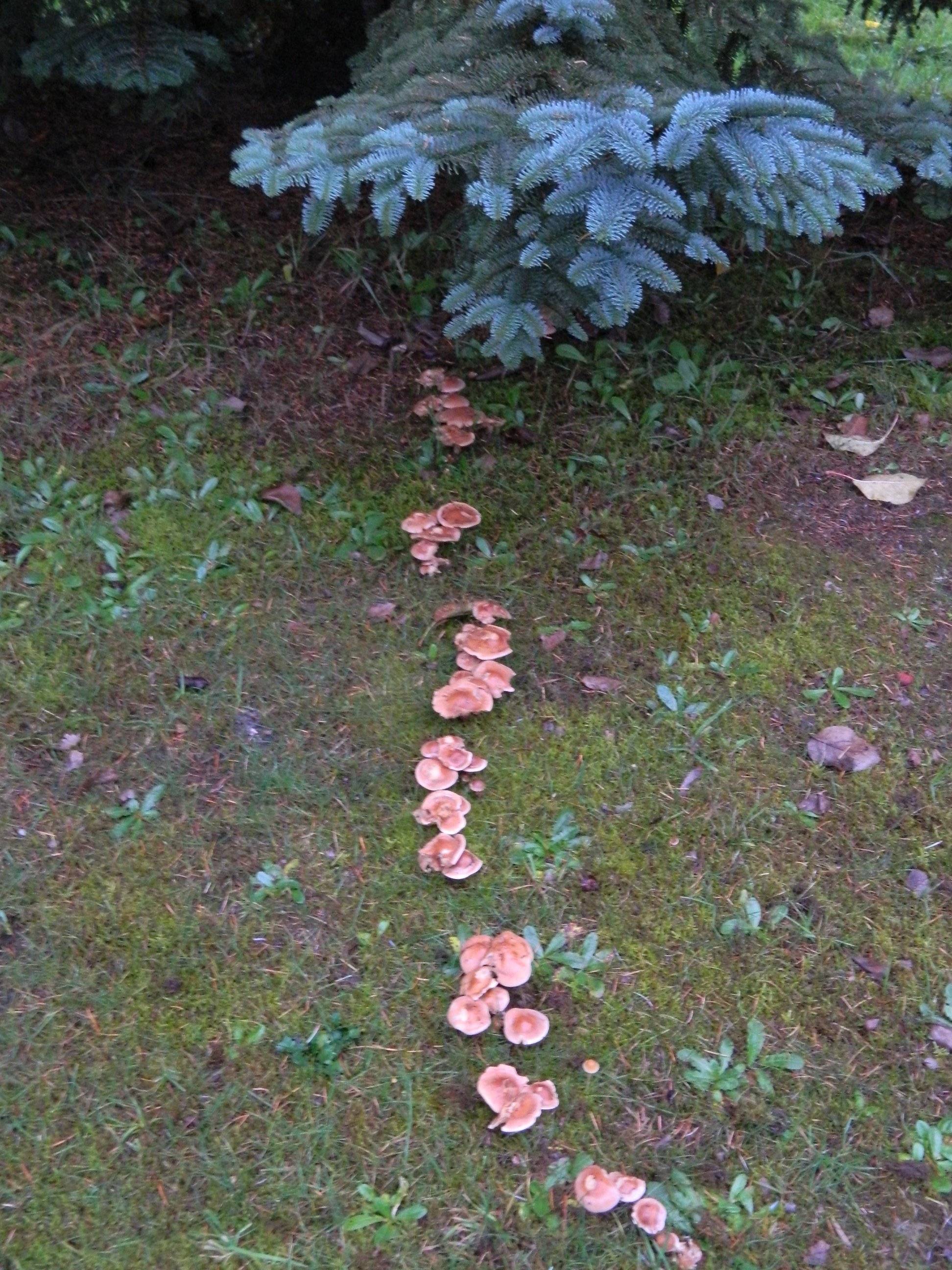
Both gratitude and kindness ask us to slow down. Slowing down isn’t always easy in our overscheduled and over-active lives. I often feel like I’m rushing from one deadline to the next, one obligation to the next, ruled by a lengthy to-do list. But slowing down is essential if we are to notice and appreciate the sunrise, the mushrooms growing at the base of a pine tree, the birds circling overhead like ice-skaters with wings. And slowing down is essential if we are to notice the smile on the cashier’s face, the door held open for us, or the myriad opportunities before us each day to extend our own kindnesses.

An Open Heart

When I experience gratitude, my heart feels open. It is an experience of abundance and sufficiency. This is all I need. It is also a feeling of presence—what happened five minutes ago doesn’t matter, and what will happen five minutes from now doesn’t matter. I am in the moment.

Likewise, the experience of kindness—whether given, received, or even just witnessed—opens my heart and allows me to feel fully present in the moment. For that brief moment, kindness is all that matters. It reminds me of one of my very favorite quotes, by Henry James: “Three things in human life are important. The first is to be kind; the second is to be kind; and the third is to be kind.”

Abundance, too, is a byproduct of kindness. If we believe we are enough, we can easily believe we have enough. Both of these beliefs help us to reserve judgment and extend kindness. And that sense of abundance, whether related to gratitude or kindness—or most likely, both—inspires us to be generous, with our time, our words, our deeds, and our resources.

Negative Emotions

I think it’s difficult to be angry or fearful when one experiences gratitude. I was surer of this last week that I am today, given the horrific events in Paris this past weekend. Those attacks surely brought fear and anger, not just to the people of France, but people all over the world. While there may also be gratitude that one’s family and friends were spared, can gratitude wipe out the fear and anger? I think not. But maybe there can be moments when gratitude at least overrides fear and lets us see that there is much to appreciate even amidst the horror of an attack such as this, or amidst the devastation of a natural disaster, or a personal catastrophe. Maybe it’s gratitude that helps us recover from the worst things that can befall us.

Kindness is also our answer to fear and anger. If we can recognize that our impulse to be unkind or say something unkind is a response to our fear or anger, we can often overcome it. If we can recognize that another person’s unkindness is their response to feeling fearful, we can often respond with kindness through that understanding. Fear often inhibits us from acting kindly—fear that our action will be misunderstood, fear that we will be rejected or embarrassed. Choosing kindness over fear is an act of courage.

Service to the Planet

When we are grateful for something, our instinct is to protect and defend it. If we stand in awe at the edge of the ocean, or if we marvel at the canopy of trees above us as we hike through the nearby hills, our natural desire is to shield them from harm, to assure that they will always be there for us and for future generations to appreciate. Our gratitude puts us in service to life—what could be more important?

Kindness, too, places us in service to life. It’s our acknowledgment that the ultimate kindness is to honor the Earth and our fellow inhabitants—human and otherwise. A healthy planet and sustainable practices is the kindest gift we can offer our planet and the generations that follow us.

Gratitude Practices

It’s lovely if gratitude comes to us frequently and effortlessly, but that is not always the case. Gratitude, like kindness, golf, or piano-playing, is strengthened with practice. The more we do it, the more we experience it and the better we get at expressing it. If you Google “gratitude practices” you will find countless suggestions, from daily meditation, to keeping a gratitude journal, to prayer. I confess that I haven’t yet established a consistent practice, but I try to spend a few moments each morning before I get up thinking about the things I have to be grateful for (the first is always that goofy guy sleeping beside me).

There’s another splendid gratitude practice that I love and practice sporadically. The wonderful physician and teacher Dr. Rachel Remen teaches this; she learned it from anthropologist Angeles Arrien. It takes very little time:

At the end of each day, sit down for a few minutes and answer these questions:

  • What surprised me today?
  • What moved or touched me today?
  • What inspired me today?

Your answers can just be a few words. What you’re trying to do is summon the memory of something that moved you.

As Dr. Remen describes: “The most interesting thing happens, then. Often people are surprised eight or nine hours after something happens when they look back on it deliberately. But [by doing this exercise] that gap shortens until eventually they are able to see in the very moment what surprises them, what touches them, and what inspires them. And then everything changes. The world has not changed, but they have begun to be able to see the world, and they can communicate that experience….It changes everything. It’s a question of paying attention.”

It’s true. At first this is difficult. You may come up blank day after day. “Nothing surprised me” or “Nothing inspired me.” But if you keep searching, you will think of something. Oh, yes, I was touched when I saw those children playing in the park. And just as Dr. Remen says, with practice you begin to notice things that touch or surprise or inspire you in the moment they happen. That creates an enduring state of gratitude—not to mention presence.

Another lovely gratitude practice: For the month of November, my fellow blogger and new friend, Dr. Catherine Cheng—whose wonderful blog, Healing Through Connection, explores (among other terrific things) fixing our healthcare system by improving communications and relationships between physicians and patients—has issued a post daily featuring something in her life that she’s grateful for. Some are things you might expect: her family, good health. Some have surprised and delighted me: Kung Fu Panda, actor George Takei, volleyball…. I look forward each day to seeing what Catherine has chosen to express gratitude for.

Catherine’s posts remind me to think about what I am grateful for—both the expected and the quirky. Whether or not we take the time to write them down, daily recognition of big and little things we have to be grateful for is a wonderful way to live in perpetual thanksgiving.

“Gratitude unlocks the fullness of life. It turns what we have into enough, and more. It turns denial into acceptance, chaos to order, confusion to clarity. It can turn a meal into a feast, a house into a home, a stranger into a friend.” (Melody Beattie)

I’m just sayin’ … honesty isn’t always kind

“Today I bent the truth to be kind, and I have no regret, for I am far surer of what is kind than I am of what is true.” (Robert Brault)

Attribution: Donna Cameron“I’m just saying this for your own good.”

“Don’t be so thin-skinned. I’m just telling it like it is.”

“Hey, I call it like I see it.”

“Jeesh, you’re so touchy!”

These phrases are often used to justify saying hurtful things. Sometimes the speaker may really believe that the listener needs to hear his unvarnished opinion about the poor sap’s looks, abilities, opinions, or prospects.

Speaking on behalf of poor saps everywhere, we don’t. We don’t need someone to tell us all the things that are wrong with us or all the things we don’t do as well as we should. That’s what that persistent little voice in our own head does—and it doesn’t need any help.

There are things that need to be said and things that don’t need to be said. If we pause to think before we speak, we generally know the difference.

“You’d be so much prettier if you’d just lose fifteen pounds,” doesn’t need to be said—ever.

“You might want to get that spinach off your front tooth before you make your presentation,” needs to be said. Thank you!

“The other kids in your class certainly have more artistic ability than you do,” doesn’t need to be said, even if it’s abundantly clear to everyone but your eight-year-old.

I don’t advocate lying. I was raised in a home where honesty was valued and I consider honesty to be one of the most important characteristics of good people. That being said, I believe there are times when telling the truth may not be the best course of action. And being able to discern the appropriate time for truth-telling and the appropriate time for silence or even a downright lie is another important characteristic of good people…certainly of kind ones.

Some lies are obvious, some a bit more subtle.

To the question, “Honey, does this dress make me look fat?” any spouse who answers that with anything but, “You look gorgeous!” or a similarly reassuring exclamatory statement really hasn’t thought through the business of being married.

“It’s perfect! Thank you so much!” in response to an ugly, impractical, or totally preposterous gift is always a wise response, even if it’s a whopper of a lie. Would you really rather hurt the giver’s feelings and then live with the regret of having done so? Receiving graciously—even when the gift is unwanted—is one of the kindest behaviors we can learn.

“I’m fine, thanks for asking.” There are times—and we usually know when they are—when telling an acquaintance about our persistent rash, impending colonoscopy, or chronic foot fungus is entirely unnecessary. The depth of the relationship is a good gauge of how much detail to provide when someone asks the innocuous and automatic question, “How are you?”

If you’re contemplating telling a lie, think about your motive behind it:

Are you lying to make yourself appear to be something that you are not—smarter, stronger, more successful or more interesting? Think again, and exercise your courage muscles. You’re fine exactly as you are—why pretend to be something that you’re not? Would you rather be authentic or an imposter? Would you rather people liked and respected you for who you really are, or because they think you’re something that you’re not? Besides, when you deceive others you must remember the story you fabricated—otherwise you are likely to get caught in your lie later—and you’ll either feel foolish or have to come up with more lies. It’s not worth it.

Are you lying to make a sale, deflect blame, get recognized, or advance your career? No matter how innocuous the lie may seem, your trustworthiness and integrity are at stake here—even if you’re the only one who knows that. Are they worth tarnishing for anything?  I recently came upon a quote by Ryan Freitas that sums it up pretty well: “Your reputation is more important than your paycheck, and your integrity is worth more than your career.”

Are you lying to spare someone’s feelings? Under these circumstances, lying may be both acceptable and desirable. Add another question: is anyone harmed … if I tell my work colleague that her new hair style is great when, in fact, my first thought was that she looks like a radish on a stick?

Other questions to consider:

  • If I were in his/her position, would I want the truth or a gentle lie? or
  • Which response best serves kindness: the truth, a considerate lie, or silence?

My sister and I still commiserate (it’s cheaper than therapy) over our mother’s “truth-telling” to us as children: to Kim that her smile showed too much of her teeth and gums—causing my sister for decades to cover her mouth when she smiled or laughed, rather than display her genuine delight; and to me that I could always have a nose-job if my nose got any bigger. Until my mother mentioned it, I had been totally unaware that my proboscis was anything less than perfect. Thanks, Mom! Fortunately, my husband thinks my patrician nose is beautiful.

It seems to me that another consideration of whether to tell the truth or to dissemble is whether you can make a contribution to the outcome.

If your colleague has already gotten the haircut, or your spouse has already bought and worn the loud Hawaiian shirt, then little is served by telling them what you really think. But if they ask you in advance how you think they would look with a radical ‘do, or wearing a bright yellow shirt with orange and purple parrots, a diplomatic truth might help them make a different decision.

Similarly, we don’t need to be the people who point out the typo, criticize the amount of cumin in the soup, or correct a stranger’s mispronunciation. If someone asks for my input, I’ll gladly give it—unless it appears that they really just want support and kudos—then I’ll give those. I’ve found as I’ve gotten older that I’ve also gotten quieter. I don’t need to point out somebody else’s foibles and failures. I’ve got plenty of my own.

But my nose, fortunately, is quite perfect.

“If you have to choose between being kind and being right, choose being kind and you will always be right.” (Anonymous)

Ever Onward, Billy Strayhorn…

“I think everything should happen at halfway to dawn. That’s when all the heads of government should meet. I think everybody would fall in love.” (Billy Strayhorn)

“Billy Strayhorn was always the most unselfish, the most patient, and the most imperturbable, no matter how dark the day. I am indebted to him for so much of my courage….” (Duke Ellington) Photo: Billy Strayhorn circa 1947; William P. Gottlieb Library of Congress Collection, public domain.

“Billy Strayhorn was always the most unselfish, the most patient, and the most imperturbable, no matter how dark the day….” (Duke Ellington) Photo: Billy Strayhorn circa 1947; William P. Gottlieb Library of Congress Collection, public domain.

I hope you’ll indulge me as I do something a bit different for today’s post. It’s still about kindness—one of the kindest people who ever lived—but it’s also a celebration of a life, and of music that will endure for generations.

When I was about 14, I heard a song that knocked my socks off—and all these years later (a lot of years), it still does. Lush Life is, in my inexpert opinion, the best jazz ballad ever written. The tune is elegant, the lyrics are both dexterous and wistful, and the rhyme is as adroit as any you’ll ever hear. I’m not alone in my estimation of Lush Life. You’ll find it at the top of many lists of the best jazz songs ever. Music historian Ted Gioia referred to Lush Life as his favorite song from the 20th century: “a perfect composition…one in which the melodic phrases, harmonies, and poetic sentiments are each unconventional yet sublime.” Tenor saxophonist Joe Henderson called Lush Life “the most beautiful tune ever written.”

The composer of this song—music and lyrics—was the incomparable Billy Strayhorn, and this month we celebrate the 100th anniversary of his birth. It’s likely to be overshadowed by the 100th anniversary—less than two weeks later—of the birth of a much more famous musician: Frank Sinatra (who, incidentally, agreed that Lush Life was one of the most perfect songs ever written).

But give me Billy any day. In fact, give me Billy every day. In addition to being one of the most talented composers and musicians who ever lived, he was extraordinarily kind. It may have been his kindness and self-effacement that prevented him from becoming as famous as Sinatra or any of the truly celebrated musicians of his day. He just didn’t care all that much for fame, and he only wanted to compose, play the piano, and work with other great musicians. Sadly, he also died much too soon, at age 51 from esophageal cancer.

If you can’t place the song, check out a few of the greats who have performed it. The very best is the 1963 recording by Johnny Hartman with John Coltrane (one of the best jazz records ever!). Sarah Vaughan, Nancy Wilson, Andy Bey, Chet Baker, and countless others also sing Lush Life, including a lovely film version by Queen Latifah. Did I mention that Billy Strayhorn was only 17 when he wrote this very sophisticated and world-weary song?

If you know of Strayhorn at all, it’s probably because he was Duke Ellington’s musical partner and collaborator from 1939 to Billy’s death in 1967. Many of the songs and albums attributed to Ellington—who was certainly a genius in his own right—were written by or written with Billy Strayhorn, often without credit to Strayhorn. Theirs was a synergistic relationship: Ellington was the extrovert, Billy the introvert. Ellington sought the limelight, Strayhorn prized his privacy. They knew each other’s musical minds inside and out.

Some of Duke Ellington’s most famous songs were by Strayhorn. Take the A Train—the song that became the Ellington band’s theme-song was composed by Strayhorn from subway directions Ellington gave Billy to Duke’s home in Harlem. Satin Doll, considered Ellington’s most recognized song, was also among the estimated 500 songs Strayhorn wrote alone or with Duke. Their versatility extended to stage shows, movie soundtracks, sacred music, and even a celebrated version of The Nutcracker Suite. Often even they weren’t sure who wrote what parts—that’s how seamlessly they collaborated.

If you like jazz, there are numerous songs you’d recognize that are Strayhorn compositions: Chelsea Bridge, Lotus Blossom, Something to Live For, Passion Flower…. Strayhorn’s roots were in classical music—you can hear it in many of his compositions—he originally intended to be a classical concert pianist … until he heard the likes of Art Tatum, Teddy Wilson, and Duke Ellington. But he carried his classical training with him when he turned to jazz.

Strayhorn’s actual 100th birth-date is November 29. I’m posting this now in hopes that you live in an area where you might have access to some of the Strayhorn centenary concerts. There will be three here in the Seattle area, performed by the Seattle Repertory Jazz Orchestra on November 7 (Seattle), November 8 (Kirkland), and November 9 (Edmonds). Oh, yes, we’re going!

There will also be celebrations in New York, Chicago, New Jersey, Philadelphia, Pittsburgh (where Strayhorn was born), New Orleans, Portland, OR, London, Paris, Italy, and undoubtedly other places.

David Hajdu, author of the definitive and completely absorbing biography of Strayhorn, aptly titled Lush Life, is going to be in Seattle during our Strayhorn celebration. Perhaps he’ll be in other cities later in the month. I recommend his book to anyone who’d like to know more about this remarkable man. I can’t possibly do him justice in a single blog post.

Duke Ellington and his band recorded a tribute album entitled “And His Mother Called Him Bill only three months after Strayhorn’s death. It is considered one of the very best Ellington recordings, and the playing by saxophonist Johnny Hodges—a good friend for whom Strayhorn wrote and arranged many songs—is sublime.

Beyond being a musical genius, Billy Strayhorn was supremely kind and generous. He coached countless musicians to improve their craft and often wrote music just for them to maximize their talents. As an openly gay African-American in the mid-twentieth century, he faced plenty of prejudice, yet always maintained his gracious demeanor and optimism. “Ever up and onward” was his catch-phrase. He was committed to the civil rights movement and a close friend and confidant of Dr. Martin Luther King, Jr. He viewed everyone equally and found something to appreciate in everyone he met—from a waitress in a diner to the Queen of England. He did not have a bad word to say about anyone. Some of Billy’s friends referred to him as “Buddha,” in recognition of his ability to be completely present with everyone he encountered.

In his eulogy to Strayhorn, Duke Ellington noted that Billy Strayhorn lived by four freedoms: “He demanded freedom of expression and lived in what we consider the most important of moral freedoms: freedom from hate, unconditionally; freedom from all self-pity (even throughout all the pain and bad news); freedom from fear of possibly doing something that might help another more than it would help himself; and freedom from the kind of pride that could make a man feel he was better than his brother or neighbor.” (Interestingly, Ellington repeated these words about Strayhorn on his 70th birthday in 1969 when he received the Medal of Freedom at a White House ceremony attended by then-President Richard Nixon. Nixon reportedly “withered” visibly as Ellington described Strayhorn’s virtues so pointedly.)

Even if you’re not a fan of jazz, adding Billy Strayhorn to your own list of heroes or people to admire will be a worthy addition. And if you’d like to get to know Billy Strayhorn better, here are some great places to start (check your local library):

  • And His Mother Called Him Bill, Ellington tribute album to Strayhorn, recorded shortly after Billy’s death in 1967
  • Lush Life, recorded in 1963 by Johnny Hartman and John Coltrane—arguably the best version ever—not to mention the entire album is pitch-perfect
  • Lush Life: The Music of Billy Strayhorn, Joe Henderson’s tribute album, also featuring Wynton Marsalis, Christian McBride, Stephen Scott, and Gregory Hutchinson
  • The Peaceful Side, Strayhorn’s own recording of some of his best songs
  • Lush Life, David Hajdu’s wonderful biography of Strayhorn

And don’t forget to see if there’s a 100th birthday tribute scheduled anywhere near you. If not, you can make your own. Happy birthday, Billy … and thank you!

“Ever up and onward.” (Billy Strayhorn)