Choosing to Be For or Against…

“Tell me what you pay attention to, and I will tell you who you are.” (Jose Ortega y Gasset)
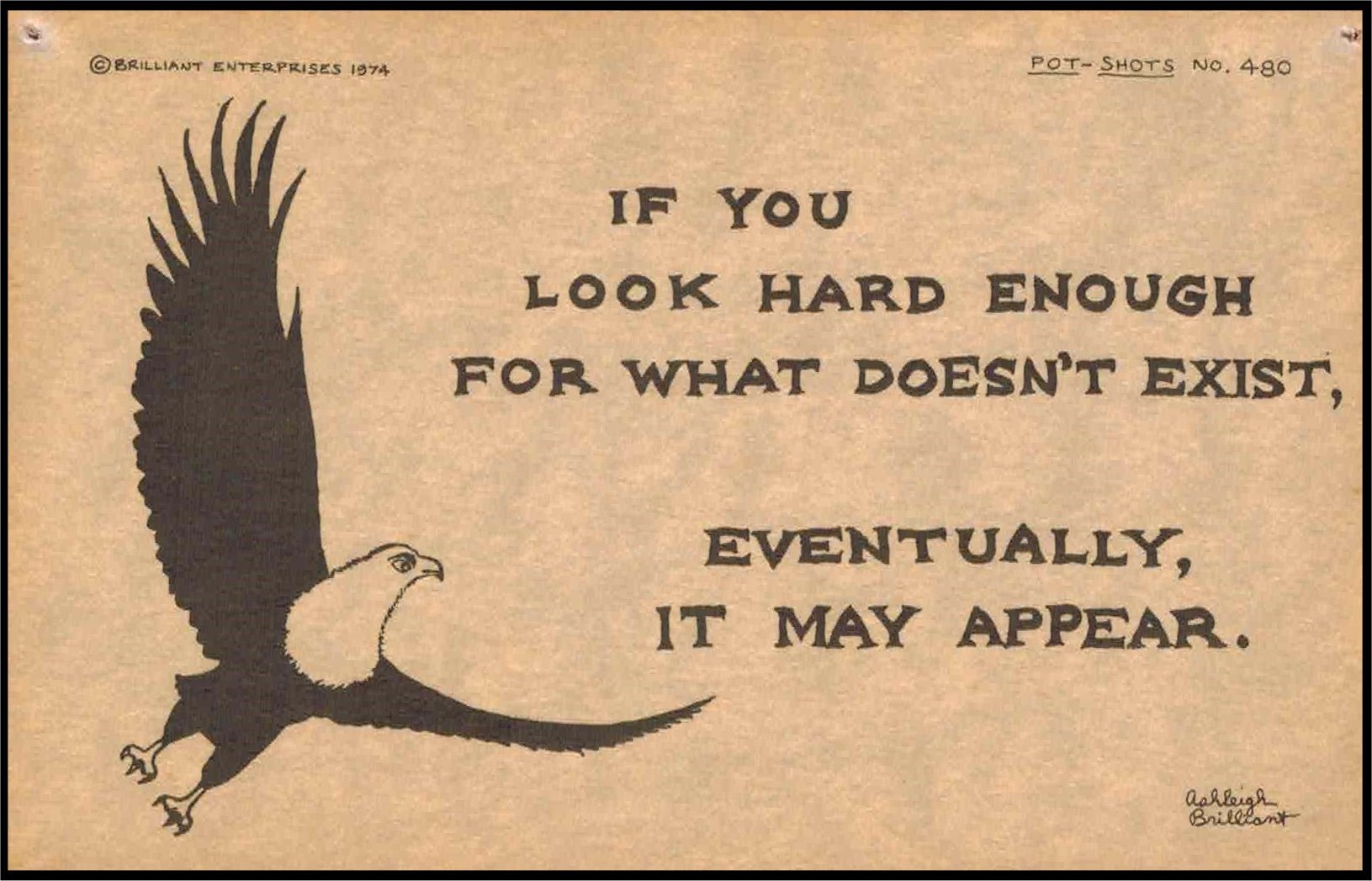
EagleThese days, when I read the newspaper or listen to the news, I find myself looking or listening for stories about kindness. I like to think that I’m developing a radar of sorts—an inner honing device that seeks and recognizes kindness. I’m a firm believer in the idea that we tend to see whatever it is we’re looking for. If we spend our days looking for what’s wrong, we will become skilled at finding what’s broken, insufficient, or flawed. And if we look for what’s good and right, that’s we will find.

For a couple of decades I’ve had pinned to my bulletin board an old Ashleigh Brilliant postcard that says, “If you look hard enough for what doesn’t exist, eventually it may appear.” A few years ago, a friend noticed it and asked me why that was on my wall, when all my other quotes and cartoons were so positive. I was baffled.

I told her, “But that is positive. It tells me to keep believing, even when I don’t yet see what I’m seeking. It’s all about the power of belief. How do you see it?”

Quite differently, it would seem. She told me, “If I think my husband is cheating on me and I look hard enough, I’ll find out it’s true.”

Well, I guess that is one way of looking at it. [Spoiler alert: the marriage didn’t last much longer.]

To a large degree, I think we do make our own reality. I’ve known people who have had more than their share of loss, illness, and misfortunes, yet they maintain a positive outlook and still manage to find something good in every mishap. They are a joy to be around.

I’ve also known people who see every loss and every misfortune as proof that the world is against them and life’s not fair. More of the same is pretty much all they expect of life, and that pervading gloom is what they convey to others. Spending time with such people can be draining—I’ve heard them referred to as energy vampires.

I’m not advocating being a Pollyanna. Perpetual and mindless cheerfulness can be as tiresome as the persistent pessimist. Each of us needs to be an activist in our own life. When we see unkindness, injustice or prejudice, we must speak out and stand up for what’s right. But if our radar is focused like a heat-seeking missile on finding mistakes and shortcomings, then life is probably pretty bleak. It’s the old glass-half-full or glass-half-empty conundrum.

Mother Teresa is reported to have said, “I was once asked why I don’t participate in anti-war demonstrations. I said that I will never do that, but as soon as you have a pro-peace rally, I’ll be there.”

I was reminded of that quote when I read Jerry Large’s column in The Seattle Times the other day. He wrote about a woman in the nearby town of Snohomish who was being removed as a volunteer leader in Young Life, a well-established Christian organization for high-school students. Pam Elliott’s “crime” was participating with other mothers in making decorations for the Seattle Pride Parade later this month, and posting the pictures on her Facebook page. She did it in support of a friend and the friend’s gay son, and because she believes in equality for everyone.

“Love is love,” Elliott said. “I am not a big activist, I’m supporting my friend. This is what we do for each other, we love each other’s kids like our own.”

The Young Life people gave her a choice. Ms. Elliott can continue her work as a volunteer leader—work which she loves—if she retracts her Facebook posting and stops aligning herself with the gay rights movement. The choice she made was to continue to support her friend and her friend’s son … and what she knows to be right. I’m not comparing Pam Elliott with Mother Teresa, but, like Mother Teresa, Ms. Elliott chose to stand for something, rather than against something else.

The more we choose positive over negative, good over bad, kindness over apathy or unkindness, the closer we all move toward manifesting the world we want to live in, and want future generations to know without question.

That’s what I look for when I read the news…

“What we choose to love is very important for what we love leads our eyes, ears, and hearts on a pilgrimage that shapes the texture of our lives.” (Wayne Muller)


Kindness and Vulnerability

“A gift is like a seed; it is not an impressive thing. It is what can grow from the seed that is impressive. If we wait until our seed becomes a tree before we offer it, we will wait and wait, and the seed will die from lack of planting…. The miracle is not just the gift; the miracle is in the offering, for if we do not offer, who will?” (Wayne Muller)

Attribution: Donna CameronPeriodically, the universe sends me a message. It’s not some disembodied James Earl Jones voice, or a bolt of lightning that rattles my foundation; more often than not, it’s a barely perceptible tap on my shoulder that says, “Pay attention here.”

I was at a conference last week where I happened to overhear two people talking about vulnerability and about Brené Brown’s TED talk on the subject. Then, last night, I was reading an article in a writer’s magazine that spoke of the writer’s need to be vulnerable, and also referred to Brené Brown’s TED talk. I felt that tap on my shoulder and heard that inner whisper, “Pay attention.”

The wonderful and sometimes dreadful thing about modern life is that we can easily and instantly access almost anything. Within seconds and a few keystrokes on Google, I was watching Dr. Brown’s 2010 talk, “The Power of Vulnerability.”

Wow! If you haven’t seen it, it’s worth your time, I promise you. This delightful and insightful talk explored a trait that whole-hearted people share: vulnerability. It described the willingness we must have to “allow ourselves to be seen,” with all our imperfections, in order to fully embrace our lives.

I can’t do justice to her words. You want to hear them first-hand. Really.

Whether we’re committing to love, or art, or business, or kindness, we must have the courage to do it whole-heartedly, with full awareness that there will always be those who find us lacking. In a way, knowing that frees us—if we can just embrace our vulnerability—for if we stop trying to please everyone, we can focus on being who we were meant to be. And isn’t that all life is asking of us?

Of course, this talk about vulnerability got me to thinking about kindness, and the connection between kindness and vulnerability. I’ve talked before about the difference between being kind and being nice. I don’t think “nice” requires us to be vulnerable. I can be nice without risk, and without exposing too much of myself. I can be nice without making a connection, or without really caring whether or not you benefit from the encounter. Nice, while often pleasant, doesn’t require sincerity or commitment.

To me, “kind” is very different. Kind means connecting; it means being conscious and intentional about the impact my words or actions may have; it means expending energy and effort and caring about the outcome. It also means suspending judgments and accepting people as they are. Kind can be messy and may take me to places where I am awkward, clumsy, and tongue-tied. Kindness requires me to take a risk. Kindness requires me to be vulnerable.

Since starting this year of living kindly, I have tried to make a conscious effort to do things kindly that I once may have done nicely. Outwardly, there’s probably not a lot of difference. In the past, if I chose to give a dollar or two to someone who asked me for money, I would do so quickly, and hurry on, sometimes wondering if the person was really in need, or if they were just lazy and saw me as an easy mark. Now, I try to pause and exchange a few words, make eye-contact, and wish them well. In most cases—though not all—I feel a connection between me and the person I am engaged with. For a brief time, we are both vulnerable, and it feels good. I don’t worry about whether their need is genuine or whether I am being a schmuck; I just hope in some way I am helping.

There is even a vulnerability to writing about kindness and to inviting people to read my periodic musings. Am I saying too much about myself? Too little? Am I pontificating (God, I hope not!)? Has it all been said before and said better? Am I missing the point entirely?

If I allow myself to be vulnerable, the answer is it doesn’t matter. As Brené Brown eloquently explains, connection is why we’re all here, sharing this planet, and it’s what gives meaning and purpose to our lives. To make that deep connection, we have to allow ourselves to be seen. That means having the courage to be imperfect, to expose our flaws, and the willingness to be vulnerable.

Living our most authentic life, whatever that means to each of us—for me it’s choosing kindness—requires that we let go of our shield and lower our guard, and that we embrace our flaws and our vulnerability. It’s scary, but, oh, the rewards of living an authentic life are beyond measure!

“Love doesn’t mean doing extraordinary or heroic things. It means knowing how to do ordinary things with tenderness.” (Jean Vanier)

[Before I close, I want to encourage you to watch Brené Brown’s TED talk. I promise it’s worth 20 minutes of your life—maybe it’s even a message from the universe to you.]

The Jerk Shall Inherit the Earth?

Hello babies. Welcome to Earth. It’s hot in the summer and cold in the winter. It’s round and wet and crowded. On the outside, babies, you’ve got a hundred years here. There’s only one rule that I know of, babies, God damn it, you’ve got to be kind.” (Kurt Vonnegut)

Bandalier,NM-ladderWellcrap.  I’ve spent the last fifteen years reckoning the importance of kindness in my life, and the last five months deeply immersed in an exploration of kindness.  And I have become convinced that despite local, national, and world current events to the contrary, people are growing kinder; we are on the verge of a kindness Renaissance.

Turns out I was wrong.

At least that’s one interpretation from an article that appeared in the June issue of Atlantic magazine.  Entitled “Why It Pays to Be a Jerk,” author Jerry Useem asserts that—consistent with the old adage—nice guys generally do finish last.  He further claims that some of the most successful people in business are also some of the biggest jerks—think Steve Jobs—and that their jerkiness is exactly what led to their success.

Useem does caution that being a jerk can also backfire and lead to abject failure, but bad behavior done right in certain circumstances is often the path to the top.

For example, stealing supplies or provisions just to benefit oneself doesn’t advance you in the eyes of colleagues, but stealing and sharing the bounty with others puts you at the head of the team.

And someone who aggressively claims to have the answers, even when they don’t, is seen as a leader and often elevated to the leadership position.  Further, it seems that the more unaware one is of how unfounded and even deluded one’s self-confidence is, the more swift and direct is the narcissist’s propulsion to the top.  UC Berkeley Research Psychologist Cameron Anderson explained, “By all indications, when these people say they believe they’re in the 95th percentile when they’re actually in the 30th percentile, they fully believe it.” And somehow they make others believe it, too.

I think this explains so much about our political system, or “jerkocracy,” as I am moved to call it. It would seem that some politicians think they’re a lot smarter than they really are and we’ve bought into their delusion.  Okay, I know that’s a totally unkind thing to say, but really—do a quick run-down of presidential contenders—doesn’t it explain a lot?

Another distressing example in the article showed that people who are treated rudely and condescended to by salespeople in upscale brand stores (e.g. Hermes, Gucci, Louis Vuitton) tend to spend more money than they do when treated well by another salesperson in the same store.  There were some qualifications to this: the shoppers needed to value the brand, the salesperson must convey the image of the brand, and such tactics by the salesperson generally only work once with the same buyer (of course, if you’re selling Rolexes, one sale is probably sufficient).  It also completely backfired if it wasn’t a truly upscale store, i.e., don’t try this if you work at Kohl’s or Target.

Givers and Takers

If anything’s clear from the article, it’s that the whole subject is murky.  Useem cites research by Wharton professor Adam Grant, author of Give and Take: Why Helping Others Drives Our SuccessGrant depicts “givers,” those whom we would generally describe as kind and generous, and “takers,” who are often labeled narcissists and jerks, noting that both givers and takers occupy the top—and the bottom—of the success spectrum.

The conclusion seems to be that you can be successful if you are kind and a giver as long as you are perceived as strong and are consistent in your behavior.  And you can be successful if you are an overconfident, narcissistic jerk as long as you are convincing and seen as someone whose success will have a spillover effect on those around him.  For both giver and taker, if you don’t convey your understanding of and ability to bring others along on your success journey, you can expect to make a nose-dive to the bottom.

So, it appears we have a choice if we want to be successful: we can be kind or we can be jerks—we just have to do either effectively.  While I have undoubtedly been a jerk at one time or another, I hope those episodes have been rare.  I choose kindness.  Being a jerk to achieve success would be soul-crushing.

Perhaps the choice between the kindness route and the jerk route depends upon how you define success.  I’ve never viewed it as either wealth or power.  Increasingly, I do define success as spreading kindness and helping others.  As long as power, intimidation, and obscene wealth constitute success for some, it looks like jerks will continue to lead.

So, the Atlantic article is discouraging.  There does not appear to be a straight path to a kinder and more respectful world.  Jerks are still reaping the rewards of their bad behavior.  There’s still a long way to go to reach the kindness tipping point.

Nobody ever claimed it would be easy.  But, we’re in this together and each time we choose kindness we move that much closer.

“Our lives are made of these moments.  Simple words and actions, taken together, weave a single day, and our days become our life.  Every gesture is a seed, and the seed determines the harvest.” (Wayne Muller)

Kindness and Curiosity

“Curiosity is the single most important attribute with which humans are born. More than a simple desire to discover or know things, curiosity is a powerful tool, like a scalpel or a searchlight. Curiosity changes us. It is also a way to effect change, perhaps even on a global level.” (Loren Rhoads)

Attribution: Donna Cameron

“The important thing is not to stop questioning. Curiosity has its own reason for existing.” (Albert Einstein)

Twice in the last week I’ve seen kindness equated with curiosity.  That made me curious. I’ve always thought curiosity is an important quality to have if one wants a rich and insightful life, but I hadn’t directly connected curiosity with the value I hold dear: kindness.

In an article entitled “Kindness and Curiosity in Coaching” that recently appeared in the Huffington Post, business consultant and executive coach Ruth Henderson described how her mother would posit a kind explanation for other people’s behavior: after being cut off by a speeder, Ruth’s mom speculated, “Maybe his wife’s having a baby and he’s trying to get to the hospital.”

Later, when Ruth was a business professional, her own coach encouraged her to approach difficult or frustrating situations with an inquisitive mind.  She told Ruth:  “Kindness and curiosity leave no room for anger and resentment.”

I think it’s true.  If I ponder a work situation where a colleague did something that seemed terribly inappropriate, or a client blew up and offended everyone within earshot, it’s easy to get angry or judge that person harshly.  But if I tap into my curiosity first, I have a very different response.  What made that colleague choose to act inappropriately?  Was she acting out of fear?  Was there a misunderstanding? Did she somehow not realize the nature of her action?  Was something else going on that I’m not seeing?

And what made that client blow up?  Fear is often behind many such outbursts—what might he be afraid of?  Or maybe he’s not feeling appreciated, or perhaps there’s a personal calamity in his life that has stretched him to his limits?  What don’t I know that might explain his behavior?

As soon as I yield to curiosity and allow for the possibility that there may be something going on that is beyond my awareness, I can replace my reflex response of anger or disgust with a desire to understand and even a desire to help.  Curiosity leads to kindness.

“When we aren’t curious in conversations we judge, tell, blame and even shame, often without even knowing it, which leads to conflict.” (Kirsten Siggins)

Curiosity vs. Discipline

In a recent article from the Harvard Business Review—one that I think should be required reading for anyone who manages or supervises other people, or who wants to—Stanford University research psychologist Emma Sepppala, PhD, describes how compassion and curiosity are more effective than frustration and reprimand in responding to an underperforming employee or one who has made a serious mistake.

Traditional, authoritarian management approaches tend to focus on reprimanding, criticizing, even frightening the employee—the rationale being that fear and embarrassment might teach the individual the error of his/her ways.  Instead, the research shows, it serves mostly to erode loyalty and trust and to impede creativity and innovation.

A more effective response to an employee’s error or underperformance is to first get our own emotions in control, and then view the situation from the employee’s eyes.  Here’s where curiosity comes into play.  What caused the mistake or what might be the reason for the poor performance?  What is the employee feeling about the error that he made?  Chances are he is horrified, embarrassed, and frightened.  A kind response—this doesn’t mean overlooking the error, but using it as a teaching or coaching opportunity and doing it compassionately—will engender loyalty, trust, and even devotion.  It will also be far more effective than reprimand or punishment in helping the employee avoid such mistakes in the future.

The loyalty engendered by the kind response extends beyond the particular employee you may be dealing with.  Seppala notes that “If you are more compassionate to your employee, not only will he or she be more loyal to you, but anyone else who has witnessed your behavior may also experience elevation and feel more devoted to you.”

It makes sense.  Everyone makes mistakes, and if our employees see their boss or manager respond kindly to a coworker’s blunder, they can feel secure in the knowledge that when they make a mistake, the response is likely to be similarly compassionate.  This fosters a culture of safety, one that encourages innovation, creativity, productivity, and loyalty—these are the qualities that the best and the brightest are seeking for their career homes.

Whoever said “curiosity killed the cat,” had it wrong.  Curiosity is one of the most beneficial qualities we can cultivate.  Combine it with kindness and magic happens!

“Let go of certainty. The opposite isn’t uncertainty. It’s openness, curiosity and a willingness to embrace paradox, rather than choose up sides. The ultimate challenge is to accept ourselves exactly as we are, but never stop trying to learn and grow.” (Tony Schwartz)

Lions and Tigers and Bears, Oh, My!

 “The greatness of a nation and its moral progress can be judged by the way its animals are treated.” (Mahatma Gandhi)

By Paula M Wolter (Own work) [CC BY-SA 3.0 (http://creativecommons.org/licenses/by-sa/3.0)], via Wikimedia CommonsSometimes it seems that it is easier to be kind to animals than to others of our own species.  There was a story in our local paper last week about traffic being stopped in both directions on a busy street as a mother duck and her brood of ducklings leisurely crossed four lanes to safety.  Drivers got out of their cars to direct traffic and protect the avian parade as commuters watched with patience and even delight.  No one honked their horns, no one yelled … I’m guessing all drove away from the scene with smiles on their faces, perhaps whistling Ernie’s “Rubber Duckie” song from Sesame Street.

Would the drivers have been as patient if the traffic jam had been of human making?  Hardly.  There would have been honking, hollering, and certainly gritted teeth by the time traffic started moving again.

Yes, it’s true that humans are not “dumb” animals and are accountable for their actions.  Ducks are, well, they’re ducks.  And they’re cute.

A traffic jam of human making might be the result of stupidity, carelessness, or the sheer fact of too many humans—and their machines—in one place.  That’s just asking for trouble.  Patience wears thin, judgments become harsh.  We slip into unkindness.

Ducks are a different story entirely, as are puppies, kittens, and most animals, especially the baby variety.  Cute often trumps impatience, judginess, and even irritation.

Plus, it’s less threatening to be kind to animals.  They don’t reject our efforts—or if they do we can clearly see that it is out of fear or injury.  Sometimes, when we try to extend kindness to people, they react with anger or insult.  They reject us.

In the case of our animal companions, the unconditional love they offer is rarely matched by our human companions, and it is certainly less perplexing.

This doesn’t mean that there aren’t some heartless people who are cruel to animals.  Sadly, there are far too many such people and we are outraged when we hear of the brutality or neglect they inflict upon creatures.  If there are people who are cruel to animals and uniformly kind to people, I have not heard of them.  Nor did Immanual Kant, who said, “He who is cruel to animals becomes hard also in his dealings with men. We can judge the heart of a man by his treatment of animals.”

I can remember a friend once telling me that she judged whether a man was worth dating a second time by how he treated her dog.  She said that measure never steered her wrong.

Still, even if we are not unkind to animals, we can probably be kinder to them.  One way is by joining millions of Americans who are signing on to the “Kindness 100” campaign of the American Humane Association.

It’s an extension of the long-celebrated “Be Kind to Animals Week,” which turned 100 this month, and has for generations taught us the importance of respecting and caring for the animals that share our planet (and tread it more gently than we do).

I tend to be skeptical of commemorative events: National Dill Pickle Week, Take Your Ferret to Work Day, and so forth.  There are so many of them, and many are quite ridiculous.

For example, tomorrow, May 14, is Chicken Dance Day – On further investigation, I learned that the Chicken Dance—wherein one dances like a chicken—is a tradition at weddings, children’s parties and family events (not my family, I’m vastly relieved to report).

And, lest you missed it, last Saturday, May 9, was Lost Sock Memorial Day (I swear I am not making this up).  I can only imagine that one drapes bunting over the clothes dryer and plays taps in remembrance of the argyles, sweat socks, and bobby socks that have been victim to mysterious demise.

I am willing to bet a lot, however, that neither of these commemorative events will stand the test of time and still be celebrated 100 years from now.  Unlike “Be Kind to Animals Week,” which has not only been celebrated every year since World War I, but has also had some notable celebrity spokespersons, including several U.S. Presidents, John Wayne, Shirley Temple, and Eleanor Roosevelt. None of whom, I can say with confidence, would have lent their name to Lost Sock Memorial Day.  Where is Carrot Top when you need him?

Kindness 100

Because this year is the centennial celebration of “Be Kind to Animals Week,” the American Humane Association is extending the 2015 campaign beyond just one week in May to last a full year.  They’ve launched a campaign called “Kindness 100” commemorating 100 years and asking all Americans to become animal advocates by adopting four practices:

Buying Humanely Raised Products – that means seeking out eggs, meat, and dairy products that are humanely raised, such as American Humane CertifiedTM products, helping to ensure the welfare of 10 billion farm animals.  They’re not asking us all to become vegetarians or vegans, but simply to shop mindfully. Personally, this is a relief because I am a carnivore and am likely to remain one.  As much as I often wish I weren’t, I like my husband’s Chicken Marsala, and sometimes I crave a good hamburger, and I pretty much consider bacon its own food group.

Protecting Wild Animals – learn about conservation efforts, and teach kids about wild animals and the need to protect them by visiting parks, accredited zoos, and aquariums.  I usually get depressed when I go to zoos, or when I see whales and dolphins in captivity.  And I get both sad and angry when I hear the horrific stories of killing elephants for their tusks.  These are not simple issues—they are socio-economic and cultural, and hugely complex.  Education is one good place to start.

Protecting Animal Actors – look for films featuring the American Humane Association’s “No Animals Were HarmedTM” end credit, ensuring the safety of hundreds of thousands of animal stars each year…and avoid those movies that don’t.  While director Clint Eastwood and I would not be in agreement on many things, as far back as 1982 he said, “I won’t allow a scene where animals are mistreated. I won’t tolerate it and never have. There’s no movie that’s worth it.”  Good for Clint (talking to empty chairs notwithstanding).

Adopting from Animal Shelters – if seeking a pet, adopt or rescue one from an animal shelter, thus saving the life of one of the 6-8 million animals who end up abandoned each year.  And they are so cute … you’ll probably want two.

Kindness 100 and “Be Kind to Animals Week” are good reminders to us to care for the creatures that enrich our lives so greatly and ask so little of us in return. Take a moment to hug your dog or your cat, or to appreciate the birds in your trees or the squirrels in your yard.  How empty our world would be without them…

P.S. – May 16 is Do Dah Day—a commemorative event in Birmingham, Alabama.  It sounds like a cross between the Rose Bowl Parade and Mardi Gras (on a much smaller scale).  Since 1992, the event has raised more than $1.3 million to benefit homeless animals.  Kudos to the good folks of Birmingham.  Happy Do Dah Day!

“Animals don’t lie. Animals don’t criticize. If animals have moody days, they handle them better than humans do.” (Betty White)